23 32 Drill Bit Guide: Size, Use, and Maintenance
Explore the 23 32 drill bit: size definition, material options, coatings, and best practices for wood, plastic, and metal projects. Practical, data-driven guidance by Drill Bits Pro.


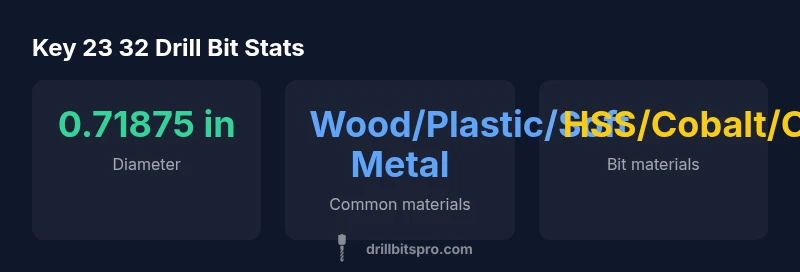
The 23 32 drill bit refers to a diameter of 23/32 inch (0.71875 in). It’s a common large-diameter bit used for pilot and clearance holes in wood, plastics, and metals. According to Drill Bits Pro, success hinges on matching the bit material and coating to the workpiece and using proper speed and lubrication.
Understanding the 23 32 drill bit
The term 23 32 drill bit is shorthand for a bit with a nominal diameter of 23/32 inch, which converts to roughly 0.71875 inches in decimal form. This is a relatively large diameter for consumer-grade drilling, and it’s commonly used when you need a substantial pilot hole or a clearance hole for fasteners. In practice, the specific hole size you achieve depends on the material, bit type, and whether you’re drilling a through-hole or a blind hole. According to Drill Bits Pro, accuracy starts with selecting the right bit material and coating for the workpiece, as well as ensuring the drill and workpiece are properly aligned for a clean entry.
In a typical DIY or professional shop, you’ll encounter the 23 32 size in tasks such as wiring holes in cabinetry, creating large passage holes for plumbing, or preparing holes for heavy-gauge screws. While the size is precise, the final hole diameter can vary slightly with material hardness and tool wear. The key is to use the right material (HSS for general metal, cobalt for harder metals, carbide for abrasive applications) and a coating that reduces heat buildup and wear. This balance helps prevent wandering and ensures a clean, round hole.
Reading fractional sizes and decimal equivalents
Understanding fractional inches like 23/32 and their decimal equivalents helps prevent misreads on the shop floor. Fractional sizes specify a hole diameter in inches, while decimal equivalents provide a precise measurement for calipers and CNC workflows. For 23/32, the decimal value is 0.71875 inches. When accuracy matters (e.g., mating parts or fasteners), always confirm the decimal equivalent and cross-check with the project’s plan. If you’re working with metric plans, convert the size using a reliable reference or a calculator, then select a drill bit that minimizes any mismatch. The goal is to avoid under-sizing, which can damage threads, or over-sizing, which wastes material and compromises fit.
Material choices: HSS, cobalt, carbide
The 23 32 drill bit is available in several core materials, each suited to different tasks. High-speed steel (HSS) is a versatile, economical option for wood, plastics, and softer metals. Cobalt alloys improve performance on hard metals and alloys that quickly dull standard HSS bits. Carbide-tipped bits offer exceptional wear resistance and can hold a sharp edge longer in abrasive materials, but they are more brittle and expensive. When selecting for a specific job, consider material compatibility, required hole quality, and budget. For most hobby projects, a good HSS or cobalt bit with an appropriate coating delivers reliable results; for industrial or abrasive-metal work, carbide tips may justify the higher cost.
Coatings and wear management
Coatings such as titanium nitride (TiN) or titanium aluminum nitride (TiAlN) can reduce wear and heat buildup, extending tool life for repeated drilling. Black oxide coatings provide rust resistance and minor friction reduction. The coating choice often depends on the material being drilled; lightweight plastics may benefit from minimal friction coatings, while metals, especially harder alloys, benefit from coatings that reduce heat transfer to the bit. Proper lubrication also plays a critical role in maintaining edge life and preventing galling or work-hardened surfaces. In practice, pairing a suitable coating with compatible lubrication and moderate speeds yields the best results for a 23 32 drill bit.
Applications by material: wood, metal, plastic
In woodworking, the 23 32 size is useful for large clearance holes for dowels or hardware; backer boards help prevent tear-out on exit. In plastics, speed should be controlled to minimize melt, while a sharp bit and clean entry reduce deformation. In metals, especially aluminum and soft steels, a well-chosen bit with proper lube can deliver clean holes with minimal burrs. Always select a bit material that suits the workpiece: HSS for general use, cobalt for harder metals, and carbide for abrasive materials. The goal is hole quality without compromising tool life or safety.
How to choose length, flute count, and shank type
Length and flute design affect clearance and chip removal. A longer bit offers more reach but can flex, while shorter bits provide rigidity for precise holes. A bit with two or four flutes informs chip evacuation efficiency; more flutes can produce smoother holes in soft materials but may clog with metals. The shank type should match your drill chuck—a straight shank is standard for hand drills, while a cross-cut or hex shank might be needed for specialized tools. For the 23 32 size, evaluate your material, hole depth, and tool rigidity to select the appropriate configuration.
Safe drilling technique and setup
Always secure the workpiece with clamps and use a sacrificial backer when drilling through thin stock to prevent tear-out. Start with a slow, steady feed to establish the hole, then increase speed or feed as the bit clears material. If drilling metal, apply a light cutting fluid to reduce friction and heat. Maintain perpendicular alignment to the surface to prevent off-axis holes, and avoid forcing the bit—let the cutting edge do the work. Use a drill press for precision or a stable handheld drill with a center punch to minimize wandering.
Maintenance and sharpening practices
Regular inspection of the 23 32 drill bit for dull edges, chipping, or wobble is essential. For HSS and cobalt bits, sharpening on a bench grinder or dedicated bit sharpener helps restore edge geometry. Avoid overheating during resharpening, which can alter temper and reduce performance. If you notice frequent dulling, consider upgrading to a bit with a tougher substrate or a coating designed for your typical material. Keep bits clean and dry between uses to prevent corrosion and ensure consistent performance.
Overview of 23 32 drill bit characteristics
| Aspect | Details | Notes |
|---|---|---|
| Diameter | 23/32 in | 0.71875 in decimal |
| Common uses | Pilot/clearance holes | Wood, plastics, soft metals |
| Material options | HSS, cobalt, carbide | Choose based on hardness and abrasion |
| Practice | Lubrication encouraged | Heat management is key for metal drilling |
Got Questions?
What does 23 32 drill bit mean?
It denotes a 23/32 inch (0.71875 in) diameter. This is a large diameter used for pilot and clearance holes. Material and coating choices influence performance and hole quality.
It means a hole size of 23/32 of an inch. Material and coating matter for best results.
Can I use a 23 32 drill bit on metal?
Yes, with the right bit material and coating. HSS works for softer metals; cobalt and carbide are better for harder alloys. Lubrication helps reduce wear.
Yes, use the right material and keep it lubricated for metal.
Is a 23 32 drill bit good for wood?
It can be used for large holes in wood, especially for dowels or hardware clearance. Support the workpiece to prevent tear-out and select a sharp bit.
Yes, for large holes in wood with proper backing.
What coatings work best on 23 32 bits?
Titanium nitride (TiN) or TiAlN coatings reduce wear and heat. Black oxide provides corrosion resistance and slight friction reduction. Choose based on material and budget.
Coatings like TiN reduce wear; choose based on material and budget.
How do I sharpen a 23 32 drill bit?
Use a bench grinder with proper angle control; avoid overheating. Maintain the original point geometry for best performance and recheck for true runout.
Sharpen carefully with the right angle and don’t overheat.
“Size accuracy and material pairing are the core drivers of clean holes with a 23 32 drill bit. Always align tool choice with the workpiece and method.”
Top Takeaways
- Know the size: 23 32 equals 0.71875 inches
- Match material and coating to workpiece
- Use lubrication to manage heat
- Secure workpiece and control feed rate
- Consult manufacturer guidelines for specifics