5 16 Drill Bit Guide: Use It Right for DIY Projects
Step-by-step guidance for selecting, using, and maintaining a 5 16 drill bit across wood, metal, and plastic. Learn sizing, speed, safety, and finishing for clean, accurate holes.


You're about to learn how to select, sharpen, and safely use a 5 16 drill bit for common project materials. This quick guide covers sizing and compatibility across wood, metal, and plastic, how to verify sharpness, choosing the correct speed and feed rate, and essential safety steps to prevent binding, wandering, or premature bit wear. Expect practical, actionable steps you can apply immediately.
What is a 5 16 drill bit and when to use it
The 5 16 drill bit refers to a drill bit with a 5/16 inch diameter, a common size for a variety of projects. According to Drill Bits Pro, this size offers a balance of speed and control for many materials, making it a go-to choice for beginners and seasoned DIYers alike. The phrase '5 16 drill bit' appears in catalogs and workshop chatter, and understanding its capacity helps you plan holes that fit fasteners, taps, or hardware with minimal material damage.
In practice, a 5/16 inch hole is large enough to pass medium-length screws, dowel joints, and clearance holes for standard hardware, yet small enough to avoid excessive material removal in soft woods or plastics. For metalworking, this size is often used for pilot holes for larger bolts or for creating light-clearance holes in thin metal sheets. When selecting a bit, consider the material you're drilling, the hole tolerance required, and the bit's edge geometry. Sharp, properly seated bits cut more cleanly and last longer than dull or damaged bits. Always inspect the bit's cutting edges for nicks or burrs before you start, and replace damaged tools to avoid binding or wandering.
If you’re unsure about the right material or geometry, start with a smaller pilot hole and work up to the final 5/16 hole. Maintaining a clean work surface, using a backer board, and wearing safety glasses will help you complete the task more accurately and safely. With practice, the 5 16 drill bit becomes a reliable, repeatable step in many builds.
Material compatibility and hole characteristics
Material choice drives hole quality and tool life. For wood, a sharp bit produces clean edges, while a center punch helps prevent wandering on dense grain. For plastics, avoid heat buildup by using slower feeds and peck drilling to prevent melts and cracks. For metals, use cutting fluid or light oil to reduce friction and chip buildup, and drill with steady, moderate pressure to prevent work hardening. Hole geometry matters: a true perpendicular hole reduces binding and improves fastener clearance.
Before you start, decide whether you’ll drill through a single sheet or through multiple layers. If you’re drilling into metal, clamp the work securely and consider using a backer to prevent burrs on the backside. If the hole must be precise, verify the target diameter with calipers after drilling and deburr as needed. Always start a new drill bit perpendicular to the work surface, using a center punch on metal to minimize walk, and pause occasionally to check chip formation and bit temperature.
Understanding drill bit types and coatings
Different types of drill bits are suited for different materials. High-speed steel (HSS) bits are versatile and affordable, suitable for most wood and soft metals. For harder metals like stainless steel, cobalt or carbide-tipped bits offer greater wear resistance. Carbide-tipped bits cut aggressively but can be brittle; use them with care in handheld drills and avoid side pressure. Coatings such as titanium nitride (TiN) or black oxide reduce friction and heat, extending life in demanding tasks. In many DIY projects, a sharp HSS bit sized for the project (including the 5 16 drill bit when appropriate) gives reliable results; upgrade to cobalt or carbide for stainless steel or hardened alloys. When using coated bits, follow manufacturer guidelines for speed and lubrication to prevent coating wear.
Sizing and measuring a 5 16 drill bit
To verify you have a 5/16 inch diameter drill bit, check the marking on the shank and cross-check with a caliper or drill gauge. If you work with a drill press, ensure the chuck size can hold a 5/16 bit securely; many chucks accommodate up to this size, but always verify. Consider the bit's length and flute count for your hole depth; longer bits are more prone to flex on hand drills. Before drilling, ensure your workpiece is clamped and aligned; ensure the bit is sharp and free of nicks. When switching from pilot to final bit, keep the same shank size to avoid wobble. For accurate holes, start with a light touch and recheck drift after initial contact.
Speed, feed, and technique for clean holes
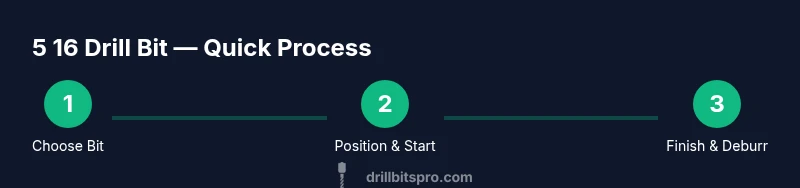
Material type determines how you approach hole cutting. Wood: apply steady forward pressure with a fast rotation; keep the bit cool by clearing chips and pausing to avoid burning. Plastic: use moderate speed and light pressure, with backing behind the plastic to prevent blowout. Metal: use light lubrication and take shallow bites, drilling in short pulses to prevent overheating and binding. Keep the drill perpendicular to the work surface; support the arm and wrists to reduce wobble. Use peck drilling when drilling deeper holes to facilitate chip removal and reduce heat buildup. Conclude with deburring to achieve a clean edge.
Common mistakes and how to avoid them
Common mistakes include wandering holes due to not center-punching or clamping, drilling at an angle, and forcing the bit when it binds. A dull bit causes more heat and rough edges; inspect before use and sharpen or replace. Skipping a pilot hole or mis-sizing the bit leads to splits in wood or misaligned metal holes. When drilling metal, neglecting lubrication increases wear and can fuse chips to the bit. Always back out periodically to clear chips and inspect temperature.
Maintenance, sharpening, and storage
Keep your 5 16 drill bit in good condition by cleaning after use and storing in a labeled case. Keep bits dry to prevent rust; lightly oil shanks and cutting edges to prolong life. Sharpen bits with a file or dedicated sharpeners; only apply to the primary edge and ensure angles are consistent. Replace worn or chipped edges promptly. Store with compatible bits and avoid mixing sizes in the same pocket to prevent dulling adjacent bits. Regular inspection helps catch damage before it ruins the impact on your project.
How to choose the right 5 16 drill bit for your project
When selecting a 5 16 drill bit, consider material, hole purpose, and how often you’ll drill similar holes. For soft woods and plastics, a sharp HSS bit is usually sufficient. For aluminum or light metals, HSS with lubrication works well, but for stainless steel or hardened alloys, a cobalt or carbide-tipped bit is preferable. If you require precise diameter control, use a bit with a flute geometry that matches your hole depth and finish needs. Always balance cost with durability and match the bit material to the task at hand.
Tools & Materials
- 5/16 drill bit (5 16 drill bit)(Diameter matches the intended hole; ensure it's sharp. Some catalogs label it as '5 16 drill bit'.)
- Center punch(Marks the exact center to prevent bit wandering.)
- Drill with variable speed or drill press(Use appropriate chuck size for 5/16 bit.)
- Clamp or vise(Secures workpiece to prevent movement.)
- Safety glasses(Protects eyes from chips and debris.)
- Lubricant or cutting oil (for metal)(Reduces heat and wear when drilling metal.)
- Backer board or scrap wood(Prevents tear-out on the backside.)
- Calipers or drill gauge(Verify hole diameter and bit size.)
- Deburring tool or/file(Finish edges after drilling.)
Steps
Estimated time: 60-90 minutes
- 1
Mark the center
Use a center punch to create a precise dent at the drilling location. This helps the bit start cleanly and reduces wandering when you first contact the material.
Tip: A sharp center punch creates a deep, visible mark; don't rely on a pencil alone. - 2
Secure the workpiece
Clamp the workpiece firmly to a stable surface. Movement during drilling can cause off-center holes and bit deflection.
Tip: Use a scrap board beneath to prevent damage to the material’s backside. - 3
Start with a pilot hole
Drill a shallow pilot hole slightly smaller than 5/16 to guide the bit and reduce chatter. This step improves accuracy for the final hole.
Tip: Keep the drill steady and clean chips as you advance. - 4
Drill the final hole
Switch to the 5/16 bit and drill at a steady pace. Maintain perpendicular alignment to minimize enlarging the hole or creating an oval.
Tip: Clear chips frequently to prevent binding and overheating. - 5
Deburr and inspect
Remove burrs with a deburring tool or file and verify the hole size with calipers if precision matters.
Tip: Deburring prevents fasteners from catching on rough edges. - 6
Finish and store
Wipe off any lubricant, remove debris, and store the bit in a protective case to prevent dulling.
Tip: Keep bits dry and organized to extend life.
Got Questions?
What is a 5 16 drill bit?
A 5 16 drill bit is a bit with a 5/16 inch diameter, a common size for general drilling across wood, metal, and plastic. It is suitable for mid-sized holes and standard hardware clearances. Always verify the diameter before use.
A 5 16 drill bit is a 5/16 inch diameter bit, good for mid-sized holes in wood, metal, and plastic. Always double-check the size before drilling.
Can a 5 16 drill bit drill metal?
Yes, a 5 16 drill bit can drill metal, especially with proper lubrication, slow feeds, and the right bit type (HSS, cobalt, or carbide-tipped for harder metals). Use a pilot hole and back out chips frequently to prevent binding.
Yes, you can drill metal with a 5 16 bit, especially if you use lubrication and a suitable bit type. Start with a pilot hole and clear chips often.
Why does my drill bit smoke or bind?
Overheating, dull edges, or too much pressure can cause smoking or binding. Stop drilling, inspect the bit, sharpen or replace if needed, and reduce pressure or speed when resuming.
If the bit smokes or binds, stop and check the bit for wear or dullness. Lubricate metal drilling and ease up on pressure.
Do I need a pilot hole before using a 5 16 bit?
A pilot hole can improve accuracy and reduce wood splitting or metal deformation. Start with a smaller pilot hole and then widen to the final 5 16 hole.
A pilot hole helps accuracy and reduces splitting; start small and work up to the 5/16 size.
How do I sharpen or replace a worn 5 16 bit?
If the edge is dull or chipped, sharpening is possible with a fine file or grinder, but for many bits replacement is simpler. Inspect regularly and replace when wear is evident.
If the edge is dull, sharpen if you know how. Otherwise, replace the bit to ensure clean holes.
Watch Video
Top Takeaways
- Choose the right bit type for your material.
- Always center, clamp, and pilot when needed.
- Maintain perpendicular drilling for accuracy.
- Deburr and clean up after drilling to finish the hole.