How Big Is a #7 Drill Bit? A Practical Size Guide
Explore the exact diameter of a #7 drill bit, its inches-to-millimeters conversion, tolerances, and practical tips for wood, metal, and plastics. A precise, data-driven look from Drill Bits Pro.


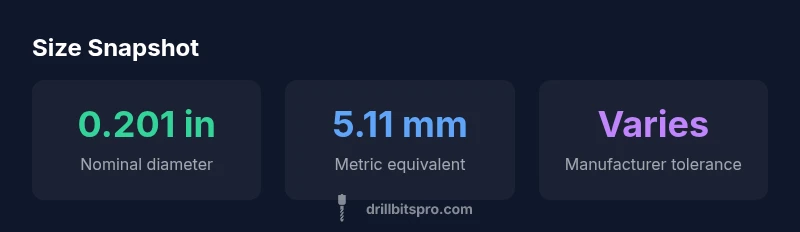
A #7 drill bit has a nominal diameter of about 0.201 inches (roughly 5.11 mm). Real bits can vary slightly by maker, so always verify with a caliper and test on scrap material before final drilling.
Understanding how the #7 size is defined
For readers asking, "how big is a #7 drill bit?" it helps to start with the sizing system. Number drills are a standard set used across hobby work and professional shops. The #7 designation refers to a specific nominal diameter in inches, which most manufacturers approximate quite closely. It’s not a universal metric, and real-world diameters can vary slightly between brands. The key takeaway is that the #7 size sits in the mid-range of commonly used number drills and is a reliable choice for pilot holes or mid-size holes in wood, plastic, and softer metals.
The exact diameter in inches and millimeters
The nominal diameter for a #7 drill bit is approximately 0.201 inches, which converts to about 5.11 millimeters. This conversion is helpful when you’re planning holes for fasteners, dowels, or threaded insertions that require a predictable opening. Keep in mind that the measured diameter on a batch of bits may differ by a few thousandths of an inch due to manufacturing tolerances. If your project demands tight tolerances, confirm with calipers or a drill bit gauge and test on scrap material before committing to the hole size.
Converting and comparing sizes
Converting between inches and millimeters is a quick, repeatable exercise. To convert 0.201 inches to millimeters, multiply by 25.4 (0.201 × 25.4 ≈ 5.11 mm). When shopping, you’ll often see the metric equivalent listed as 5.1 mm or 5.11 mm. If your project uses metric hardware, begin with the closest metric bit (e.g., 5.0–5.2 mm range) and verify fit with a test hole. This practice helps bridge the gap between imperial sizing and metric requirements common in many DIY contexts.
Tolerances and real-world measurement
Manufacturers produce drill bits with tolerances that account for tool wear, heat, and material. A nominal #7 size is an excellent starting point, but the actual diameter can drift within a few thousandths of an inch. When precision matters—for example, when drilling a hole for a dowel or a fastener—you should measure several bits from the same batch and conduct test cuts in scrap material. This approach reduces surprises during assembly and ensures the final hole size matches your design intent.
Verifying size on the bench: a practical workflow
- Calibrate your caliper and verify that it reads correctly on a known standard.
- Measure multiple #7 bits from your existing set to understand batch variance.
- Drill a pilot hole in scrap wood or aluminum to compare hole diameter against the intended size.
- If the hole is undersized or oversizes, adjust bit selection accordingly or consider a reamer for fine-tuning.
- Document the results for future projects, so you consistently choose the right size without re-testing every time.
When to choose #7 versus nearby sizes
If your target hole is intended for a specific fastener or dowel, the exact size matters. A slightly larger or smaller bit can lead to a sloppy fit or binding. If you need a near-match, nearby sizes like #6 or #8 may be suitable depending on material and tolerance, but always verify with a test hole. For pilot holes, starting with #7 can balance ease of drilling and hole strength.
Material considerations: wood, metal, and plastic
In wood, a #7 bit can create clean, well-defined pilot holes that prevent splitting when using a large screw. In soft metals, you may need lubrication and a slower drill speed to prevent overheating and binding. In plastics, a sharp bit reduces wandering and burrs. The material’s hardness and grain direction influence how closely your hole size will align with the nominal diameter, so expect small deviations and plan for sanding or reaming if precision is critical.
Buying, storing, and maintaining #7 bits
When purchasing, consider HSS (high-speed steel) or cobalt for tougher metals, and ensure the shank fits your drill chuck. Store bits in labeled cases to minimize dulling from contact with other metal edges. Regularly sharpen or replace dull bits to maintain hole quality, and keep bits clean to prevent rust and corrosion that can subtly alter actual diameters.
Common mistakes and how to avoid them
Mistake 1: Assuming the nominal size equals the actual diameter without verification. Mistake 2: Drilling without scraps testing to check hole size. Mistake 3: Mixing metric and imperial sizes without re-checking conversions. Avoid these by instituting a small pre-test routine and documenting results for future projects.
Diameter for #7 drill bit
| Size (Number) | Diameter (in) | Diameter (mm) |
|---|---|---|
| #7 | 0.201 | 5.11 |
Got Questions?
What is the exact diameter of a #7 drill bit?
The nominal diameter of a #7 drill bit is about 0.201 inches (roughly 5.11 mm). Actual bits can vary slightly by manufacturer, so verify with a caliper and test on scrap material.
A #7 drill bit is about 0.201 inches in diameter. Check a few bits with a caliper to confirm before drilling.
How do tolerances affect the finished hole size?
Tolerance means the actual diameter can be a few thousandths of an inch off the nominal size. Plan for testing holes on scrap material and adjust bit choice if precise fit is required.
Tolerances can move the hole a few thousandths of an inch; test on scrap material to verify.
Are #7 and #8 sizes close enough for pilot holes?
#7 and #8 are near in the sizing ladder, but the difference matters for tight fits. Use test holes to determine if one is acceptable for your application.
They’re close, but test holes to ensure the fit works for your use.
What materials are best drilled with a #7?
Wood and soft metals are common, where the 0.201 in hole balances ease of drilling with hole strength. Lubrication and slower speeds help with metals; in wood, clean pilot holes prevent splitting.
Great for wood and soft metals; slow speed and lubrication help with metal.
How can I verify the size at home?
Use a caliper or a drill gauge to measure several bits from the same batch, then drill a scrap hole and compare to your target size.
Measure with calipers and test on scrap material to confirm size.
Should I memorize sizes or keep a chart?
Keep a practical chart or reference sheet for common sizes like #7. This saves time and reduces measurement errors on the job.
Keep a quick reference chart for common drill sizes.
“Even with a defined nominal size, real-world holes deviate due to tolerances and material behavior. Start with the nominal size and verify with cautious testing.”
Top Takeaways
- Know the nominal size: #7 ≈ 0.201 in (5.11 mm).
- Always verify with calipers before precision holes.
- Expect minor manufacturing variances by brand.
- Test on scrap material to confirm fit.
- Choose nearby sizes only after testing for your application.