What Drill Do You Need for Concrete: A Practical Guide
Learn which drill styles and masonry bits work best for concrete, differentiate hammer drills, rotary hammers, and SDS options, and follow a step-by-step approach for clean, precise holes.


You’ll typically need a hammer drill or rotary hammer with carbide-tipped masonry bits for concrete, plus a drill suited to the job size. For small pilot holes and light-duty work, a corded or cordless hammer drill is enough; for thicker slabs or dense concrete, choose a dedicated rotary hammer with a robust bit system. Always wear safety gear.
Why the Right Drill Matters for Concrete
Choosing the correct drill for concrete isn’t just about speed—it impacts hole quality, tool longevity, and your safety. For DIYers and professionals, the difference between a standard drill and a dedicated concrete drill can be measured in dust control, wall walking, and bit wear. According to Drill Bits Pro analysis, selecting the right tool minimizes bit dulling and reduces the number of failed holes, especially on dense or reinforced concrete. When you pick the wrong tool, you’ll experience frequent stalling, wandering, and excessive heat that can ruin bits and surfaces. The goal is to match tool capability to the job: light-duty tasks can often be handled with a hammer drill, while heavy-duty concrete work benefits from a rotary hammer or SDS setup. This section breaks down the core tool categories and when to choose each.
Hammer Drills vs Rotary Hammers vs SDS: How They Differ
A standard hammer drill is a versatile option for small holes in concrete, offering a balance of weight, speed, and control. It uses a hammering action to help the bit bite into the material, but its effectiveness diminishes as hole diameter grows or concrete becomes denser. A rotary hammer (also called a combi hammer) delivers more impact energy per stroke and is better suited for larger holes and tougher mixes. An SDS (slotted drive system) rotary hammer uses detachable bits that slide into the chuck, allowing for easier bit changes and improved dust management. For most DIY tasks up to 1/2 inch diameter, a good hammer drill will suffice; for 1/2 inch and larger, or dense concrete, a rotary hammer with SDS bits performs more consistently.
What Brand and Bit Type You Should Use
Carbide-tipped masonry bits are the standard for concrete and masonry work; they stay sharp longer and cope with the heat from extended drilling. For diamond core drilling, you’ll need specialized equipment and typically a different power setup, best left to pros for larger cores or wet drilling. If you’re drilling through reinforced concrete, consider core drilling with the appropriate core bit, or use a metal-detector to locate rebar before you drill. This guidance aligns with best practices shared by industry sources and is supported by Drill Bits Pro analysis, 2026, which emphasizes tool and bit compatibility with concrete density.
Sizing and Speed: Matching Hole Size to Drill Capability
Hole diameter dictates tool choice and technique. Small pilot holes (1/8 inch to 1/4 inch) can often be achieved with a hammer drill, but larger holes (1/2 inch and above) require more power and stability. Slower speeds with steady pressure help prevent wandering and bit overheating. If you’re unsure about the density or potential presence of rebar, start with a pilot hole and progressively drill to the final diameter. In all cases, avoid pushing the drill at full force; let the bit do the work and maintain good cooling.
Safety First: PPE and Setup
Concrete drilling generates dust, noise, and potential kickback. Always wear eye protection, a dust mask or respirator, hearing protection, and gloves. Secure the workpiece with clamps or a sturdy vise, clear the area of trip hazards, and ensure your drill bit is properly seated. A vacuum or dust collection system helps keep the work area clean and reduces inhalation risks. Following these precautions reduces the likelihood of injuries and equipment damage.
Tools & Materials
- Hammer drill or rotary hammer(Choose based on hole size and concrete density; rotary hammers excel on larger holes)
- SDS-plus/ SDS-max bits (as applicable)(Ensure compatibility with your hammer type)
- Carbide-tipped masonry bits(Standard for non-core holes in concrete)
- Diamond core bit (for large cores)(Specialized use for larger holes or coring)
- Center punch and pencil for marking(Helpful for starting holes accurately)
- Dust mask / respirator( protects from silica dust)
- Safety glasses(Eye protection is essential)
- Hearing protection(Reduce noise exposure)
- Clamps or Vise to secure workpiece(Prevent movement during drilling)
- Vacuum or dust collection bag(Helps keep workspace clean)
- Measuring tape and marker(Accurate hole placement)
- Coolant/water bottle (optional for cooling)(Only if using wet/dust-control approaches)
Steps
Estimated time: 60-120 minutes
- 1
Assess job and choose tool
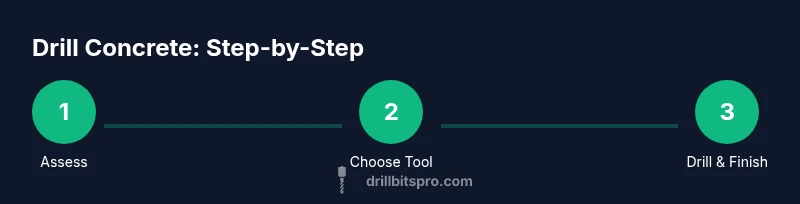
Evaluate hole size, concrete type, and any embedded rebar. Based on this, select a hammer drill for small holes or a rotary hammer with SDS bits for larger or denser slabs. The reason is simple: more powerful tools reduce bit wear and improve hole quality when density increases.
Tip: Before starting, locate any concealed rebar using a detector and adjust your plan accordingly. - 2
Mark hole location and mark depth
Use a tape measure and marker to precisely mark the hole center and depth. A center punch can help establish a starting point to prevent bit wandering. If you’re drilling multiple holes, mark all locations before starting.
Tip: Clamp the workpiece to stabilize it; even a slight shift can cause misaligned holes. - 3
Start with a pilot hole
Begin with a small pilot hole (roughly 1/8 in to 1/4 in) at low speed to establish a straight path. A pilot hole reduces bit wandering and makes subsequent larger-diameter drilling easier.
Tip: Use a slow, steady feed; avoid forcing the bit to prevent overheating. - 4
Progress to final hole size
Switch to the final bit size and maintain steady pressure. If the hole diameter is large, make multiple passes with progressively larger bits. Pause occasionally to let the bit cool and clear dust.
Tip: Withdraw the bit periodically while drilling to clear debris and reduce heat buildup. - 5
Cool, clean, and deburr
Recharge cooling as needed, wipe away dust, and deburr the hole edges with a deburring tool or file. Clean holes ensure anchor bolts or sleeves seat properly and reduce installation issues.
Tip: Keep the drill perpendicular to the surface to avoid elliptical holes. - 6
Inspect and finish
Verify hole diameter and depth, ensure alignment with your plan, and remove any debris from the area. If you hit a rebar, stop and adjust; avoid forcing the drill through metal as it can dull bits or damage the tool.
Tip: If you encounter a hard spot, pause and re-evaluate the approach rather than applying brute force.
Got Questions?
What drill is best for concrete?
For most concrete work, a hammer drill or rotary hammer with carbide-tipped masonry bits provides reliable performance. Choose a hammer drill for small holes and a rotary hammer for larger holes or tougher mixes.
For most concrete work, use a hammer drill or rotary hammer with carbide bits. Choose based on hole size and density.
Do I need an SDS drill for concrete?
SDS drills are ideal for heavy-duty or larger-diameter holes because they provide more power and easier bit changes. They’re especially useful for dense or reinforced concrete when efficiency matters.
SDS drills are great for bigger or tougher holes and offer easier bit changes.
Can I drill concrete without a pilot hole?
Starting with a pilot hole is recommended for accuracy and to reduce bit wear, especially on hard concrete. It helps keep the larger bit on course as you widen the hole.
Starting with a small pilot hole helps accuracy and reduces wear.
Can I use wood or metal bits on concrete?
No. Wood or metal bits are not suitable for concrete and will dull quickly. Use masonry bits designed for concrete instead.
Wood and metal bits aren’t for concrete—stick with masonry bits.
How do I prevent bit dulling on dense concrete?
Use appropriate speed, steady pressure, and allow cooling breaks. Consider a rotary hammer for dense material and replace bits when significant dulling occurs.
Use steady pressure and give bits cooling time; replace dull bits.
What safety gear is essential for concrete drilling?
Wear safety glasses, a respirator or mask, hearing protection, and gloves. Secure the workpiece and keep the area free of debris to prevent accidents.
Safety glasses, a respirator, hearing protection, and gloves are essential.
Watch Video
Top Takeaways
- Choose the right drill based on hole size and density
- Carbide-tipped bits outperform standard bits on concrete
- Pilot holes simplify large-diameter drilling
- Safety gear minimizes risk and injuries
- Keep the workpiece secure and maintain cooling during drilling