How Many Decibels Does a Drill Make? A Practical Guide
Explore how many decibels a drill makes, what factors drive noise, and proven techniques to protect your ears. This data-driven guide covers cordless vs corded drills, measurement methods, and actionable noise-reduction strategies for DIYers and professionals alike.


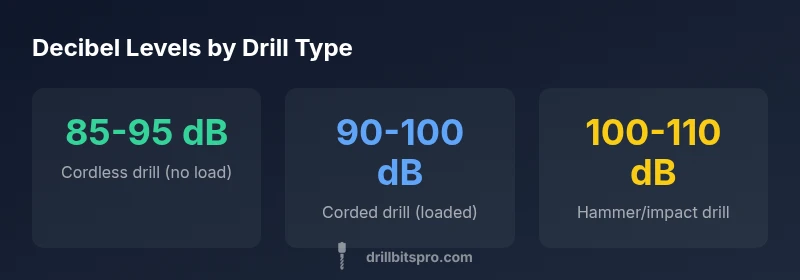
How many decibels does a drill make? Most handheld drills operate in roughly 85–100 decibels (dB) under typical use, with impact or hammer drills pushing into the 100–110 dB range when aggressively drilling into hard materials. Because noise levels vary by model, bit, and load, hearing protection is essential in most workshop tasks, and noise-reduction strategies can meaningfully lower exposure.
Understanding Decibel Levels for Drills
Decibels (dB) measure sound intensity on a logarithmic scale. For power tools, the key is how loud the tool is under realistic working conditions. When you hear about 85 dB versus 105 dB, remember that a relatively small increase in dB represents a large jump in perceived loudness. For drills, this difference often comes from workload, material resistance, bit sharpness, and motor design. In practical terms, a cordless drill with a sharp bit rating under light load will typically sit in the 85–95 dB range, while heavy percussion on metal can push total exposure into the 105–110 dB range. If you’re performing long-duration drilling tasks, cumulative exposure matters more than a single momentary spike.
In many jurisdictions, occupational noise exposure limits are defined as an average over a workday. Even if a single task peaks at 110 dB, the overall daily exposure can exceed recommended limits if you don’t take protective steps. As a result, DIYers and professionals alike should approach drilling with a noise-management mindset from the first cut.
How Different Drill Types Compare
Different drill types produce distinct noise profiles. Cordless drills, especially brushless models, tend to be quieter at light loads but can become louder when torque is high or when using heavy-duty bits. Corded drills often maintain steadier noise output, though peak loads during aggressive cutting can elevate sound levels. Hammer or percussion drills dramatically increase noise due to impact action, frequently crossing 100 dB under typical masonry tasks. The material being drilled also matters: metal usually generates higher noise than wood with similar tool settings, especially if the metal is thick or has burrs. Proper routing and clamping can prevent additional vibration-induced noise, making it easier to manage exposure in shared workspaces.
Real-World Scenarios and Examples
In everyday workshop tasks, you’ll notice a range of noise profiles. Drilling into pine with a cordless drill under moderate speed typically stays around 85–92 dB, with brief peaks near 95 dB as the bit bites. Drilling into hardwood at higher speed can push into the 95–105 dB range, particularly if the bit dulls or the material binds. Masonry work with a hammer drill often sits in the 105–110 dB range because of the percussion action. In metalworking, drilling through steel with a high-torque setup can exceed 100 dB, and sustained cutting can push into the 105–110 dB region. These examples illustrate why PPE and strategy matter even for small jobs.
How to Measure Noise at Home
Measuring decibels at home is feasible with modern tools. Use a calibrated sound level meter or a reputable smartphone app that supports A-weighted measurements for human hearing. Place the meter at roughly ear height and keep the drill operating under typical load. Repeat measurements at multiple spots around your workspace to account for reflections and clutter. Note that consumer devices can vary in accuracy, so treat readings as indicative rather than courtroom-proof evidence. For more precision, seek professional measurement in a controlled environment.
Noise Reduction Strategies and PPE
Mitigating drill noise combines planning and equipment choices. Start with PPE: earmuffs with a high NRR rating and properly fitted earplugs when necessary. Maintain sharp bits to reduce required torque and vibration, which directly contribute to noise. Use slower speeds when possible and clamp workpieces securely to minimize movement and bounce. If space allows, position the workpiece near a barrier or enclosure to dampen reflected sound. Anti-vibration handles and reduced exposure periods throughout a project can significantly lower cumulative noise. Finally, consider selecting tools marketed as low-noise or with built-in noise-reduction features to achieve meaningful reductions without sacrificing performance.
Typical decibel ranges for common drills
| Drill Type | Typical dB Range | Notes |
|---|---|---|
| Cordless drill (no load) | 85-95 | Lower idle noise; not representative under load |
| Cordless drill (loaded) | 90-100 | Noise rises with workload |
| Hammer drill | 100-110 | Higher due to percussion |
| Metal drilling under load | 105-110 | Highest among common tasks |
Got Questions?
What is the typical decibel range for a standard drill?
Most standard drills operate in the 85-100 dB range under normal load; heavy tasks can push toward 110 dB depending on material and speed.
Most standard drills run around 85 to 100 dB during normal use, with heavier work possibly reaching about 110 dB.
Do drills produce more noise drilling metal than wood?
Drilling metal can be louder than wood due to higher resistance and cutting speeds; results vary by tool and bit quality.
Metal drilling is often louder than wood because of tougher material and higher resistance.
How can I reduce drill noise in a home workshop?
Use quieter models when possible, keep bits sharp, clamp workpieces, and lower speeds where feasible; add noise barriers if space allows.
Choose quieter tools, keep bits sharp, clamp down, and slow down if you can.
Is hearing protection required for DIY drilling?
Yes. For many drilling tasks, extended exposure to high dB levels warrants hearing protection; earmuffs or plugs are recommended.
Yes—wear hearing protection whenever you're drilling for extended periods.
How do I measure decibels at home accurately?
Use a calibrated sound level meter or a reputable smartphone app; measure at roughly ear height while the drill runs under typical load.
Use a sound meter or trusted app and measure at ear level while the drill operates.
Do cordless drills differ in noise from corded drills?
Noise differences exist, but both can reach high dB levels; cordless units may be quieter at light loads but can approach corded levels under heavy load.
Cordless and corded can sound similar under heavy use; some cordless models are quieter at light work.
“Sound levels matter for long-term hearing health; always consider decibel exposure when selecting tools.”
Top Takeaways
- Understand the 85–110 dB range for common drills
- Always wear hearing protection during drilling tasks
- Sharpen bits and use correct speeds to reduce noise
- Consider low-noise tool options and workplace barriers