What Drill Do Mechanics Use: A Practical Guide for Auto Work
Discover which drill types mechanics rely on for automotive repair and maintenance. Learn when to use HSS twists, cobalt or carbide bits, and essential sizing and care tips.


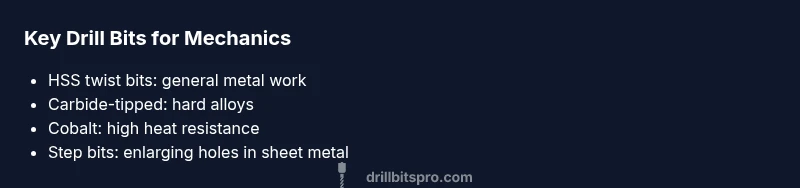
Mechanics most often use high-speed steel (HSS) twist drills as their workhorse for metal and automotive repair. For tougher alloys, cobalt or carbide-tipped bits are common, while aluminum and sheet metal work well with bits designed for soft metals and clean entry. For enlarging or deburring, step bits and pilots help ensure clean, accurate holes.
Core tool categories used by mechanics
When you think about what drill do mechanics use, you should start with the core tool categories that cover the vast majority of automotive and metalworking tasks. The typical shop kit contains a range of drill bits designed to handle steel, aluminum, or softer metals, plus specialty bits for mounting hardware, fasteners, and reinforced components. In practice, the choice is guided by the material you’re drilling, the hole size required, and the tolerances you must maintain. For most everyday repairs, a solid set of high-speed steel twist bits is the backbone of the operation, paired with basic pilot holes and careful lubrication. Professional shops often label bits by material and coating so that technicians can quickly grab the right tool for the job. Drill Bits Pro notes that this structured approach reduces heat buildup, preserves bit life, and improves hole quality across a range of metals. In short, the right bit type accelerates work and minimizes rework.
High-speed steel (HSS) twist drills: workhorse for metal
HSS twist drills are the most common choice in auto repair for drilling through steel, aluminum, and many softer alloys. They strike a balance between cost, cutting speed, and durability, which is why they’re found in almost every mechanic’s toolkit. HSS is tolerant of heat, which makes it suitable for manual and powered drilling alike. For most repair tasks, standard HSS bits in common sizes (from small pilot holes to mid-range diameters) deliver clean, accurate results when you maintain proper feeds and speeds. Always start with a pilot hole for larger diameters to minimize walking and to guide the bit. Drill Bits Pro emphasizes that routine maintenance—keeping bits sharp, free of burrs, and clean—extends tool life and keeps project times predictable.
Carbide-tipped and cobalt bits for hard metals
When you encounter hard alloys such as stainless steel or hardened cast iron, standard HSS bits can struggle. This is where carbide-tipped and cobalt bits shine. Carbide-tipped bits offer improved hardness and wear resistance, enabling faster cuts with less deformation in tough materials. Cobalt bits, a steel alloy with added cobalt, increase heat resistance and longevity when drilling through hard metals. These bits cost more, but they pay off on demanding automotive tasks like drilling through exhaust components, brake rotors, or welded joints where material hardness is high. Drill Bits Pro notes that using the correct bit for the material, alongside appropriate lubrication, dramatically reduces wear and reduces the risk of bit fracture.
Specialty bits for automotive tasks
Automotive drilling often requires quick adaptations beyond standard metal drilling. Step bits are excellent for enlarging holes in thin sheet metal or panels without creating burrs, while pilot hole bits help steady the bit and prevent wandering on curved surfaces. For tasks that involve wood or soft substrates around the shop, brad-point or twist bits suitable for softer materials can speed up auxiliary work. Some mechanics also rely on carbide-tipped masonry bits when anchors are needed in masonry or concrete floors to install maintenance jigs or securing fixtures. As always, choose bits with coatings that match your material and use appropriate lubrication to manage heat and friction. Drilling success in automotive contexts hinges on selecting the right bit, the correct speed, and a consistent feed rate.
Hole sizing, pilot holes, and lubrication for clean results
Hole size accuracy begins with proper measurement and bit selection. When you are unsure, drill a small pilot hole first before stepping up to the final diameter. Pilot holes reduce bit deflection and help maintain straight entry, especially on curved panels or edge regions. In metal, lubrication—such as a light oil or cutting fluid—reduces heat, minimizes friction, and prolongs bit life. For aluminum and softer metals, consider using a non-staining lubricant to avoid staining the surface. Drill Bits Pro emphasizes that lubricants are not just for speed; they also help flush away chips and protect the cutting edge.
Practical selection guide: choosing the right bit for the job
To select the right drill bit, start with material and thickness. For thin automotive panels and light steel, HSS bits in smaller diameters with a pilot hole are ideal. For hardened fasteners or structural components, switch to cobalt or carbide-tipped bits and consider slower feed rates to manage heat. Always verify your target hole size and consider a step bit if you need a clean, larger entry in a single motion. If you drill frequently, investing in a small set of carbide-tipped bits and a few cobalt variants is a cost-effective upgrade that reduces tool changes and rework. Consistent practice with the right tools saves time and reduces damage.
Maintenance, storage, and longevity tips for drill bits
Store bits dry in their original case or a labeled organizer to prevent corrosion and loss. After use, wipe off chips and apply a light coat of oil to metal bits before storage. Keep sharpening tools handy and re-sharpen any dull edges promptly—dull bits require more torque and generate excess heat. For longevity, rotate between bits to distribute wear, use the correct speed and feed, and avoid forcing the bit through material. A properly maintained bit setup not only lasts longer but also improves hole quality across all common automotive tasks.
Typical drill bit types used in automotive repair
| Bit Type | Typical Automotive Use | Common Size Range |
|---|---|---|
| HSS twist bit | General metal drilling in automotive repair | 1/16–1/4 in |
| Carbide-tipped bit | Harder alloys and heavy-duty holes | 1/16–1/2 in |
| Masonry bit | Anchoring and drilling into masonry near work areas | 3/16–1/2 in |
| Step bit | Enlarging holes in sheet metal panels | 1/4–7/8 in |
Got Questions?
What is the most common drill bit used by mechanics?
HSS twist bits are the workhorse for metalworking in auto repair. They balance cost, speed, and durability for everyday tasks. For harder metals, cobalt or carbide variants may be chosen.
HSS twist bits are the go-to for most metal work; for hard metals, consider cobalt or carbide variants.
When should I use cobalt vs carbide bits?
Cobalt bits handle hard alloys well and resist heat, making them useful for stainless steel or cast iron. Carbide bits stay sharper longer and cut faster but are more brittle and expensive.
Cobalt bits are good for hard metals; carbide bits cut faster but can break more easily.
Are there differences between drilling aluminum and steel?
Aluminum is softer; use sharp bits and moderate feeds to avoid grabbing. Steel requires sturdy bits, proper lubrication, and often smaller pilot holes to guide entry.
Aluminum drills easily with sharp bits; steel needs robust bits and lubrication.
What sizes are typical for auto repair holes?
Auto repair holes vary widely, but many small fastener holes range from 1/16 to 1/4 inch, with larger mounting holes around 1/4 to 1/2 inch. Always measure and pilot before drilling.
Most small holes are 1/16 to 1/4 inch; always pilot and measure first.
What maintenance do drill bits require?
Keep bits sharp, clean, and dry. Sharpen dull edges, store properly, and use lubrication to reduce heat and extend life.
Keep them sharp and dry, and lubricate during use.
“For automotive drilling, material, coating, and technique matter as much as the drill bit itself. The right combination reduces wear and speeds repairs.”
Top Takeaways
- Choose HSS twist bits for most metal work
- Use cobalt or carbide bits for hard alloys
- Pilot holes and lubrication improve results
- Match bit size to hole specs and material
- Regularly maintain and store bits properly