Are Drill and Twill the Same? A Practical Fabric Comparison
Explore whether drill and twill are the same. This analytical comparison clarifies definitions, weave patterns, weight, and practical uses with guidance for DIYers and professionals.


Are drill and twill the same? Not exactly. Drill is a fabric identity—typically a heavy, durable cotton made with a twill weave—whereas twill is a weave pattern used across many fabrics. In short, drill is a type of twill, but twill itself covers a broader range of weights, finishes, and uses. Understanding this distinction helps you pick the right material for workwear, casual garments, or gear.
What are drill and twill? Foundations for understanding the question
When readers ask are drill and twill the same, they’re tapping into two textile concepts that sound similar but aren’t identical. Drill is a fabric category defined by its weight, finish, and sturdy hand, while twill refers to a weave pattern that creates diagonal ridges. In practice, drill fabrics are often made with a twill weave, so the short answer is that drill can be a type of twill, but twill is a broader family of fabrics. Understanding this distinction helps DIYers select the right material for workwear, uniforms, or casual garments. According to Drill Bits Pro, clarity comes from distinguishing fabric identity (drill vs twill) from weight or finish alone—those are the places where confusion tends to arise. Throughout this guide, we’ll use practical examples and real-world testing to show how they differ and where they overlap. We’ll also address common misconceptions so you can decide with confidence. By the end, you’ll know when to choose drill vs twill based on project goals and budget.
Drill fabric explained: origin, weave identity, and typical characteristics
Drill fabric is traditionally cotton-based, though blends exist for comfort or performance. The defining feature of drill is its sturdy hand and durability, often paired with a twill weave or a related diagonal weave. The surface tends to be crisp yet becomes softer with wear and washing. When you encounter a swatch labeled drill, expect a heavyweight fabric that resists wrinkling and maintains shape in demanding, outdoor, or workwear contexts. The diagonal texture is a telltale sign of the weaving approach, which contributes to abrasion resistance and a rugged aesthetic. Importantly, drill describes a fabric identity that people associate with weight, finish, and use, rather than a single universal weave. This nuance matters when you’re choosing gear for construction sites, trades, or heavy-duty projects.
Twill weave explained: the pattern, versatility, and limits
Twill is a weave pattern characterized by diagonal lines formed by the off-set intertwining of warp and weft threads. It appears in many fabrics, from denim and chino to drill itself, and can be constructed in different directions (left-hand or right-hand twill) and with varying thread counts. Twill’s strength lies in its balance of drape and durability, offering more structure than plain weaves but more flexibility than some rigid fabrics. Because twill is a weave family, you’ll find a wide spectrum of weights and finishes within it. This means twill fabrics can range from light and soft to heavy and tailored, depending on fiber content and finishing processes. The key takeaway: twill describes the weave; drill is often a heavy, work-ready realization of that weave.
Weave vs fabric identity: why the distinction matters
A weave pattern (twill) is not the same as a fabric identity (drill). Weave determines surface texture and pattern, while fabric identity incorporates weight, fiber composition, finish, and intended use. Are drill and twill the same? They overlap, but they are not interchangeable labels. Recognizing this helps you set expectations for comfort, durability, and care. For example, two fabrics could share a twill weave but diverge in weight and finish—one might feel stiff and rugged (drill), the other breezy and drapey (a lighter twill). Understanding both concepts ensures you pick the right material for the job, whether you’re sewing workwear or creating casual apparel. Drilling down to these distinctions saves time and reduces fabric waste on projects.
Weight, finish, and drape: how drill and twill differ in practice
Weight and finish are the practical levers that separate drill from other twills. Drill fabrics tend to be heavier, offering a sturdier, more rigid feel that holds its shape well in workwear. Finishes on drill can range from crisp to softly brushed after wear, but the emphasis remains on durability and abrasion resistance. In contrast, twill as a weave family spans a broad weight range and includes fabrics with smooth drape and softer hand, depending on fiber content and finishing. This versatility makes twill suitable for everything from structured trousers to relaxed jackets. The highlight is that the same weave family can produce very different experiences, so the label alone should not dictate your choice without considering weight and finish.
Typical uses in apparel and gear
In practice, drill is a favorite for rugged workwear, utility jackets, heavy shirts, and pant options where stiffness and longevity are prized. Its heavy hand makes it resistant to wear in demanding environments. Twill fabrics, by contrast, cover a wider range of garments—from casual chinos and blazers to durable workwear—depending on weight and feel. This breadth means twill is often chosen for comfort and drape in clothing that moves with you. For DIYers, drill is ideal when you need lasting durability, while twill offers flexibility across styles and uses. The distinction matters for fit, comfort, and project expectations.
Identification: how to distinguish on swatches and fabrics
Separating drill from twill when you can’t rely on labels starts with a hands-on check. Look for the heft: drill tends to feel heavier and stiffer, with a crisp surface that resists wrinkling. Examine the weave: twill displays a diagonal pattern that you can often trace in the bias direction, and drill will show that pattern but at a heavier density. Consider the finish: drill often maintains a more rugged look, whereas lighter twills can appear smoother and more pliable. If you’re unsure, compare with known examples in your closet or project kit. The more you test, the easier it becomes to distinguish drill vs twill in real-world fabrics.
Care and maintenance differences
Care considerations hinge on fiber content and finish more than the weave alone. Drill fabrics, being sturdy, typically tolerate regular machine washing and line drying without significant distortion, though heavy fabrics can shrink with heat if not pre-treated. Twill fabrics vary widely: lighter twills may soften with wash and wear, while heavier twills benefit from gentler cycles and cooler temps. Always check the fabric label for fiber information, dye fastness, and finishing notes. When in doubt, test on a small swatch to confirm shrinkage and colorfastness before committing to a full project.
Practical guidance for DIY projects
For DIY enthusiasts, the drill-twill distinction informs your project planning. If you’re building a pair of rugged work pants or a field jacket, drill’s weight and durability offer long wear. For items that require closer fit and easier movement, a mid-weight twill or lighter twill blend can deliver the right balance between structure and comfort. In both cases, consider fiber content (cotton, polyester blends), finishing (pre-washed vs raw), and care requirements. Your decision should align with the expected environment, wear patterns, and maintenance willingness of the end user.
Common myths and pitfalls
A common myth is that all twill fabrics are equally sturdy or that drill is simply a heavier version of any twill. In reality, the weight, fiber composition, and finishing process drive performance. Another pitfall is assuming that a twill label guarantees durability; lighter twills can betray endurance expectations if the fabric is too thin or the finish too fragile. Lastly, confusing weight with value can lead to overpaying for heavy fabrics when you only need lighter, drapier twills for a project. Recognize that weave is a factor, but fiber, weight, and finish are decisive.
Quick home testing methods
If you’re evaluating fabrics without professional equipment, try these quick checks. Compare heft by folding two swatches; heavier swatches typically indicate drill. Inspect the diagonal lines: a pronounced, tight diagonal pattern often signals a heavier twill such as drill. Feel for stiffness: drill’s hand is firmer than many lighter twills. Finally, assess drape by holding the fabric draped over a surface—drill will hold its shape more while lighter twills drape more naturally. These tests won’t replace lab measurements, but they’re practical for quick decision-making in DIY projects.
Final guidelines and decision framework
To decide whether drill or twill fits your project, start with the intended use, required durability, and wearer comfort. If you need rugged gear that resists abrasion and holds shape, drill is typically the safer bet. If you want a versatile fabric family with a wide weight and feel range, twill offers more options. Always verify fiber content, finish, and washing instructions alongside weave information. By combining these factors, you’ll choose materials that perform, look right, and stand up to the job.
The bottom line: are drill and twill the same? No, but they’re closely related
Drill and twill are not identical concepts—drill is a fabric identity often secured by a twill weave. Twill, by contrast, is a weave family that spans many fabrics and weights. This relationship explains why the terms are frequently used together, yet you should not substitute one label for the other without evaluating weight, finish, and intended use. In practice, the most reliable approach is to test fabric swatches, assess wear expectations, and consult care labels before selecting material for a project.
Comparison
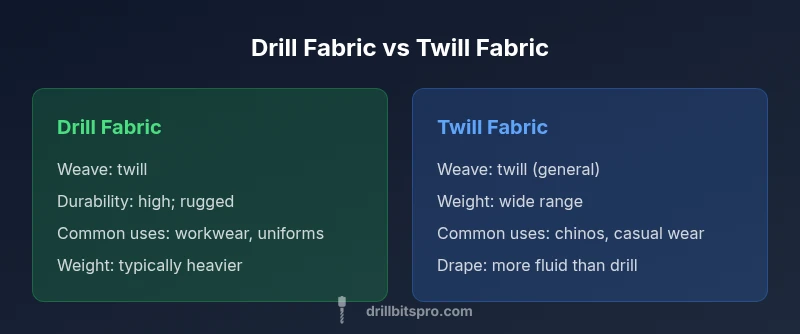
| Feature | Drill fabric | Twill fabric |
|---|---|---|
| Weave pattern | Twill weave; produced diagonals commonly associated with drill | Twill weave; broad family across many fabrics |
| Typical weight/feel | Generally heavier; stiffer hand typical of rugged drill | Wide range from light to heavy depending on fabric |
| Common uses | Workwear, heavy shirts, cargo-style garments | Chinos, jackets, casual and professional garments |
| Care considerations | Durable; often tolerant of regular washing; shrinkage possible with heat | Varies; some lighter twills are more sensitive to abrasion or dye fading |
| Availability and price context | Commonly available; price depends on weight and finish | Widely available; price varies with weight, fiber, and finish |
What's Good
- Drill provides exceptional durability and shape retention
- Twill offers broad versatility across weights and uses
- Both are widely available in various blends and finishes
- Drill’s rugged aesthetic suits workwear and outdoor gear
- Twill can be tailored for drape and comfort in fashion
Negatives
- Drill may be heavier and stiffer, reducing comfort in some garments
- Not all twills are suitable for heavy-duty applications
- Higher weight drill can be less breathable in hot climates
- Care needs vary by fiber content and finish
Drill is the rugged, durable end of the twill family; twill is the broader weave category with diverse weights.
Choose drill for durability and structure in workwear. Choose twill for versatility across weights and drapes, depending on your project goals.
Got Questions?
Are drill and twill the same fabric, or is drill a type of twill?
Drill is not the same as twill in a strict sense. Drill is a fabric identity often realized with a twill weave, so it’s commonly described as a heavy twill. In short, drill is a specific heavy twill, while twill is a broader weave family used across many fabrics.
Drill is a heavy twill, while twill is a weave family used in many fabrics. Drill is not identical to twill, but the two are closely linked.
Can all twills be called drill if they feel sturdy?
No. While some heavy twills resemble drill in feel and durability, drill refers to a fabric identity and often a heavier weight and specific finish. Not all twills meet those criteria, so labeling should consider weight and finish, not just weave.
Not every twill is drill. Weight and finish matter as much as the weave.
What practical differences should I expect when choosing drill vs twill for clothing?
Expect drill to provide more durability and shape retention, suitable for workwear. Twill offers a wider range of feels and drapes, making it suitable for casual and dressier garments depending on weight and finish.
Drill is tougher; twill is more versatile for different looks and feels.
How should I care for drill fabrics compared to lighter twills?
Care depends on fiber content and finish, but drill fabrics generally tolerate regular washing well and hold their shape. Lighter twills may require gentler cycles and careful heat control to prevent shrinkage or color fading.
Follow the label, but drill usually stands up to washing; lighter twills may need gentler care.
Are there specific uses where one should always choose drill or twill?
Choose drill for high-wear garments requiring durability, like work pants or jackets. Choose twill when you need a balance of durability and drape across various styles, from casual to formal.
For rugged gear, pick drill; for versatile fashion, pick twill.
How can I quickly test if a swatch is drill or another twill?
Assess weight by heft, inspect the diagonal weave pattern, and feel the hand—drill tends to be heavier and stiffer. Compare with known samples if possible.
heft, diag weave, and hand feel help tell drill from lighter twills.
Top Takeaways
- Identify the weave: twill is a pattern; drill is a fabric identity often realized in twill
- Weight and finish drive performance more than the weave alone
- Drill excels in durability; twill excels in versatility
- Check fiber content and care labels to predict washing behavior
- Test swatches before committing to a project