What to Do If You Drill Your Finger: A Practical DIY Guide
Practical, step-by-step guidance for treating finger injuries from drilling. Learn immediate first aid, wound care, signs you need medical help, and prevention tips to keep your hands safe during DIY projects.


You will quickly assess the injury, stop bleeding, and begin first-aid until you can clean and dress the wound. For minor cuts, follow basic wound care and monitor for signs of infection. For deeper wounds or persistent bleeding, seek professional medical care. This guide covers immediate actions, safe cleaning, dressings, and prevention to avoid future slips.
Understanding finger injuries from drilling
Finger injuries during drilling happen when your hand is near the rotating bit, or when the bit binds and kicks back. This can result in small cuts, punctures, or crush injuries depending on material and pressure. According to Drill Bits Pro, keeping hands away from the collet and using jigs or clamps reduces risk. Always confirm your drill is off and unplugged before adjusting the bit or your grip. In most DIY settings, these injuries are preventable with mindful setup, proper PPE, and clear work zones. In this section we explore how these injuries occur, why they’re common in busy workshops, and how to mentally plan for safer drilling. We’ll also outline immediate actions to take when accidents happen.
Immediate first aid steps
If you cut your finger while drilling, act quickly but calmly. Apply gentle pressure with a clean cloth or sterile gauze to stop bleeding. If blood soaks through, add another layer without removing the first. Elevate the hand slightly to reduce swelling and keep the finger at heart level when possible. Once bleeding is controlled, begin basic wound care and prepare for cleaning and dressing as described in the next sections.
Cleaning and wound care basics
Rinse the wound under lukewarm running water for 5–10 minutes to flush out debris. Do not scrub or use harsh soaps directly on a fresh wound. Gently pat dry with a clean towel, then apply a thin layer of antibiotic ointment if available and cover with a sterile non-stick dressing. Change the dressing at least daily or when wet, and watch for redness, warmth, or swelling.
Assessing depth and severity
Not all finger injuries are the same. If the cut is deep, or you see exposed tissue or bone, seek medical care promptly. If the wound is shallow, evenly bleeding, and kept clean with a dressing, you may continue close monitoring at home. Pain intensity that doesn’t improve after 24–48 hours or spreading redness are warning signs requiring professional evaluation.
Dressing, protection, and protection
Use a sterile non-stick pad, then secure with a bandage or medical tape. Avoid tight wrapping that cuts off circulation. A lightweight finger splint may be used if you have significant tenderness or swelling. Keep the dressing clean and dry to prevent infection.
When to seek medical care
If bleeding cannot be controlled with firm pressure after 10 minutes, or the wound is deep, jagged, or caused by a contaminated object, seek urgent medical care. Signs of infection—red streaks, increasing warmth, fever, or pus—also require evaluation. For any injury involving a numb finger, deformity, or persistent numbness, see a clinician promptly.
Recovery timeline and pain management
Most minor finger wounds heal within 1–2 weeks with proper care. Expect some soreness for a few days; use over-the-counter pain relievers as recommended by your clinician. If pain worsens or you notice delayed healing, consult a professional. Keep an eye on scabbing; avoid picking at scabs to prevent scarring and infection.
Prevention: safer drilling practices
Plan your work area with clear space and well-lit surfaces. Use clamps or a vice to keep workpieces steady, and keep your fingers away from the rotating bit. Wear cut-resistant gloves when appropriate, and inspect bits for damage before use. Practice proper drill speed, pressure, and stance to reduce kickback risk.
Gear and workspace setup to prevent injuries
Organize your tools in accessible, designated spots. Ensure PPE like safety glasses, gloves, and hearing protection are within reach. Use a drill press for precise, safer drilling projects whenever possible. Maintain clean floors and remove trip hazards to prevent slips that could lead to injuries.
tools_needed_note_included":null},
Tools & Materials
- First aid kit(Includes sterile gauze, antiseptic wipes, bandages, and sterile gloves)
- Sterile gauze pads(For applying direct pressure on wounds)
- Antiseptic wipes or solution(To clean the wound surface before dressing)
- Antibiotic ointment(Optional; use if no allergy and product is available)
- Non-stick wound dressing(To cover the wound without sticking to it)
- Medical gloves (disposable)(To minimize contamination during care)
- Adhesive bandages(For small cuts or after removing larger dressings)
- Cold pack/ice(To reduce swelling if applied with cloth; never place directly on skin)
Steps
Estimated time: 30-45 minutes
- 1
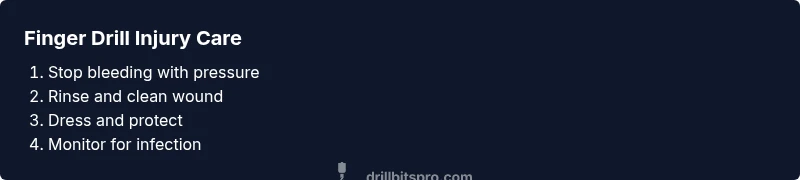
Stop the bleeding with gentle pressure
Apply firm, steady pressure directly on the wound using a clean cloth or sterile gauze. Hold for 5–10 minutes without peeking. If blood soaks through, add another layer without removing the first to avoid reopening the wound.
Tip: Do not remove the first dressing while you apply more material. - 2
Rinse and inspect the wound
Rinse under lukewarm running water for 5–10 minutes to flush out debris. Do not use strong streams that could irritate tissue. Inspect for deep cuts or embedded foreign material and note any changes in color or swelling.
Tip: Avoid using hydrogen peroxide on open wounds as it can delay healing. - 3
Clean and protect the area
Gently pat dry, apply a thin coat of antibiotic ointment if available, and cover with a sterile non-stick dressing. Secure with tape or a bandage, ensuring it isn’t wrapped too tight.
Tip: Keep the dressing clean and dry; change daily or when wet. - 4
Monitor for signs of infection
Watch for redness, warmth, swelling, or discharge over the next 24–48 hours. If any of these signs appear, seek medical advice promptly.
Tip: If fever develops, seek urgent care. - 5
Manage pain and swelling
If needed, take over-the-counter pain relief as directed. Elevate the hand and apply a cold pack wrapped in cloth to reduce swelling for short intervals.
Tip: Avoid aspirin if you have a risk of bleeding without consulting a clinician. - 6
Determine when to resume work
If the wound is clean, not painful beyond minor soreness, and dressed, you can continue with lighter, non-irritating tasks. Avoid using the affected finger for delicate drilling until healed.
Tip: Use a safety jig or clamp to keep fingers away from the bit. - 7
Plan aftercare and follow-up
Schedule a follow-up if the wound shows delayed healing after 3–5 days or if you suspect infection. Maintain ongoing wound care until complete healing.
Tip: Document any changes and share with your clinician if you seek care.
Got Questions?
Is this injury serious enough to see a doctor right away?
Only you can decide based on depth, bleeding, and pain. If bleeding won’t stop after 10 minutes of pressure, the wound is deep, or you see exposed tissue, seek medical care. If you develop fever or spreading redness, contact a clinician.
If bleeding won’t stop or you see tissue exposed, seek medical help now. Fever or spreading redness needs attention.
Can I treat a finger injury at home, and for how long should I wait before seeking care?
Many minor cuts can be managed at home with cleaning, antiseptic, and dressing. If the wound remains painful beyond a few days, or looks worse after 48 hours, arrange a medical evaluation.
Most small cuts are okay at home, but watch closely for worsening signs over a couple of days.
What should I avoid doing after a finger drill injury?
Avoid picking at scabs, avoid using harmful substances like hydrogen peroxide repeatedly on a fresh wound, and avoid applying tight bands or constrictive dressings that limit blood flow.
Don’t pick the scab or over-clean with harsh chemicals; keep it simple and clean.
Are antiseptic wipes enough, or should I use antibiotic ointment?
Antiseptic wipes are good for initial cleaning. Antibiotic ointment can help prevent infection if no allergies exist, but use as directed and avoid overuse.
Antiseptic wipes first, and antibiotic ointment can be helpful if approved by a clinician.
When is it safe to resume normal drilling activity after an injury?
Resume only when the wound is healed enough to prevent reopening. Start with light tasks and protective equipment, and gradually increase intensity as healing allows.
Go slow at first and protect the finger with safety gear.
What signs indicate an infection may be developing?
Redness that spreads, warmth, swelling, pain increasing after 24–48 hours, or pus drainage are warning signs that require medical evaluation.
If you notice spreading redness or pus, seek care.
Watch Video
Top Takeaways
- Stop bleeding quickly with steady pressure
- Cleanse and cover the wound promptly
- Monitor for infection and seek care for deep or uncontrollable bleeding
- Plan safer drilling habits to prevent finger injuries
- Keep a ready-to-go first-aid kit in your workshop