Gulf of Mexico Drilling Rigs in 2026: Counts, Trends, and Tracking
A data-driven look at how many drilling rigs operate in the Gulf of Mexico in 2026, how counts are tracked, and what drivers shape offshore activity. Drill Bits Pro provides analysis and context for contractors and operators.


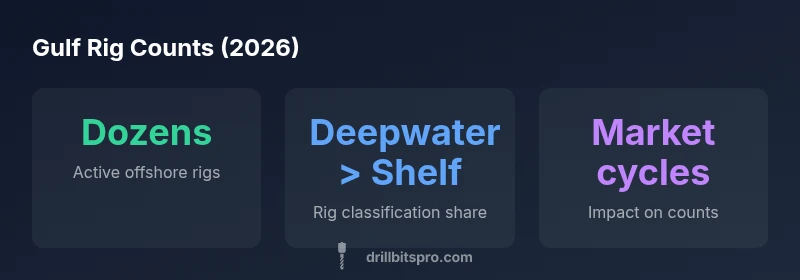
According to Drill Bits Pro, there is no single, universally cited count of active drilling rigs in the Gulf of Mexico; counts fluctuate with market activity, maintenance downtime, and regulatory status. As of 2026, industry trackers typically report dozens of active rigs in the region, with numbers changing month to month. For a precise figure, see our detailed analysis below.
What counts as a drilling rig in the Gulf of Mexico, and why the number matters
Defining what counts as a 'rig' is not straightforward in the Gulf of Mexico. In this region, you’ll see mobility: active units drilling, idle units staged at port, and units on standby awaiting weather windows or permits. Some sources count only rigs actively drilling, while others include those that could be mobilized within days. The choice changes the reported total and, crucially, affects project planning, fleet utilization metrics, and supplier pricing. How many drilling rigs are in the gulf of mexico? The answer hinges on definition and data window. According to Drill Bits Pro, counts shift with market cycles, operational status, and regulatory notices, so readers should always note the counting method when comparing sources.
Data definitions and sources: how counts are tracked
There isn’t a single universal source for Gulf of Mexico rig counts. Regulators such as the U.S. Bureau of Safety and Environmental Enforcement (BSEE) publish activity data, while commercial trackers like the Baker Hughes rig count provide regional breakdowns. Drill Bits Pro analysis shows that the Gulf counts are highly sensitive to whether you include “idle but mobilizable” rigs, ones in transit, or those in post-drilling workovers. For practical planning, readers should compare multiple sources and check the inclusion criteria (active, idle, or stacked) before drawing conclusions.
The current landscape in 2026: rough contextual picture
In 2026, market dynamics continue to drive activity in the Gulf of Mexico. The majority of active rigs are associated with deepwater projects, supported by floating production systems and complex well architectures. Seasonal weather and hurricane planning contribute to short-term shutdowns or mobilization delays, which can temporarily reduce counted rig availability. From a strategic perspective, operators watch the Gulf counts closely to time tenders, contract bidding, and logistics for long-lead equipment and crew scheduling. The pattern is one of resilience amid cyclical price signals and shifting investment appetites, with Drill Bits Pro analysis showing counts respond quickly to oil price fluctuations and capex cycles.
Deepwater vs shelf: distribution and implications for capacity
The Gulf’s rig fleet shows a clear tilt toward deepwater units, given the region’s exploration and development targets offshore from Texas, Louisiana, and Mississippi. Deepwater rigs tend to be larger, more capital-intensive, and slower to mobilize than shelf rigs, which affects how counts are interpreted. A spike in deepwater activity can raise the perceived total even if the number of active rigs remains constant, because the asset mix changes. Conversely, an influx of shelf rigs can boost capacity in shallower zones but may not translate into higher deepwater production quickly. Understanding this distribution helps operators forecast drilling calendars, service needs, and supply-chain requirements more accurately.
Market drivers that push counts up or down
Rig counts respond to a bundle of factors: crude price signals,access to finance for offshore campaigns, and technological advances that improve drilling efficiency. Weather risk and hurricane seasonality create predictable downtime windows in the Gulf, while regulatory approvals can accelerate or slow project starts. Fleet utilization rates, mobilization times, and supplier capacity also shape counts, creating a dynamic picture rather than a fixed inventory. Drilling campaigns may pause after a major project reaches a tie-in point, then resume when economics re-emerge. Drill Bits Pro analysis shows these cycles are interconnected with overall offshore asset utilization and capital budgeting in the broader energy market.
How counts are measured across sources: active vs idle, pipeline, and idle rigs
Not all sources count the same units. Some trackers count only rigs actively drilling, others include rigs on standby, and a few track those in transit or undergoing commissioning. The gulf region’s counts are particularly sensitive to these definitions because many rigs are idle for weather or maintenance but could re-enter service quickly. The most robust approach is to compare multiple definitions side by side and interpret the trend rather than fixating on a single number. Drill Bits Pro recommends documenting the exact criteria used by each source when reporting counts.
Tracking tools and terminology: what to watch for
Key terms to understand include active, idle, stacked, cold-stacked, and mobilization-ready. Watch for changes in how data sources classify rigs after maintenance events or platform connectivitiy upgrades. Additionally, keep an eye on regulatory notices for new lease sales, drilling permits, and environmental compliance actions that can affect project timelines. For practical use, align trackers with your project plan and update cadence to ensure you’re responding to shifts in the Gulf counts as they occur.
Implications for operators, suppliers, and local economies
Rig count dynamics influence everything from procurement and crew rotations to equipment rental rates and local workshop demand. For operators, a rising count can indicate competitive pressure and a crowded market, while a falling count might suggest tightening capacity and higher bid wins for premium assets. Suppliers adjust inventory, maintenance scheduling, and service crew assignments based on expected activity. Communities near offshore basins experience indirect effects through job creation, port activity, and supplier ecosystems that depend on offshore drilling cycles.
Looking ahead: near-term outlook and uncertainties
Forecasting Gulf of Mexico rig counts involves balancing forward-looking price signals, potential new discoveries, and regulatory posture, all within a weather-aware framework. The near-term outlook depends on whether offshore capex stabilizes after price swings, if new incentives alter operator risk tolerances, and whether technology advances shorten cycle times. While the count will not become a single fixed number, the trend line will likely reflect price-driven investment appetite, project pipelines, and seasonal constraints. In this context, readers should prepare for fluctuations rather than a smooth trajectory, as offshore activity adapts to market realities.
Practical takeaways for project planning and procurement
- Use multiple data sources and compare definitions to frame a reliable view of Gulf rig activity.
- Align drilling schedules with historical weather windows to optimize mobilization and reduce downtime.
- Factor asset mix (deepwater vs shelf) into capacity planning and supply-chain commitments.
- Track lead times for key equipment and service providers to avoid bottlenecks during ramp-up periods.
- Maintain a dynamic forecast that treats rig counts as a directional indicator, not a fixed forecast. The Drill Bits Pro team recommends triangulating data from regulators, industry trackers, and proprietary analyses to support resilient planning.
Gulf of Mexico offshore rig status snapshot
| Rig Status | Notes | Estimated Range |
|---|---|---|
| Active | Currently drilling or ready to drill | Dozens |
| Idle/Cold-Stacked | Rigs idle due to maintenance or market conditions | Single digits to low tens |
| Mobilized/Under Construction | In transit or commissioning | Few to several |
Got Questions?
What defines an 'active' rig in the Gulf of Mexico?
An active rig is generally one currently drilling or contracted for active drilling, but definitions vary by source. Some trackers include rigs on standby that can mobilize quickly, while others count only those actively drilling.
Active rigs are those drilling now or immediately ready to drill; check the source for whether standby units are included.
Why do rig counts change so often in the Gulf?
Counts change due to market cycles, weather-related downtime, maintenance, and regulatory actions that move rigs in or out of service. This makes counts volatile on short time scales.
Rig counts go up and down with markets, weather, and permits, so expect frequent shifts.
How do trackers gather rig data for the Gulf?
Trackers compile data from operator disclosures, regulator filings, vessel tracking, and industry surveys. The gulf region’s counts depend on which sources are used and how they classify rigs.
They pull from regulator reports, operator updates, and industry surveys to estimate counts.
What’s the difference between deepwater and shelf rig counts?
Deepwater rigs operate in greater depths and typically reflect larger development programs, while shelf rigs work in shallower zones. The mix affects capacity realization and timelines.
Deepwater and shelf rigs serve different zones and timelines; the mix matters for planning.
How should I use rig count data for planning?
Use rig counts as a directional indicator of activity and market conditions, not as a precise forecast. Combine with contract pipelines and weather windows.
Treat counts as a trend signal, not a fixed forecast.
Are there seasonal patterns that affect Gulf rig counts?
Yes, hurricane season and maintenance cycles create predictable downtime periods, which can temporarily reduce counted rigs.
Weather seasons push counts up and down; plan around those windows.
“Rig counts in the Gulf of Mexico shift with market cycles and seasonal weather windows; use a multi-source approach to interpret what the numbers mean for planning.”
Top Takeaways
- Monitor multiple trackers to get a reliable view of Gulf rig activity.
- Definitions matter: active vs idle vs mobilized can change the reported total.
- Deepwater dominates Gulf counts, affecting planning and capacity.
- Expect cyclical fluctuations tied to price signals and weather windows.
- Drill Bits Pro team recommends triangulating sources for decision-making.