Are Drill Batteries Lithium? A 2026 Practical Guide
Discover if drill batteries are lithium, compare Li-ion with NiCd/NiMH, and learn how to choose, care for, and safely use lithium-based packs for smarter cordless drilling.


Yes. For most modern cordless drills, battery packs are lithium-based, primarily lithium-ion (Li-ion). NiCd and NiMH packs are largely phased out in new tools due to lower energy density and higher self-discharge. Some specialty or budget models may still use NiCd, but lithium-based cells dominate today for longer run time and lighter weight. Drill Bits Pro analysis, 2026, confirms the shift.
Why Lithium-Ion Powers Modern Drills
For many users asking "are drill batteries lithium?", the answer is largely yes. According to Drill Bits Pro, lithium-ion batteries power the vast majority of modern cordless drills due to higher energy density, lighter weight, and improved cycle life. Li-ion chemistry has evolved to deliver more charge cycles before capacity loss, improving long-term reliability. This shift started in the 2010s and accelerated as Li-ion technology matured. For DIYers and pros, Li-ion packs translate to longer run times between charges, less fatigue from handling a heavier tool, and better overall performance in fast-paced work. The trade-offs include higher upfront cost and sensitivity to heat and deep discharge. In practice, you’ll see Li-ion packs on 18V and 20V MAX platforms, where a balance of power and run time matters most on demanding tasks.
Industry observers note that the transition from NiCd and NiMH to Li-ion is strongly linked to performance demands on job sites and home workshops. If you’re upgrading, expect a noticeable improvement in how long you can work before recharging and how much weight you carry on the ladder or scaffolding. This is one of the reasons why the drilling community emphasizes compatible battery form factors and proper charging practices to maximize life and safety.
Li-ion vs NiCd/NiMH: Pros and Cons
Li-ion batteries offer several clear advantages over NiCd and NiMH packs. First, energy density is higher, so you can store more power in a comparable-sized pack, which translates to longer runtimes. Second, Li-ion cells are significantly lighter than NiCd cells, reducing operator fatigue on extended tasks. Third, Li-ion does not suffer from the pronounced memory effects that plagued NiCd in the past, making capacity maintenance less of a headache. NiMH offers a middle ground but often trails Li-ion in weight and cycle life. NiCd remains in some budget or legacy tools due to cost, but its energy density is lower and its environmental footprint higher. In real-world use, Li-ion packs typically provide faster charging and longer intervals between top-offs, helping you stay productive on the job. When evaluating tools, a Li-ion configuration is usually the better choice for most professionals and serious DIYers, with NiCd/NiMH reserved for older stock or extremely tight budgets.
Other Chemistries Still in Use and Why
Despite Li-ion dominance, some tools still ship with NiCd or NiMH packs, especially older models, entry-level kits, or budget lines. NiCd is known for robustness in extreme temperatures and simple electronics, but its memory effect and lower energy density make it less appealing today. NiMH improves energy density over NiCd but still falls behind Li-ion in weight and charging efficiency. A newer entry in the field is LiFePO4 (LiFePO4) batteries, which offer enhanced thermal stability and cycle life, though they’re heavier and often costlier. For specialty applications, some users opt for NiCd for compatibility with legacy chargers or specific tools; however, the trend across the market is toward Li-ion and LiFePO4 for safer, lighter, and longer-lasting performance. Always verify tool compatibility and recommended battery chemistry in the user manual before swapping chemistries.
How to Choose Lithium-Based Batteries for Your Drill
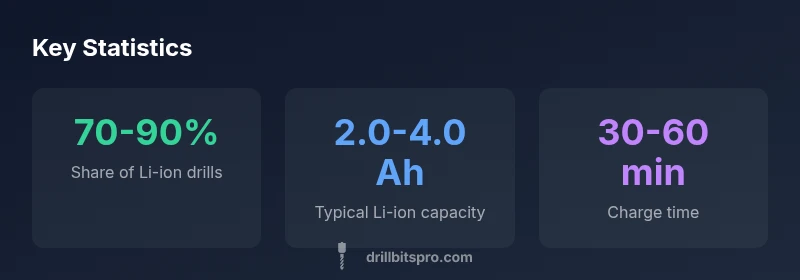
Choosing the right Li-ion battery for your drill starts with compatibility. Check the tool’s voltage rating (commonly 18V or 20V) and ensure the battery form factor matches your model. Capacity, measured in amp-hours (Ah), translates to run time; common ranges for drills are 2.0–4.0 Ah, with higher values offering longer practical use between charges. Consider C-rate and discharge characteristics for heavy-duty or fast-drilling applications. Weight matters: larger Ah packs are heavier, which can affect control on overhead work. For a seamless experience, buy from reputable brands and use the charger designed for your battery chemistry. Finally, consider environmental conditions: Li-ion performs best in moderate temperatures and should be stored partially charged when not in use.
Safety, Maintenance, and Real-World Use
Safe handling of lithium batteries is essential. Use only the charger specified by the tool manufacturer, avoid punctures, and protect packs from high heat. Do not fully discharge Li-ion cells regularly; aim to recharge when they’re nearing depletion as directed by the manufacturer. Store batteries in a cool, dry place, ideally at partial charge to preserve capacity. Inspect packs for swelling, corrosion, or physical damage; if any anomalies appear, discontinue use and dispose of the pack properly. Regular maintenance includes cleaning contacts, checking for loose connections, and replacing worn packs before they fail mid-project. Following these practices helps maximize safety and performance on the job.
The Future of Drill Battery Tech
As technology advances, we expect Li-ion chemistry to continue evolving with higher energy density, faster charging, and improved safety features. Solid-state and LiFePO4 variants are under exploration for power tools, potentially offering better thermal stability and longer life in demanding environments. Manufacturers are also exploring smarter battery management, wireless communication, and predictive health monitoring to help users know when a pack is nearing end of life. For end users, this means more reliable tools, fewer interruptions, and safer charging ecosystems. While the basics of compatibility remain essential, staying informed about evolving chemistries can help you plan future upgrades with confidence.
Battery chemistry comparison
| Chemistry | Energy density | Memory effect | Cost range |
|---|---|---|---|
| NiCd | Low | Significant memory effect | Low upfront cost |
| NiMH | Moderate | Minimal memory effect | Moderate cost increase |
| Li-ion | High | Negligible memory effect | Moderate to high |
| LiFePO4 | Moderate | Low memory | High upfront but long life |
Got Questions?
Are drill batteries Li-ion?
Yes. Most modern cordless drills use Li-ion packs due to high energy density and lighter weight. NiCd and NiMH are less common today except in budget or legacy tools.
Most modern drills use Li-ion packs; NiCd or NiMH are mostly found in older or budget models.
What are the advantages of Li-ion over NiCd/NiMH?
Li-ion offers higher energy density, lighter weight, and negligible memory effects, leading to longer runtimes and easier charging.
Li-ion gives you more power for less weight and less memory concern.
Do all drills today use Li-ion batteries?
Nearly all mainstream brands ship Li-ion packs in new models; some older or budget lines still use NiCd or NiMH.
Most new drills use Li-ion, but some older models may use NiCd or NiMH.
Can NiCd or NiMH packs be used in modern drills?
Compatibility depends on the tool’s battery compartment and connector; most modern tools are not designed for old NiCd/NiMH packs.
Generally, you should not mix NiCd or NiMH with modern tools; check the model’s specs.
Are Li-ion batteries safe for woodworking environments?
Li-ion packs are safe when used with proper chargers and handling. Avoid puncture, extreme heat, and overcharging.
Li-ion is safe if you use the right charger and handle them properly.
How should I care for lithium drill batteries?
Follow the manufacturer’s charging guidelines, avoid deep discharge, store at partial charge in cool conditions, and inspect for damage.
Follow the charger, don’t fully discharge, store cool and safe.
“Lithium-based batteries deliver higher energy density and lighter weight, enabling longer runtimes and faster charging for most cordless drills.”
Top Takeaways
- Identify lithium-based packs as the default for modern drills.
- Check your tool’s voltage and form factor before upgrading to Li-ion.
- Expect Li-ion packs to be lighter and longer-lasting than NiCd/NiMH.
- Watch charging times; Li-ion recharges faster in many models.
- Follow safety guidelines to avoid thermal runaway and short circuits.