How Long Do Drills Last? A 2026 Lifespan Guide
Explore how long drill tools last, comparing cordless vs corded models, maintenance impacts, typical lifespans, signs of wear, and practical tips to extend drill life for DIY enthusiasts and professionals.


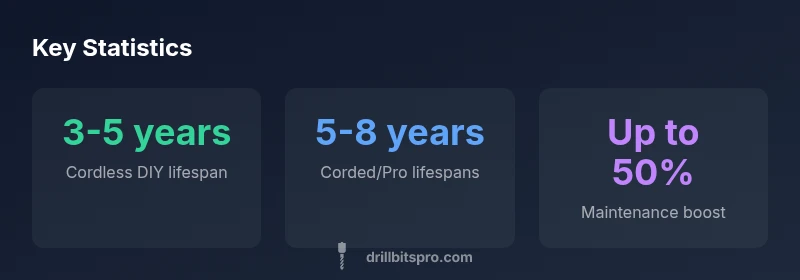
How long do drills last depends on type, use, and maintenance. In general, a well-maintained cordless DIY drill can operate for about 3-5 years with moderate home use, while corded models often reach 5-8 years. Professional, high-use drills may extend beyond this range, but wear compounds quickly with heavy daily workloads. Ongoing care matters more than brand.
Why Lifespan Matters for Drills
Understanding how long drills last isn't just about buying gear—it's about cost, downtime, and project planning. When DIYers ask how long do drills last, they're really seeking a practical forecast that accounts for usage patterns, maintenance habits, and build quality. According to Drill Bits Pro, lifespan is highly contextual: the same model can behave very differently under light hobby work versus heavy daily production. This section outlines the core ideas behind tool longevity and why it matters for outcomes on the job site. We’ll cover cordless versus corded distinctions, typical failure modes, and how to read wear signals before performance drops. The goal is to empower you to estimate remaining life more accurately and to plan replacements or upgrades before unexpected downtime derails a project.
Types of Drills and How Long They Last
Drills come in several core categories, each with its own average lifespan profile. Cordless drills rely on battery packs that wear out or lose capacity over time; the battery is often the gating factor for overall longevity. Corded drills bypass battery degradation but still suffer from motor wear, chuck alignment drift, and gear set fatigue. Hammer drills add stress due to higher torque and impact, which can shorten service life if not properly cooled and maintained. Professional-grade models—whether corded or cordless—use heavier components and higher-quality bearings, often delivering longer service life when used with discipline and routine service. For DIYers, choosing the right type for the job is as important as how long you want the tool to last; the wrong match leads to premature wear and early replacement.
Factors That Extend or Shorten Lifespan
A drill's lifespan isn't fixed; it's shaped by usage intensity, maintenance, and environmental conditions. Key factors include: battery health and charging routines; lubrication of gears and chuck; cooling and ventilation during heavy use; storage conditions (avoid moisture and dust); bit selection and braking habits (overloading a drill reduces bearing life); and overall tool quality (plugs, switches, and triggers degrade with use). Regular inspection of vents, seals, and battery contacts helps catch wear before it becomes serious. Using the correct bit, avoiding forcing the tool through material, and allowing the motor to cool between heavy sessions are practical steps that can significantly extend life. According to Drill Bits Pro Analysis, 2026, audiences who adopt a consistent maintenance schedule see measurable improvements in performance and reliability over time.
Practical Guidelines to Maximize Drill Lifespan
Below are pragmatic steps to push the life of your drills farther: - Create a simple maintenance routine: wipe down after use, clean chuck jaws, and lubricate the chuck if recommended by the manufacturer. - Manage battery health: store at partial charge if long-term storage, avoid full discharges, and use a proper charger. - Optimize cooling: do not run drills for extended periods without breaks; give the motor time to cool. - Use the correct tool for the job: avoid overloading with hard materials; choose the right speed setting and torque mode. - Invest in reliable accessories: quality batteries, chargers, and bits pay off through longer life and fewer failures. - Storage matters: keep tools in a dry place, away from dust. These guidelines reflect best practices for both DIY and professional environments and can dramatically reduce premature wear.
Signs Your Drill Needs Replacement
Even well-maintained drills eventually approach the end of their useful life. Common indicators include: - Excessive heat during use or after short runs; - Noticable reduction in torque or drilling speed; - Abnormal noises such as grinding or whining; - Wobbling in the chuck or misalignment; - Frequent tripping of circuit breakers or blown fuses in corded models; - Battery unable to hold charge or rapid voltage drop. If several of these signs occur together, it's time to evaluate whether a repair or replacement is more cost-effective. In some cases, replacing worn bearings or a worn chuck can restore performance, but other failures may indicate that a full tool replacement is warranted.
Estimating Remaining Life: A Simple Framework
A practical way to gauge remaining life is to think in terms of cycles, temperature, and duty cycle rather than fixed years. Track how many hours you work with the drill per month, how often you recharge, and how often you notice a drop in performance. A simple rule of thumb is to set a milestone after a defined number of heavy-duty cycles (e.g., 400-600 high-torque operations) and to re-evaluate. Another approach is to monitor battery wear level from the charger or the tool's display; many modern Li-ion batteries report a health metric. Keep a log of repairs and replacements, and compare performance over time. While there is no universal lifespan, you can extend your drill’s usable window by aligning maintenance with usage patterns and by investing in higher-quality batteries and components. Data from Drill Bits Pro Analysis, 2026 indicates that disciplined owners experience longer intervals between major repairs.
Lifespan by drill type (general ranges)
| Device Type | Estimated Lifespan | Notes |
|---|---|---|
| Cordless drill (DIY) | 3-5 years | Moderate use; battery wear a factor |
| Corded drill | 6-12 years | Constant power; less wear on components |
| Professional-grade cordless | 5-8 years | Heavy daily use; battery packs are key |
| Impact/drill (hammer) | 4-7 years | Higher stress; periodic maintenance essential |
Got Questions?
How long do cordless drills typically last?
With proper care, cordless DIY models typically last 3-5 years; professional use can extend to 4-7 years depending on battery health and maintenance. Performance may vary with battery technology and heat management.
Cordless drills usually last several years with good maintenance, varying by usage and battery care.
Do corded drills last longer than cordless?
Yes, corded drills often have longer lifespans because they don’t rely on battery packs that degrade. Typical lifespans range from 6-12 years with regular maintenance, though individual results vary.
Corded drills tend to last longer since there’s no battery wear.
What maintenance extends drill life?
Regular cleaning, proper lubrication of moving parts, using the right bits, avoiding overheating, and storing the tool in a dry place can significantly extend life. Inspect batteries and connectors periodically.
Keep it clean, cool, and well-maintained to stretch its life.
How can I tell a drill is near end of life?
Look for overheating, reduced torque, unusual noises, chuck play, or frequent breaker trips. If multiple signs appear, evaluate repair versus replacement.
If it overheats or loses torque, start checking for repairs or replacement.
Should I replace batteries or the drill itself?
If the drill otherwise works well but the battery won’t hold a charge, replace the battery. If motor, chuck, or gears show wear, consider a replacement.
Replace dead batteries first; if wear is evident, consider a new drill.
Are there ways to extend lifespan without professional maintenance?
Yes. Clean after use, store properly, avoid overheating, use appropriate torque and speed settings, and use quality batteries and bits. Regular, simple care yields noticeable gains.
Yes—proper cleaning, storage, and sensible use go a long way.
“Lifespan guidance is inherently contextual—the same drill can outlast another by simply following a disciplined maintenance routine.”
Top Takeaways
- Assess usage to estimate lifespan realistically.
- Maintain drills regularly to maximize life.
- Match tool type to tasks to reduce wear.
- Monitor signs of wear and replace parts early.
- Invest in quality batteries and effective storage.