What to Do If You Drill Through a Wire: A Practical Safety Guide
Learn practical, safe steps when you drill through a wire. This Drill Bits Pro guide covers immediate shutdown, hazard checks, first aid basics, and when to call a licensed electrician.


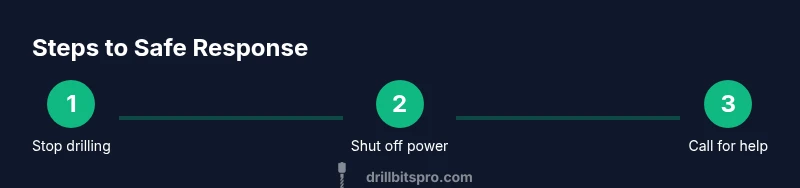
Goal: respond safely when you drill through a live wire. Your first moves are to stop drilling, avoid contact with the wire, and shut off power at the main breaker if you can reach it safely. If there are sparks, smoke, or you cannot safely cut power, evacuate and call emergency services. Then secure the area and summon a licensed electrician for repairs.
Why drilling through a live wire is dangerous
Drilling into or near electrical wires creates immediate shock and burn hazards, plus the risk of arc flash and electrical fire. Even if a conductor seems inactive, hidden live wires or residual charge can shock you through metal tools or damp surfaces. For DIYers and professionals, the core message is clear: if you suspect a drill has contacted a live wire, treat it as a serious hazard and act quickly to minimize harm and property damage. Throughout this guide we’ll address the core question: what to do if drilled through a wire, and how to protect yourself and others while awaiting professional repairs. Maintaining situational awareness and using proper safety protocols reduces the odds of lasting injury or fire.
Immediate safety actions you should take in the first minutes
In the first moments after realizing you’ve drilled through or near a wire, stop work immediately and set tools down away from the hazard. Do not touch exposed conductors or metal parts that could be energized. If you can reach and safely operate the main power disconnect, switch it off to remove the hazard from the circuit. Keep others away from the area; warn them about potential shocks and fire risk. If there are sparks, smoke, or a burning smell, evacuate and call emergency services. Once the area is secured, you can begin a safer assessment and prepare to involve a licensed electrician for repairs and verification.
How to verify the power status safely
Once the immediate danger is contained, do not re-energize the circuit. Use appropriate PPE and a voltage tester to confirm the circuit is de-energized before touching anything near the wire. If you can access the main disconnect safely, turn it off and re-check with a multimeter or a proper electrical tester. Never rely on assumptions about a wall switch or outlet; always test with calibrated equipment. If you cannot safely power down the circuit or you’re unsure about the wiring path, treat it as live and avoid any further work until a professional inspects the situation.
Special cases: when power can't be shut off or the circuit isn't obvious
Older homes or complex floor plans can complicate power shut-off. If you can’t locate the service disconnect or the circuit feeding the area is unknown, evacuate the room and restrict access. Do not use metal tools near any exposed conductors. Consider using lockout/tagout procedures if you have formal training, but only do so if you know how to apply it safely. In any scenario where you’re unsure, contact a licensed electrician for a professional assessment and to verify that all circuits in the area are de-energized before resuming work.
Aftercare: first aid, hazard containment, and documenting the incident
If someone was exposed to an electrical shock, seek medical attention immediately; even minor shocks can have delayed effects. Call emergency services if symptoms persist or worsen. For the scene, extinguish any electrical fires with an appropriate class C extinguisher and keep a safe distance from damaged wiring. Document the incident with photos and notes, including where the drill occurred, the wiring path, and any damaged tools. This record helps with safety audits and future planning. Finally, never re-energize a compromised circuit without a qualified inspection and clearance from a licensed electrician.
Preventive steps and best practices for future projects
Plan wiring work with a map of known circuits and locations of outlets and switches. Use low-voltage detectors and only drill with the proper bit size and depth to avoid hitting hidden conductors. Always wear PPE, keep the work area dry, and use a GFCI-protected outlet when testing circuits. Establish a pre-project safety checklist, including confirming power-off procedures and the availability of an emergency plan. This proactive approach reduces the likelihood of a drilled-through-wire incident in future projects.
Tools & Materials
- Non-contact voltage tester(Check for voltage without touching wires)
- Insulated gloves(Class 2/III insulation, dry hands)
- Voltage-rated multimeter(For confirming de-energized status)
- Flashlight (inadequate lighting backup)(Keep area well-lit during checks)
- Lockout/Tagout device (optional)(Only if you’re trained to use it)
- First aid kit(Treat minor injuries and burns)
- Fire extinguisher (electrical fires)(Class C if available)
- Phone or radio to call help(Have direct number for emergency/electrician)
- Eye protection and sturdy footwear(Protective gear shields from sparks and debris)
Steps
Estimated time: 30-60 minutes
- 1
Stop work and set tools down
Immediately halt drilling and minimize movement near the wire. Keep a clear escape path and avoid touching metal tools or the exposed conductors. This reduces the chance of a shock or arc flash as you evaluate the situation.
Tip: Keep your distance and communicate to others to stay back. - 2
Assess accessibility to power shutdown
If you can reach the main service disconnect safely, switch it off. Do not attempt this if you’re uncertain or the path is blocked by debris or water. Powering down eliminates the live-feed hazard and stabilizes the scene.
Tip: If in doubt, evacuate and wait for professional help. - 3
Isolate the area and prevent access
Contain the hazard by closing doors, posting a warning, and keeping others away. Use non-conductive barriers if possible and avoid touching metal objects in the vicinity. Isolation minimizes accidental contact.
Tip: Assign a dedicated observer to enforce the boundary. - 4
Verify de-energization with proper tools
With PPE on, use a non-contact tester to confirm no voltage, then double-check with a multimeter on a known dead circuit. Do not rely on a switch or outlet alone as proof. Confirming safety is essential before any further work.
Tip: Test the tester on a known live source first to ensure it’s functioning. - 5
Call for professional help
If the region could still be energized or there’s any damage, contact a licensed electrician. Do not re-energize or attempt permanent repairs yourself. This protects you and preserves the integrity of the electrical system.
Tip: Have your location details and a description of the incident ready. - 6
Provide first aid if needed
If someone is shocked, call emergency services immediately and follow basic first aid—do not move the person if they are in contact with live equipment. If safe to do so, disconnect power and remove any jewelry or metal from the area while avoiding contact with the person.
Tip: Only perform CPR if trained and the person isn’t breathing. - 7
Document and review the incident
Take photos of the drill site, note the circuit involved, and record any symptoms or equipment damage. This helps with safety audits and improves future planning. Share findings with your supervisor or client as appropriate.
Tip: Include timestamps and tool model numbers for traceability. - 8
Resume work only after clearance
Do not resume drilling or wiring work until a licensed electrician confirms the area is safe and makes any required repairs. Follow up with proper testing and a final safety sign-off before re-energizing the circuit.
Tip: Document clearance in your project log.
Got Questions?
What should I do first if I drill through a wire?
Immediately stop work, avoid contact with conductors, and shut off power if safe. Evacuate if there are sparks or smoke and call emergency services if needed. Then contact a licensed electrician for repairs.
Stop work, avoid contact, shut off power if safe, and call for help. Then get a licensed electrician to inspect and repair.
Is it safe to continue drilling after stopping?
No. Do not resume drilling near the hazard. Resume only after a licensed electrician has verified the area is safe and the wiring is properly repaired.
No, don’t continue drilling until a professional verifies the area is safe.
How can I tell if a wire is live after the incident?
Never rely on sight or smell. Use a calibrated voltage tester or multimeter with appropriate PPE to confirm de-energization before any handling.
Use a proper voltage tester to confirm the wire isn’t live—don’t guess.
When should I call an electrician?
Call immediately if there is any damage, unexplained heat, sparks, or if you cannot safely shut off power. A licensed electrician must inspect and repair the wiring.
Call an electrician right away if you see damage or can’t safely shut off power.
What if someone is shocked?
Call emergency services right away. If trained, begin CPR and do not touch the person while they are in contact with the live wire. Once power is off, provide aid and seek medical attention.
If someone is shocked, call for help and, if trained, administer CPR after you’ve cut power.
Should I attempt to repair the wiring myself?
No. Electrical repairs require licensed professionals. Improper work can cause severe injury or fire hazards.
Don’t try to repair electrical damage yourself; call a licensed electrician.
Watch Video
Top Takeaways
- Stop work immediately and isolate the area
- Shut off power safely before touching anything nearby
- Verify the de-energization with proper testing tools
- Call a licensed electrician for repairs and verification
- Document the incident for future safety planning