Is stainless harder to drill than mild steel? A practical guide
Analytical guide comparing drilling stainless steel vs mild steel, focusing on bit selection, speeds, feeds, lubrication, and hole quality to help DIYers and professionals drill with confidence.


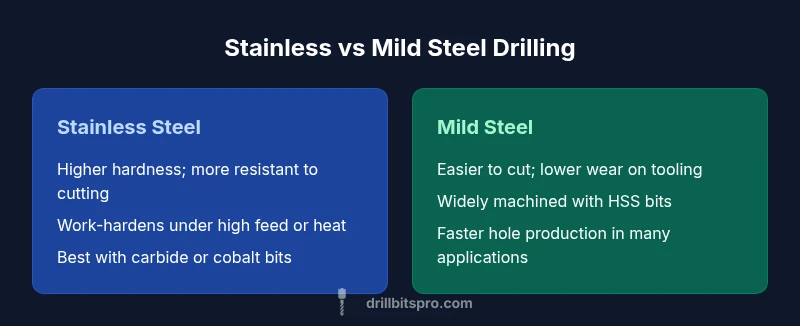
Is stainless harder to drill than mild steel? In most cases, yes. Stainless alloys resist cutting due to chromium and nickel content and tend to work-harden under aggressive feeding. With carbide or cobalt drill bits and carefully controlled speeds, feeds, and lubrication, you can achieve clean holes similar in quality to mild steel. Mild steel, by contrast, machines more easily with standard HSS bits when kept at moderate feeds.
Is stainless harder to drill than mild steel? Key factors
The core question is is stainless harder to drill than mild steel, and the answer hinges on alloy composition, tooling, and process controls. When you encounter stainless steels—especially austenitic grades—the combination of high chromium and nickel content makes the material more resistant to cutting. In practice, stainless also shows a tendency to work-harden if the feed is too aggressive or the cut is interrupted. For many projects, the difference in machinability is not a verdict against stainless, but a reminder that tooling and technique must match the material.
Material properties that affect drilling
Hardness, elasticity, and carbide-forming elements influence drill performance. Stainless steels generally have higher hardness in the heat-affected zone and a greater resistance to rapid chip formation, which can slow drilling and raise tool wear. Mild steel offers lower hardness and a wider processing window, making it forgiving for beginners and for larger-diameter holes where tool deflection is a concern. The key is recognizing that stainless’s corrosion resistance comes with a trade-off in machinability, whereas mild steel’s simplicity rewards faster setup and throughput.
Drill bit selection for stainless vs mild steel
Bit choice is the most decisive factor in a successful drill job. For stainless, carbide-tipped or cobalt-containing tools are strongly preferred due to their higher hot hardness and wear resistance. HSS bits can work, but they dull quickly and wear unevenly when drilling stainless. For mild steel, high-speed steel (HSS) or cobalt bits often perform well, especially when coolant or cutting oil is used. When you’re choosing a bit, consider geometry: split-point tips and stubs with strong helixes help manage tough chips and reduce walk.
Speed, feed, and lubrication strategies
Drilling stainless requires a more deliberate approach to speed and feed than drilling mild steel. Start with lower spindle speeds and decrease the average feed during entry, then maintain a steady feed to avoid micro-welding of the chip. Use continuous lubrication or cutting fluid to cool the work and bit, which minimizes work hardening and extends tool life. In mild steel, you typically have more latitude with speeds and feeds and can often maintain productive feeds with standard lubrication. The takeaway is match the process to the material while avoiding hot spots and gummy chips.
Peck drilling, pilot holes, and hole quality
Peck drilling—drilling in short bursts with pauses—reduces heat buildup and improves chip evacuation when working with stainless. A pilot hole helps guide the drill and reduces wandering on tough surfaces. Proper chip evacuation is essential; clogged flutes raise temperatures and encourage work hardening. For mild steel, continuous drilling is often acceptable, but stainless benefits from deliberate retractions and cleaning to maintain clean, round holes and to limit burrs.
Grade considerations: what to know about 304 vs 316 and beyond
Stainless comes in many alloys; some grades are more challenging to drill than others. Austenitic grades (like common 304 and 316) resist cutting but respond well to carbide or cobalt tooling. Martensitic or precipitation-hardening grades behave differently and may respond more like hardened steels under certain conditions. In general, the higher the alloy content that improves corrosion resistance, the more critical your tooling and process controls become. When the project demands a precise, clean hole, expect to adapt tooling and technique to the specific grade.
Step-by-step practical drilling approach for most projects
- Select a carbide-tipped or cobalt drill bit for stainless and an HSS bit for mild steel. 2) Secure the work and confirm alignment to minimize deflection. 3) Apply a coolant or cutting oil to reduce heat; keep the bit cool. 4) Start at a conservative speed and a steady feed, then adjust based on chip formation, noise, and heat. 5) Use peck drilling for stainless to clear chips and prevent work hardening. 6) Deburr and inspect the hole quality before continuing to the next hole. 7) If the bit dulls quickly or the hole is inconsistent, reassess tooling or material and consider a sharper bit or a different alloy.
Common mistakes that worsen stainless drilling outcomes
Common mistakes include using too high a speed with an insufficient feed, ignoring lubrication, and forcing the bit into the material. In stainless, even small heat spikes can cause dramatic work hardening, making the hole harder to complete. Skipping pilot holes or neglecting chip evacuation also leads to oversized or misaligned holes. For mild steel, these mistakes are less likely to ruin a cut but can still shorten tool life and affect hole quality.
Practical tips by thickness and grade: quick guardrails
For thin stainless sheets, use a sharp carbide bit with light entry pressure and frequent pecking to evacuate chips. For thicker sections of stainless, maintain steady feeds and use continuous lubrication to manage heat across the cut. If the material is a high-nickel alloy, expect higher wear and adjust your tooling accordingly. For mild steel, emphasize edge quality and speed-to-throughput balance, keeping lubrication handy but not always mandatory.
Comparison
| Feature | Stainless Steel | Mild Steel |
|---|---|---|
| Hardness / machinability | Higher hardness; more resistant to cutting; greater work-hardening risk | Lower hardness; easier to cut; more forgiving |
| Tool wear risk | Higher wear with standard HSS; carbide/cobalt recommended | Lower wear with common HSS tooling |
| Recommended drill bits | Carbide-tipped or cobalt bits strongly preferred | Standard HSS bits are common and effective |
| Speeds & feeds approach | Slow to moderate speeds; steady feeds; use lubrication | Moderate speeds; balanced feed; typically less cooling needed |
| Hole quality considerations | Can achieve clean holes with proper tooling; watch for work-hardening burrs | Typically consistent hole quality with standard tooling |
| Tooling cost | Higher due to wear resistance requirements | Lower tooling costs; broad availability |
What's Good
- Stainless drilling can yield corrosion-resistant holes when finished properly
- With proper tooling, stainless holes can be clean and precise
- Carbide or cobalt bits extend tool life when drilling stainless
Negatives
- Stainless requires more expensive drill bits and stricter technique
- Increased risk of work-hardening if feeds are too aggressive
- Cooling and lubrication add steps and time
Carbide/cobalt tooling with controlled feeds makes stainless drilling predictable; mild steel remains easier.
Use carbide or cobalt bits for stainless and steady feeds with cooling. Mild steel can be machined with standard HSS tooling, offering faster throughput when tolerances permit.
Got Questions?
Is stainless steel harder to drill than mild steel?
Yes, stainless is generally harder to cut and can work-harden if fed aggressively. It requires tougher drill bits and careful control of speed and cooling to maintain edge life.
Yes. Stainless is tougher to cut and can work-harden, so use sharper carbide tools and careful speed, feed, and cooling.
Can I use regular HSS drill bits for stainless steel?
HSS bits can drill stainless, but they dull quickly and wear unevenly. For repeated stainless drilling, carbide or cobalt bits are recommended to maintain hole quality.
HSS can work, but carbide or cobalt bits last longer on stainless.
What speeds should I use when drilling stainless steel?
Use slower, controlled speeds with steady feeds. Adequate lubrication is essential to prevent heat buildup and work hardening during the cut.
Keep speeds slow and feeds steady, with good lubrication.
Should I lubricate when drilling mild steel?
Lubrication is beneficial for mild steel as well, reducing heat and prolonging tool life, though it is less critical than with stainless.
Lubrication helps mild steel—use it when possible.
Does grade of stainless affect drillability?
Yes. Austenitic grades (common alloys like 304/316) resist cutting more than martensitic grades and respond best to carbide or cobalt tooling with careful heat management.
Yes, different stainless grades drill differently; plan tooling accordingly.
What is the best way to avoid work hardening?
Maintain a steady feed, avoid stopping mid-cut, use adequate lubrication, and consider peck drilling to relieve heat buildup.
Keep a steady feed and lubrication to prevent work hardening.
Top Takeaways
- Choose carbide or cobalt bits for stainless drilling
- Keep speeds slow to moderate and maintain steady feeds
- Use lubrication and peck drilling to control heat
- Mild steel is easier to drill; expect quicker tool wear reduction
- Match tooling to alloy grade for best results