Drill Bit Sizes: Reading and Selecting the Right Bits for Every Job
A practical, data-driven guide to drill bit sizes, covering fractional inches and metric millimeters, how to read size markings, and how to choose the right bits for wood, metal, and plastic projects.


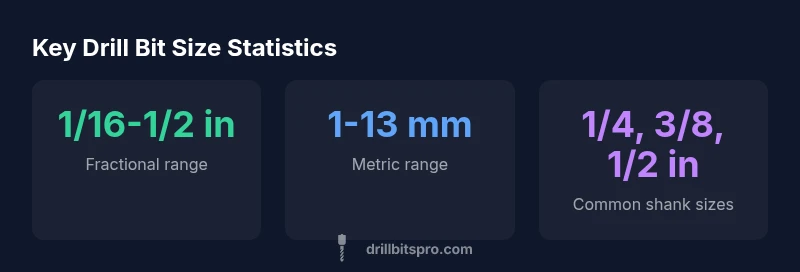
Drill bit sizes are defined by standard measurement systems—fractional inches, metric millimeters, and, in some catalogs, letter sizes. For most DIYers, the common range runs from fractional 1/16 inch up to 1/2 inch and from about 1 mm to 13 mm in metric. Understanding these scales helps you quickly pick the right bit for wood, metal, or plastic projects.
Understanding drill bit sizes
According to Drill Bits Pro, drill bit sizes are the diameter of the bore produced by the bit and are expressed in multiple unit systems depending on the market and the material. In North America, fractional inches are common for wood and metalworking, while many international brands publish in metric millimeters. Some catalogs also retain rare "letter" sizes used by specific manufacturers, but these are less common in modern DIY kits. The size of a bit directly influences the speed, wear, and quality of the hole you create; selecting the correct size is a fundamental skill for any workshop. When starting a new project, identify the material, desired hole diameter, and the intended tolerance. This helps you narrow to a practical range rather than chasing an exact figure in every scenario. Remember to account for tool wear and material behavior—wood may tolerate slightly larger holes, while metal often requires precision.
Reading size markings and standards
Drill bits typically display their diameter on the flute near the shank or printed on packaging. Fractional sizes use standard fractions (e.g., 1/8, 3/16), metric sizes use millimeters (e.g., 5 mm, 10 mm), and some bits show decimal equivalents (e.g., 3.2 mm). For accuracy, measure the bit with calipers or a dedicated gauge, especially when reusing older bits or when buying from discount brands. When in doubt, compare to a known reference hole or test in a scrap piece of your work material. Consistency in measurement reduces wandering and improves hole quality.
Fractional vs metric vs letter sizes: a quick guide
Fractional sizes are common in home improvement and are expressed as fractions of an inch (1/16, 1/8, 3/16, etc.). Metric sizes use whole millimeters (5 mm, 8 mm, 10 mm). Letter sizes are less standardized today but persist in some specialty sets. The key difference is unit conversion: you generally cannot accurately swap a 6 mm bit for a 1/4 in bit without confirming the equivalent diameter. Keep a small reference chart or a quick-dial gauge in your toolbox to avoid mismatches.
How to choose the right size for wood vs metal
Woodworking and metalworking demand different sizing logic. For wood, pilot holes are often smaller than the final hole to reduce splitting and to accommodate fasteners smoothly; you’ll typically need a hole diameter slightly smaller than the screw’s root. For metal, holes should match the fastener’s clearance or the bolt’s shank for a snug fit, depending on use. Start with a conservative test hole in scrap material, then adjust based on fit and thread engagement. Also consider the bit’s material and coating, as carbide-tipped bits cut more aggressively but can break if misused.
Practical sizing strategies and tools
Effective sizing relies on steady processes and the right tools. Use a drill size gauge or a set of pilot-hole charts to map desired hole diameters to corresponding bit sizes. When working with multiple materials, maintain a small reference binder with material-specific guidelines. For complex holes or nonstandard materials, a step drill bit or a taper bit can reduce the need to switch sizes repeatedly. Always deburr holes after drilling to ensure clean threads or smooth passage for fasteners.
Common mistakes and how to avoid them
Common mistakes include assuming a bit’s diameter without verification, ignoring material type, and drilling at incorrect speeds or feeds. Dull bits wander easily and can overheat, shortening tool life. Always start with the smallest diameter that will do the job and increase only after confirming the hole’s alignment and fit. Clamping the workpiece securely and using center punches or guides reduces drift and improves accuracy.
Implementing drill bit sizes in projects: a sample workflow
A practical workflow starts with the project plan and hole requirements. Gather size references for each operation, select bits by material compatibility, and measure new bits against a trusted gauge. Before you drill, clamp workpiece, mark the center, and test a pilot hole in a scrap piece. As you assemble, verify that hole diameters align with fasteners and components. This disciplined approach minimizes mistakes and improves overall quality.
Overview of major drill bit size standards
| Type | Diameter range (inches/mm) | Notes |
|---|---|---|
| Fractional (inches) | 1/16–1/2 | Common for DIY wood/metal |
| Metric (mm) | 1–13 | Broad international standard |
Got Questions?
What are the main systems of drill bit sizes?
Drill bits are sized in fractional inches, metric millimeters, and sometimes letter codes. Most DIY tasks use fractional or metric sizes, and packaging typically lists the diameter clearly.
Drill bit sizes come in fractions, millimeters, or letters; check the packaging and measure if needed.
How do I read a size on a drill bit?
The diameter is usually printed on the shank or packaging. For accuracy, verify with calipers or a gauge.
Look at the bit’s diameter on the shank or packaging and double-check with a caliper if you’re unsure.
Which size should I use for pilot holes in wood?
Pilot hole size depends on the screw and wood type. Start smaller than the screw root, and adjust based on fit.
Start with a smaller pilot hole than the screw root and test for fit.
What’s the difference between fractional and metric sizes?
Fractional sizes are inches (fractions like 1/8), metric sizes are millimeters (e.g., 3 mm). Don’t assume one maps exactly to the other without checking a conversion chart.
Fractions are inches, metric are millimeters; convert if needed.
How can I prevent drill bit wandering?
Center-punch the mark, clamp the workpiece, use sharp bits, and drill at proper speeds.
Center-punch, clamp, keep bits sharp, and use correct speed to avoid wandering.
“Mastering drill bit sizes isn’t just about picking the closest diameter—it’s about matching material, bit geometry, and drill speed to minimize wandering, heat, and premature wear.”
Top Takeaways
- Know your units: fractional inches and millimeters dominate drill sizes.
- Always verify size with a gauge or calipers before drilling.
- Match hole size to material: wood tolerates small variance, metal requires precision.
- Use pilot holes and proper deburring to improve hole quality.
- Keep a reference chart handy for quick size conversions.