How to Tell Drill Bit Size: A Practical Guide
Learn how to accurately identify drill bit size (diameter) using calipers, gauges, and markings. This step-by-step guide covers imperial and metric sizing, essential tools, measurement methods, and common mistakes to avoid for clean, precise holes.


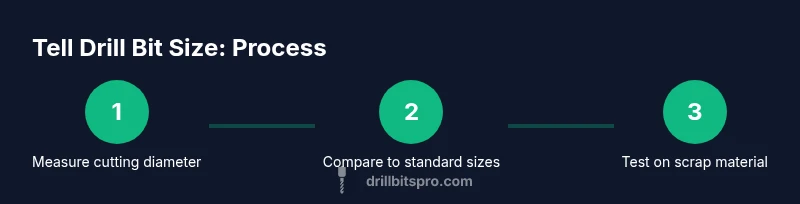
You tell drill bit size by identifying the cutting diameter in either imperial or metric units. Use a caliper or size gauge to measure the tip, check for any markings on the bit or packaging, and compare the result to standard sizes. If markings are worn, measure and convert using a trusted chart, then verify with a test hole.
What is drill bit size and why it matters
Drill bit size refers to the diameter of the bit’s cutting portion, not the shank. The size determines the final hole diameter and influences how parts fit, how much material is removed, and whether a fastener will pass cleanly. For DIY projects and professional jobs alike, using the correct size minimizes rework and preserves workpiece integrity. As you compare bits, remember that the shank diameter may differ from the cutting diameter, especially on certain bit styles. In this guide, we’ll break down how to tell size accurately and how to choose the right size for your task. According to Drill Bits Pro, getting the size right from the start saves time, reduces waste, and improves overall results for both wood and metal projects.
Imperial and metric sizing: a quick primer
drill bit sizes come in two primary systems: imperial (inches) and metric (millimeters). Imperial sizes commonly use fractional inches such as 1/8" or 3/16", while metric sizes are expressed in millimeters like 3 mm or 6 mm. The same hole size can be represented in two ways depending on the system you’re using, so it’s important to consistently convert and compare using a reliable chart. For example, a 1/4" bit is roughly 6.35 mm. When you’re in a mixed-tool environment, having a quick reference to convert between inches and millimeters helps you stay accurate across tasks. Drill Bits Pro’s analysis shows that consistent unit use reduces measurement errors in multi-material projects.
Tools to measure drill bit size
- Digital caliper (preferred for precision): measures the cutting diameter directly across the tip.
- Drill size gauge or drill-diameter gauge: quick-reference tool to find the closest standard size.
- Ruler or tape measure: a reasonable backup for quick checks, especially when calipers aren’t handy.
- Magnifier or loupe: helps when markings are faint or worn.
- Sharpie or marker: label measured sizes for traceability.
- Notepad or app: record measurements and conversions for future reference.
Note: Always ensure your tools are calibrated and clean before taking measurements. Drilling with a dirty or miscalibrated gauge leads to inaccurate results and potential rework.
Step-by-step: determine the size of a drill bit you already own
- Gather your measuring tools and a scrap piece of material similar to your workpiece. 2) Hold the bit firmly in a vise or clamp so it cannot move. 3) With a caliper, measure the cutting diameter across the tip at the widest point. 4) If the caliper shows a decimal (e.g., 0.125 in or 3.2 mm), note it. 5) If you have a size gauge, try to slide the bit into the closest matching hole. 6) Compare your measurement to a size chart to identify the nearest standard size. 7) Mark the identified size on your notes and test on a scrap hole to confirm fit. 8) If the bit is worn, remeasure with a new bit for accuracy and repeat the verification with scrap material. 9) Record the final size in your project log.
Tip: Always zero your caliper before measuring and avoid measuring a dull edge, which can misrepresent the diameter.
Step-by-step: determine the size from markings or packaging
- Inspect the bit near the cutting edge and along the shank for stamped or etched numbers or fractions. 2) If you see a marking like 1/8" or 3 mm, record it as the cutting diameter. 3) If the size isn’t visible, check the packaging for the listed diameter and cross-check with your measurement. 4) When in doubt, use a caliper to verify the size against the packaging listing. 5) For mixed sets, confirm that the bit you’re using matches the intended size by testing on scrap material. 6) Note that some specialty bits may use color codes or color bands rather than numeric sizes. 7) Update your project log with the confirmed size and any unit conversions.
Pro tip: If the markings are faint or worn, rely on precise measurement rather than guessing.
Converting between inches and millimeters (and choosing the nearest standard size)
Converting between imperial and metric sizes is common when combining tools or parts from different suppliers. A quick conversion: 1 inch equals 25.4 millimeters. When you measure a decimal value in inches (for example, 0.201"), use a reliable chart or calculator to find the closest standard size in your preferred system (e.g., 1/4" or 6 mm). In most shop scenarios, selecting the nearest standard size with a tiny clearance ensures the hole is neither undersized nor oversized. Drill Bits Pro recommends always testing on scrap material to confirm a precise fit before committing to a project.
Note: Never assume a perfect match—the difference between sizes can matter for fasteners, threading, and fit.
Common mistakes and how to avoid them
- Mistake: Using the shank diameter instead of the cutting diameter for hole sizing. Correction: Focus on the cutting diameter when selecting a drill size for holes.
- Mistake: Ignoring worn markings. Correction: Always measure with calipers to confirm size.
- Mistake: Skipping unit consistency (mixing inches with millimeters). Correction: Choose one system per project and convert carefully.
- Mistake: Relying on rough eyeballing. Correction: Use precise tools and test on scrap material.
- Safety note: Hold the workpiece securely to prevent slips and potential injury while measuring and drilling.
By keeping these pitfalls in mind, you’ll improve accuracy and reduce rework. The Drill Bits Pro team emphasizes meticulous measurement as the foundation of clean, precise holes.
Real-world scenarios and practical tips
- Woodworking: When drilling large clearance holes for dowels, start with a slightly smaller pilot hole and test fit on scrap. Use the pilot hole size as your baseline, then ream to the final diameter if needed.
- Metalworking: For clean-through holes, measure the intended screw or bolt diameter and select a hole slightly larger to accommodate thread clearance. Use a sharp bit with proper lubrication.
- Plastic: Plastic can melt or crack if the hole is too large; measure the nominal hole required for the fastener and choose a size that allows for a snug fit without excess force.
Brand notes: In practice, sharpened bits and properly calibrated tools reduce heat buildup and improve hole quality. Drill Bits Pro’s guidance highlights that precise sizing reduces tool wear and ensures consistent results across materials.
Authority sources and further reading
- OSHA official site for general tool safety and measurement practices: https://www.osha.gov
- Britannica article on drills and drilling: https://www.britannica.com/technology/drill
- NIST (National Institute of Standards and Technology) on measurement standards and conversions: https://www.nist.gov
These sources provide foundational information on measurement accuracy, tool safety, and unit conversions that support the techniques outlined in this guide.
Quick recap: telling drill bit size at a glance
To tell drill bit size quickly, measure the cutting diameter with a caliper, compare to a size gauge if available, check for markings on the bit or packaging, convert if necessary, and verify on scrap material before drilling. Consistency in units and relying on the confirmed measurement are the two biggest drivers of accuracy.
Authority sources (inline references)
- OSHA: https://www.osha.gov
- Britannica: https://www.britannica.com/technology/drill
- NIST: https://www.nist.gov
Tools & Materials
- digital caliper(Ensure jaws are clean and zeroed before measuring.)
- drill size gauge(Helpful for quick matching to standard sizes.)
- ruler or steel scale(Backup measurement tool when calipers aren’t available.)
- magnifying loupe(Useful if markings are faint or worn.)
- marker(Label measured sizes for future reference.)
- notebook or digital log(Record size, units, and test results for each project.)
Steps
Estimated time: 15-25 minutes
- 1
Prepare and secure your workspace
Clear the area and clamp the workpiece if needed. This ensures you can measure accurately without the bit slipping. Gather all measuring tools before you begin.
Tip: Zero the caliper with no object in the jaws to ensure an accurate baseline. - 2
Identify measurement units to use
Decide whether you’ll measure in inches or millimeters for the current project. Consistency is key; mixing units leads to mistakes when selecting the final drill size.
Tip: If you’re unsure, start with inches for common wood sizes and convert later if needed. - 3
Measure the cutting diameter with a caliper
Place the bit so the jaws contact the cutting edges at the tip. Read the diameter across the widest part. Take at least two measurements at different spots to confirm consistency.
Tip: Measure at the very tip where the diameter is most uniform; avoid the ferrule or shank areas. - 4
Check for markings on the bit or packaging
Look along the bit’s length and near the end for stamped sizes like 1/8" or 3 mm. If markings are missing, rely on your caliper measurement and a size chart.
Tip: Worn markings are common on older or high-use bits; measurement is the safe fallback. - 5
Convert and confirm using a size chart
If your measurement isn’t a standard size, consult a trusted conversion chart and pick the nearest standard size. When drilling, it’s safer to choose the next larger size if precise fit is critical.
Tip: Always test on scrap material to confirm fit before proceeding to the actual workpiece. - 6
Record and reuse your verified size
Log the confirmed size, units, and the test results for future reference. This helps maintain consistency across projects and tools.
Tip: Label your drill bit size in your project log and keep a reference chart handy.
Got Questions?
What is the most common drill bit size used for pilot holes?
Pilot holes vary by material and screw size, but many wood projects use sizes in the range of 1/8" to 3/16" as a starting point. Always measure the screw’s shank diameter and choose a pilot slightly smaller for a clean bite.
Pilot sizes usually range from about 1/8 inch to 3/16 inch for wood, but always measure the screw and test on scrap.
Can I tell drill bit size by feel or sight alone?
No. Feeling or guessing can lead to inaccurate hole diameters. Always measure with a caliper or use a size gauge, and verify with a test hole on scrap material.
Don’t rely on feel—measure with calipers and test on scrap first.
What’s the difference between shank size and cutting diameter?
The shank is the portion that goes into the chuck; the cutting diameter is the actual hole-size the bit removes. For hole-sizing, always use the cutting diameter.
Shank is what goes in the chuck; cutting diameter is the hole size you care about.
How do I convert metric drill sizes to inches?
Convert by multiplying the millimeter size by 0.03937 to get inches, or use a trusted conversion chart. For practical accuracy, round to the nearest standard inch or metric size and verify with a test.
Multiply by 0.03937 or use a conversion chart, then verify with a test hole.
What should I do if markings are worn off a drill bit?
Rely on precise measurement with calipers and match to a size chart. Mark the measured size on your log and use that for your project, rather than guessing.
If markings are worn, measure with calipers and confirm with a chart.
How can I ensure accuracy when drilling through metal?
Use cutting oil or lubricant, use a sharp bit, and select a size that allows for adequate clearance. Start with a pilot hole if needed and verify the fit with a test piece.
Use lubricant, sharp bits, and test on scrap metal first.
Watch Video
Top Takeaways
- Know the cutting diameter is the key measure for size.
- Use calipers or size gauges for precision, not just the shank.
- Keep units consistent and test on scrap material first.
- Read markings when present; rely on measurement when worn.
- Record verified sizes for future projects.