How big is a 5 16 drill bit? A practical sizing guide
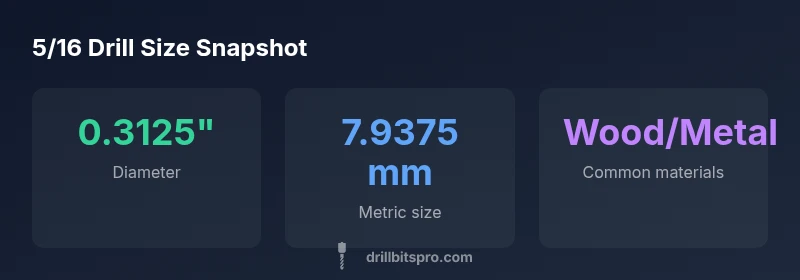
Learn how big a 5 16 drill bit is, convert to millimeters, and apply practical tips for wood, metal, and plastic drilling. A precise diameter of 0.3125 in (7.9375 mm) guides better fits and cleaner holes.


how big is a 5 16 drill bit? The 5/16 drill bit has a diameter of 0.3125 inches (7.9375 mm). This means holes drilled with this size are just under 8 mm wide in metric terms. For practical projects, this size is commonly used for medium pilots in wood, plastic, and light metal work.
How big is a 5/16 drill bit? Understanding sizing and measurement
When people ask how big is a 5 16 drill bit, they’re really asking about the drill’s diameter and how it translates into hole size for real-world tasks. The 5/16 size refers to the fractional inch measurement 5/16, which equals 0.3125 inches. In metric terms, that diameter is approximately 7.9375 millimeters. This precise figure matters because the hole size directly influences the fit of fasteners, the strength of the surrounding material, and the ability to clear shavings or debris during drilling. If you’re drilling through wood, you’ll often want a snug pilot hole for the screw’s core, while metal work may call for a hole size that matches a bore tolerance or a bushing’s inner diameter. In practice, keep your measurement consistent across tools by using the same scale (fractional inches, decimal inches, or millimeters) rather than switching back and forth. A quick conversion table or a caliper can save you from guessing and avoid undersized or oversized holes that compromise joints or assemblies.
Reading sizing charts and conversions
Sizing charts for drill bits use three common systems: fractional inches (like 5/16), decimal inches (0.3125"), and metric millimeters (approximately 7.94 mm). Each system has its own advantages. Fractional inches are intuitive when you already have a kit labeled in fractions; decimal inches are precise for digital calipers; metric is universal in many shops. To translate quickly: 5/16" equals 0.3125" exactly and equals about 7.9375 mm. If you prefer rounding, many users round to 0.313" or 7.94 mm; the slight difference usually doesn’t matter for many hobby projects, but it can matter in tight tolerances. Professionals might maintain separate gauges so they don’t confuse sizes during a busy job. In addition to diameter, consider flute length and overall bit length, especially if you’re drilling through thick material or into a recessed area. For most beginners, keep a small conversion cheat sheet handy and verify measurements with a caliper before drilling. That extra step helps avoid rework and damaged workpieces.
Material-specific guidance: wood, plastic, and metal
Different base materials respond differently to the same drill diameter. In soft wood, a 5/16 hole can be drilled with moderate feed pressure and higher speed to achieve a clean, round hole, especially if you deburr afterward. In hardwoods, a traditional pilot hole around 60-70% of the screw root diameter reduces splitting; for a 5/16 hole, a smaller pilot helps maintain fiber integrity. Plastics, including acrylics and polycarbonate, heat easily. Use sharp bits, slow feed, and a back-off technique to prevent melting or tearing the edges. When drilling metal, lubrication and slower speeds are essential to manage heat and prevent work hardening. For steel and aluminum, consider using high-speed steel or cobalt bits designed for metalworking, and consult the manufacturer’s speed recommendations. Always clamp the workpiece securely and remove chips frequently to avoid binding. Across materials, the 5/16 inch diameter creates a substantial hole; ensure your target bolt, rivet, or fastener will fit with minimal play while still allowing lubrication or coatings to seal effectively.
Tolerances and hole quality: what to expect
No drill bit is perfect, and hole size varies slightly due to tool wear, drill press runout, and material hardening. For standard high-speed steel bits, expect tolerances in the range of about ±0.005 to ±0.010 inches, depending on drill quality and setup. In practice, measure the hole after drilling with a caliper or plug gauge before assembly. If you discover a hole is too large, you can try re-drilling with a fresh bit or using a smaller pilot hole to guide the final hole. If it’s too small, you’ll need to expand carefully, usually with progressively larger bits and careful deburring. Deburring is not just cosmetic; it improves fit and reduces stress concentrations. In projects where precise hole size is critical, consider using a drill press with a fixed chuck and a depth stop, along with a quality jig to reduce runout. Remember that a well-lubricated metal hole, or a cleanly drilled wooden hole with dust removed, will tend to meet tolerance expectations more consistently than a rushed, freehand drill job.
Step-by-step drilling a clean 5/16 hole
- Prepare: select a sharp 5/16 drill bit and ensure it is appropriate for the material. Inspect for burrs and clean the bit before starting.
- Mark: use a center punch or awl to locate the drill point precisely. Tie a piece of tape around the drill bit to gauge depth if needed.
- Secure: clamp the workpiece firmly to prevent movement during drilling.
- Drill: start with a light touch to establish a guide, then increase speed or feed as appropriate for the material. For metal, apply cutting fluid and keep the bit cool; for wood, let the bit cut with gravity and steady pressure.
- Deburr: remove burrs with a deburring tool or round file; for plastics, take care to avoid chipping.
- Inspect: measure the hole diameter with a caliper to confirm it’s within tolerance, and check for concentricity with the workpiece features.
- Finish: clean away chips and re-check fit with the intended fastener or insert. If needed, use a chamfer bit to ease edge entry.
Common mistakes and troubleshooting
Common mistakes include using a dull bit, drilling at too high a speed for metal, or applying too much downward pressure that chips the material. Forgetting to clamp the workpiece and letting it drift will yield angled holes. Not using lubrication on metal can cause premature wear and heat buildup; plastics can melt at high speeds. Another frequent error is confusing sizes by mixing metric and imperial measurements mid-project. If you see smoke, hear a squeal, or notice excessive burrs, stop, reassess the bit condition, and adjust speed, lubrication, and depth accordingly. Maintaining a clean work area and periodically checking tool wear will save time and improve results. Rotate to a fresh bit when signs of dullness are present, and store your drill bits in a proper case to prevent nicking tips or bending the shank.
Quick reference: imperial vs metric cheat sheet
- 5/16 inch = 0.3125 inch = 7.9375 mm (approximately 7.94 mm)
- Rounding: 0.313" or 7.94 mm is sufficient for most non-critical work
- Material considerations: wood, metal, plastic; choose speed and lubrication accordingly
- If you’re unsure about hole size, measure with calipers and compare to the fastener root diameter
- When working with metal, always wear PPE and use clamps and a depth stop if available.
5/16 inch vs metric sizing
| Size (in) | Size (mm) | Notes |
|---|---|---|
| 5/16 | 7.9375 | Exact diameter: 0.3125 in (7.9375 mm) |
| 8 mm (approx) | 8.00 | Metric approximate equivalent |
| Notes | N/A | Fraction vs metric sizing reference |
Got Questions?
What is the exact diameter of a 5/16 drill bit?
A 5/16 drill bit has a diameter of 0.3125 inches (7.9375 mm). The decimal equivalent is exact, so you can rely on those figures for precise hole sizing.
The 5/16 drill bit measures 0.3125 inches across, which is about 7.94 millimeters.
How do I convert 5/16 to millimeters?
Convert by multiplying inches by 25.4. Since 5/16 equals 0.3125 inches, it converts to about 7.94 mm.
0.3125 inches equals roughly 7.94 millimeters.
What RPM range should I use for metal with a 5/16 bit?
For metal, use slower speeds and lubrication. Typical ranges are about 800–1500 RPM depending on the metal and bit quality; adjust to avoid overheating.
Metal drilling with a 5/16 bit benefits from lower RPM and lubrication.
Can I use a 5/16 drill bit for pilot holes in wood?
Yes. A 5/16 bit can be used for larger pilot holes in wood; match the pilot size to the screw root and wood type to minimize splitting.
Yes, you can, but pick a pilot size suitable for the wood and screw.
What are common mistakes when using a 5/16 drill bit?
Dull bits, rushing, not clamping the work, or mixing metric with imperial sizes mid-project are common mistakes that lead to poor results.
Dull bits or rushing cause rough holes.
How do I deburr after drilling a hole?
Use a deburring tool or sandpaper to remove burrs and chamfer the edge; this improves fit and reduces stress.
Deburr after drilling to smooth the edge.
“Size consistency matters for clean holes and proper fit. Even tiny wear or misalignment can affect performance.”
Top Takeaways
- Know the 5/16 diameter exactly: 0.3125 in (7.9375 mm).
- Use a caliper or conversion chart to avoid guessing.
- Choose appropriate material technique (wood, plastic, metal).
- Expect tolerances of roughly ±0.005–0.010 in with common bits.
- Deburr and verify hole size before assembly.