How to Tell If a Drill Bit Is for Metal or Wood
Learn practical, step-by-step methods to identify whether a drill bit is designed for metal or wood, with visual clues, testing tips, and safety guidance from Drill Bits Pro.


By inspecting geometry, markings, and performing a quick material test, you can tell if a drill bit is for metal or wood. Look for tip shape and flute design: brad-point and spur-style tips indicate wood; spiral bits with uniform flutes and HSS or cobalt marks indicate metal. Always test on scrap and wear eye protection.
Visual Clues: markings, shank, and coating
Identifying whether a drill bit is intended for metal or wood begins with careful observation of markings, the shank, and any coatings. Wood bits often carry branding and shapes associated with woodwork, such as brad-point or spur tips, and may have shiny or plain finishes. Metal bits frequently indicate their material via markings such as HSS, cobalt, or carbide labels, and may feature coatings like black oxide or titanium nitride to improve heat resistance. The shank can also offer clues: metal-focused bits tend to use a robust, cylindrical shank compatible with a variety of drilling setups, while some wood bits emphasize simplicity and ergonomics for hand-held use. According to Drill Bits Pro, when in doubt, confirm by cross-referencing manufacturer codes and material designations printed on the bit.
- Inspect the printed markings and logos under good light.
- Note any material abbreviations like HSS, M2, or cobalt.
- Check the coating: black oxide and TiN are common on metal bits; wood bits are often uncoated or has a simple finish.
- Test on scrap material after thorough inspection to verify performance.
Tip geometry and usage indicators
The geometry of the tip is one of the most reliable telltales for metal vs wood bits. Wood bits frequently show brad-point or spur-type tips designed to start cleanly in wood fibers, guiding the bit for an accurate pilot hole. Metal bits nearly always have a standard twist-point or split-point that focuses cutting energy along a narrow line, reducing wandering in hard materials. Coatings also offer cues: cobalt and certain hard coatings are common on metal-ready bits, while wood-only bits usually lack these coatings or use more basic steels. In practice, you’ll notice that wood bits have more pronounced cutting edges to slice through soft fibers, whereas metal bits are built for higher heat and tougher material removal. Drill Bits Pro notes that matching point geometry to the material saves time and reduces wear.
Material families and what they imply
Knowing the typical material families helps you decide quickly. Wood bits fall into families like brad-point, spade, and standard twist bits, all designed to cut through wood with ease and clean edges. Metal drilling uses high-speed steel (HSS) or cobalt alloys, sometimes carbide-tipped for very hard work. These metal bits emphasize heat resistance and wear resistance since metal drilling generates more heat and can dull blades faster than wood drilling. Visual cues—such as a uniform spiral, lack of a center spur, or a labeled HSS/coating—are strong indicators of metal bits, while a pronounced center tip and wood-specific shapes hint at wood use. Drill Bits Pro recommends verifying with the product page or datasheet when possible.
Coatings and material compatibility
Coatings are more than cosmetic; they tell you about intended use. TiN or TiAlN coatings are popular on bits designed for metal because they reduce wear and heat buildup. Black-oxide coatings also indicate metal-oriented bits that benefit from improved durability. Wood bits are often simpler in construction, rarely featuring high-end coatings, because they’re typically used with softer materials. If you see a cobalt designation, that’s a strong sign the bit is designed for metal, especially when paired with a robust twist geometry. When identifying a mystery bit, cross-check the coating, the tip geometry, and any printed material codes against a trusted catalog or Drill Bits Pro’s guidance.
Safe, low-risk testing: procedure and precautions
When you can’t determine the material from inspection alone, a controlled test on scrap material is a safe, practical approach. Clamp a small scrap piece of the test material and run the bit at a moderate speed with light pressure. Wood bits should cut easily through wood without excessive smoke or dulling; metal bits should perform with less resistance in metal scraps and may heat up more noticeably. If the bit dulls quickly or produces fine powder rather than chips appropriate to the material, stop and reassess. Always wear eye protection, use clamps, and start with a pilot hole to minimize binding. Drill Bits Pro emphasizes safety and methodical testing as essential parts of identification.
How to interpret results: wood vs metal outcomes
If the bit produces clean wood chips and easy advancement with little heat, it’s likely a wood-oriented bit. If chips are fine and metallic, heat buildup is noticeable, or the bit cuts with reduced efficiency in wood, it’s more likely designed for metal. Some bits are dual-purpose or specialized, but those are rare; when in doubt, switch to a confirmed wood bit for wood and a confirmed metal bit for metal to avoid tool wear or damage. Recording the outcome in a quick workshop log helps you avoid misidentification in the future, especially for project-critical tasks.
Tip: Keep a labeled bin of bits by usage to speed up material selection during busy schedules.
Safety and storage considerations
Always keep drill bits clean and dry to prevent corrosion and jamming. Wipe away debris after use and store bits in their original cases or labeled organizers so you can locate the right type quickly. When transporting bits, ensure the surfaces are not rubbing together to avoid dulling the cutting edges. Regularly inspect bits for nicks or chips and replace them when needed to maintain precision. Drill Bits Pro recommends routine maintenance and organized storage as foundational to accurate material identification.
Quick-reference identification checklist
Use this at a glance to distinguish between metal and wood bits:
- Tip: brad-point or spur points usually indicate wood; twisted points with uniform spirals tend toward metal.
- Markings: HSS, cobalt, carbide suggest metal; standard steels suggest wood or general-use bits.
- Coatings: TiN/ TiAlN coatings lean metal; bare steel or simple finishes suggest wood or mixed-use.
- Test results: wood shows clean, fiber-cutting action; metal shows rapid chips, greater heat, and possible dulling on wood.
- Material compatibility: wood bits for wood, metal bits for metal. When in doubt, consult the datasheet or Drill Bits Pro guidance.
This checklist keeps you from guessing and helps you choose the right bit quickly.
Next steps and practice exercises
Practice on a variety of scrap materials and record your findings. Create a small reference card for your shop listing common bit kinds and their primary materials. Consider labeling tooling with color codes or text to indicate material compatibility, which reduces time spent deciding during projects. Regularly revisit your references to stay updated with new bit designs and coatings as technology evolves. Drill Bits Pro suggests building a habit of verification before every drilling task to extend bit life and improve results.
Visual ID cheat sheet (printable)
For quick decisions, keep a printable cheat sheet near your drill station. It should include:
- Common wood tip shapes (brad-point, spur)
- Common metal bit shapes (twist with split-point)
- Coatings associated with metal bits (TiN, TiAlN, black oxide)
- Example markings to look for (HSS, cobalt, carbide)
Having this at hand reduces misidentification and speeds up workflow in DIY projects and professional jobs alike.
Summary: key takeaways for identifying drill bits
- Inspections of tip geometry, coatings, and markings are your first pass.
- Wood bits favor brad-point tips; metal bits favor twist points with metal-specific coatings.
- Always test on scrap in a controlled setup before using on a real project.
- Proper storage and labeling reduce future misidentification and waste.
Final thoughts: why accuracy matters in drilling
Choosing the wrong bit can dull faster, overheat, or produce poor results. By learning to tell metal vs wood bits, you reduce tool wear, increase drilling accuracy, and complete projects more efficiently. Drill Bits Pro’s analysis emphasizes careful inspection, testing, and safe practice as the core steps to reliable identification and successful drilling outcomes.
Tools & Materials
- Safety glasses or goggles(Impact-resistant ANSI Z87.1 or equivalent)
- Clamp or vise(Keeps scrap material secure during test)
- Calipers or ruler(For measuring bit diameter and shank size)
- Scrap wood(For wood-bar test sample)
- Scrap metal(For metal-bar test sample)
- Marker or label maker(Label findings and future use)
- Small hand drill or drill press(Use at low speed for testing)
- Lubricant or cutting oil(Helps reduce heat during metal testing)
Steps
Estimated time: 20-40 minutes
- 1
Inspect the bit markings
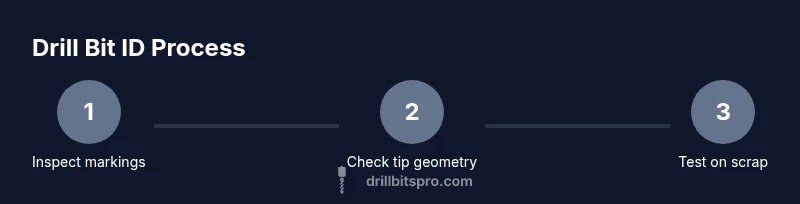
Begin by examining any printed codes, logos, and material designations on the bit. Look for terms like HSS, cobalt, carbide, and the dimension lines. Use a magnifier if needed to read small print. This step helps you quickly separate metal-rated bits from wood-rated ones, based on manufacturer data.
Tip: Document markings with a photo for future reference. - 2
Check tip geometry
Look at the tip: brad-point or spur-like tips indicate wood; standard twist or more pronounced point variants indicate metal suitability. Note whether the point is sharpened for hard materials or designed to start cleanly in wood fibers.
Tip: If unsure, move to the next test step rather than guessing. - 3
Evaluate flute design
Wood bits tend to have broader, more open flutes suitable for chopping wood fibers. Metal bits often have tighter spirals designed to efficiently remove metal chips. The spacing and depth of the flutes can guide your decision.
Tip: Use a bright light to better view flute geometry. - 4
Assess coating and material cues
Coatings such as black oxide, TiN, or cobalt content strongly suggest metal use. Wood bits are usually plain steel with minimal coating. Coatings serve both heat management and wear resistance functions.
Tip: Coatings aren’t a guarantee—verify with the datasheet when possible. - 5
Set up a controlled test
Clamp a scrap wood piece and a scrap metal piece. Run the bit at a modest speed with light pressure on each material. Observe cutting behavior, heat buildup, and chip shape to infer material compatibility.
Tip: Always wear eye protection; keep hands away from spinning bits. - 6
Test on wood scrap
If the bit cuts wood fibers cleanly with standard wood chips and little resistance, it’s likely wood-oriented. Monitor for any scorching or smearing which would indicate improper use.
Tip: If no wood cutting occurs, re-evaluate the bit’s classification. - 7
Test on metal scrap
In metal, expect finer chips and more heat before dulling. If cutting is easy and consistent, the bit likely suits metal. If it struggles quickly, it may be a wood bit or a dual-use bit.
Tip: Use gentle lubricant for metal testing to reduce heat and wear. - 8
Record your results
Note the results for each material, including speed, pressure, and outcome. This creates a reference for future usage and decreases trial-and-error time on new projects.
Tip: Keep a dedicated lab notebook or digital log. - 9
Label the bit for next use
Place a label with material designation and recommended use near the bit. This practice saves time and avoids misapplication on future jobs.
Tip: Use color-coded labels if you have multiple bit sets. - 10
Store properly
Return the bit to its case or a dedicated compartment after testing. Store away from moisture to prevent corrosion and maintain cutting integrity.
Tip: Keep bits dry and separated to prevent chips from dulling edges.
Got Questions?
How can I tell if a drill bit is metal- or wood-specific without testing?
Inspect tip geometry and markings first; wood bits typically have brad-point or spur tips, while metal bits favor twist points and metal designations like HSS or cobalt. Coatings can also signal metal use. If uncertain, move to a controlled scrap test.
Check the tip shape and any material codes printed on the bit; wood bits have brad-points, metal bits often show HSS or cobalt and may have protective coatings.
Are there any universal drill bits that work well on both wood and metal?
Some bits are marketed as versatile, but performance varies. Metal-focused bits work better on metal and can perform poorly or wear quickly in wood, and vice versa. For best results, use the appropriate bit for the material.
There are some dual-purpose bits, but they’re not ideal for either material. Use the correct bit for wood or metal.
What coatings indicate a metal drill bit?
Coatings like black oxide, titanium nitride (TiN), and cobalt content are common on metal drill bits. Wood bits are less likely to have these coatings and often use plain steel or lighter finishes.
Coatings like TiN or cobalt usually mean the bit is for metal, while wood bits use fewer coatings.
Why does tip angle matter for metal vs wood drilling?
Different materials require different tip geometry. Wood benefits from tips that start cleanly and guide fibers, while metal needs geometry that reduces wandering and handles heat.
The angle helps control cutting start and reduces wandering in wood or metal.
Can I use a wood bit on metal if I drill slowly?
Not recommended. Wood bits dull quickly on metal, heat up faster, and can seize or wander. Use a metal-specific bit for metal drilling.
No—wood bits aren’t designed for metal and will wear out or jam.
What should I do with a mystery bit after testing?
Record the outcome and label the bit for future use. Store it in its own labeled compartment to avoid reuse mistakes.
Note the results, label the bit, and store it separately.
Watch Video
Top Takeaways
- Inspect markings and coatings to identify material intent.
- Brad-point or spur tips suggest wood; standard twists imply metal.
- Test on scrap material to confirm before use.
- Coatings like TiN indicate metal tooling; bare steel often signals wood use.
- Label and store bits correctly to avoid future misidentification.