Which drill bits are for metal: A practical guide
A data-driven, practical guide to metal drilling bits, covering HSS, cobalt, carbide tips, coatings, lubrication, and best practices for DIYers and pros.


Which drill bits are for metal? For most metal projects, start with high-speed steel (HSS) bits, preferably cobalt or carbide-tipped for tougher alloys. Use cutting oil or lubricant, set medium to high speed, and back off if shiny chips appear. For softer metals like aluminum, standard HSS often suffices, but speed and lubrication matter as much as sharpness.
Which drill bits are for metal and why this choice matters
If you’re wondering which drill bits are for metal, the short answer is: use metal-rated bits — typically HSS (high-speed steel) with cobalt or carbide tips for harder alloys. For softer metals like aluminum, standard HSS can work, but speed and lubrication matter just as much as sharpness. Drill bits designed for wood or plastic will heat up, dull quickly, or snap when used on metal. A sharp bit and a steady feed prevent work hardening and extend bit life. For DIY projects and professional jobs alike, understanding this basic biology of metal drilling saves time and reduces frustration.
Materials and coatings explained
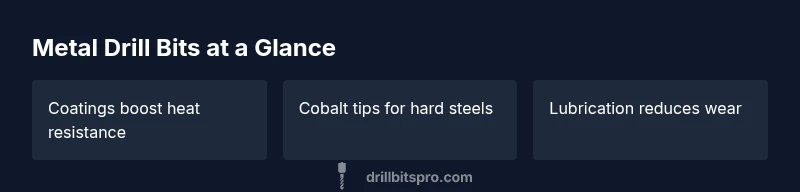
Metal drilling bits come in several materials and coatings. The most common are HSS, HSS-Co (high-speed steel with cobalt), and carbide-tipped variants. HSS bits are versatile and affordable but can wear quickly on stainless or hardened steels. Cobalt alloys increase heat resistance and maintain hardness at higher temperatures, making them better for hard metals. Carbide tips last longest and cut cleanly in tough alloys, but they are more brittle and expensive, so use them for critical holes or hard materials only.
When to choose cobalt or carbide
If you regularly drill hard metals or stainless steel, cobalt or carbide-tipped bits significantly outperform standard HSS in terms of heat resistance and edge retention. For softer metals, HSS or HSS-Co still work well, but you’ll gain longer life with cobalt or carbide when the bit has to work through tough patches or deeper holes. Select coatings like TiN or ZrN when frequent drilling is expected.
Drilling technique for metal
Lubrication reduces friction, heat, and wear. Apply a light, continuous flow of cutting oil or coolant as you drill, especially on stainless steel or deep holes. Start at a low feed rate and gradually increase as the bit bites. Use peck drilling (periodically retracting the bit) to clear chips and prevent clogging. Always secure the workpiece with clamps, and back the hole with a slower initial entry to avoid walking.
Common mistakes and how to avoid them
Avoid dull or chipped bits by maintaining sharpness. Don’t rush the process with high speeds on hard metals; overheating dulls the edge regardless of material. Don’t skip lubrication. Avoid using wood or masonry bits on metal; they are not designed for the job and will fail quickly.
Tool maintenance and longevity
Keep bits clean and dry, and store them in a protected rack to prevent chipping. Sharpen blades regularly with an appropriate sharpening file or tool, or replace worn bits. Inspect coating wear and replace bits when coated areas start to peel, as this reduces heat resistance. Regular maintenance extends bit life and ensures consistent results.
Choosing the right size and type for your project
Plan hole size and pilot hole requirements before drilling. For thicker metals, use a step-down approach: pilot hole slightly smaller than the final hole, then move to the final size with a sharp edge. For clearance and debris management, consider using drill guides or jigs.
Comparison of metal drilling bit types
| Bit Type | Best For | Notes |
|---|---|---|
| HSS (High-Speed Steel) | General-purpose metal drilling (soft to mid hardness) | Budget-friendly and versatile; works on aluminum and mild steel |
| HSS-Co (Cobalt Alloy) | Harder steels, stainless steel | Better heat resistance; longer life on tough metals |
| Carbide-tipped | Hard, hardened alloys | Superior wear resistance; more brittle; higher cost |
Got Questions?
What drill bit is best for metal?
For most metal drilling, HSS-Co or carbide-tipped bits are best, depending on the metal hardness. Start with a sharp bit and use lubrication.
For metal, HSS-Co or carbide-tipped bits are usually best; keep it sharp and lubricated.
Can I use regular wood bits on metal?
No. Wood bits dull quickly and can chip or break when used on metal. Use bits rated for metal instead.
Wood bits aren’t suitable for metal drilling; switch to metal-rated bits.
Do I need lubricant when drilling metal?
Yes. Cutting oil or coolant reduces heat, minimizes wear, and improves hole quality, especially on stainless steel.
Yes, use cutting oil to keep bits cooler and last longer.
Can I drill stainless steel with HSS bits?
HSS bits can drill stainless steel if they’re cobalt-enhanced or carbide-tipped and maintained sharp, but expect more effort and heat.
Stainless steel may require cobalt or carbide-tipped bits.
What RPM should I use for metal drilling?
Use lower to moderate speeds for metal; high speeds generate heat and dull the bit quickly. Check the bit’s guidelines.
Keep the speed low to moderate when drilling metal.
How can I extend drill-bit life?
Keep bits sharp, lubricate, and avoid overheating. Store properly and replace worn bits promptly.
Keep sharp and lubricated; don't overheat the bit.
“Sharp, properly secured bits and controlled feed are the keys to clean holes in metal; temperature management matters as much as speed.”
Top Takeaways
- Identify metal hardness before selecting bits
- Choose HSS-Co for tougher metals
- Lubrication reduces heat and wear
- Use pilot holes and controlled feed
- Invest in quality bits for longevity