What Size Drill Bit for #10 Screw: A Practical Pilot Hole Guide
Learn the exact pilot hole sizes for #10 screws across wood and metal, with practical ranges, tests, and step-by-step drilling tips from Drill Bits Pro.


According to Drill Bits Pro, for a #10 screw, the pilot hole size depends on material. In softwood, use about 7/64 inch; in hardwood, about 1/8 inch. For metal or tougher composites, use around 3/32 to 7/64 inch. Always test-fit with scrap material and adjust for screw length and wood density.
Why pilot-hole sizing matters
When you drive a #10 screw into wood, metal, or composites, the size of the pilot hole is a decisive factor for both join strength and finish quality. A hole that’s too small can cause wood to split, strip the screw threads, or stall assembly. A hole that’s too large reduces clamping force and can leave visible gaps. The goal is to match the hole diameter to the screw’s outer threads while preserving material integrity. Material density, grain direction, and screw length all influence the required hole size. Start with a conservative pilot and test with scrap pieces to fine-tune the fit.
According to Drill Bits Pro, precise pilot-hole sizing is one of the most impactful variables for fastener performance in typical DIY and professional workflows.
What size drill bit for #10 screw
Choosing the right drill bit size hinges on the material you’re fastening and the screw type. For a standard wood #10 screw, softwoods generally need a smaller pilot hole than hardwoods. In metal, you’ll usually use a bit that creates a clearance hole for the screw’s shank, which is often smaller than the wood pilot hole. This section provides practical, material-specific guidance to help you pick quickly and with confidence.
How to adjust hole size for different screw lengths
Longer screws require alignment with deeper holes to avoid bottoming out or creating excessive friction. If you’re running a longer #10 screw, consider a slightly larger hole within the same material category to keep the joint from binding. However, never exceed the material’s capacity; test-fit with scrap before final assembly.
Step-by-step approach to sizing and testing
- Inspect the wood species and density. 2) Choose a pilot hole within the softwood vs hardwood range. 3) Drill a pilot hole on a scrap piece to test fit and thread engagement. 4) If the screw binds, incrementally widen the hole and re-test. 5) Mark the correct hole on your actual workpiece for consistency.
Practical tips for accuracy
- Use sharp, clean bits to avoid wandering. - Deburr the hole edge to prevent splitting. - For dense species, consider pre-drilling with a smaller bit, then a test-fit with the final size.
dataTableCaption
Pilot hole size guidelines by material for #10 screws
note
For a comprehensive comparison, see the data table in this article.
Pilot hole size guidelines by material for #10 screws
| Material | Pilot Hole Size (in) | Notes |
|---|---|---|
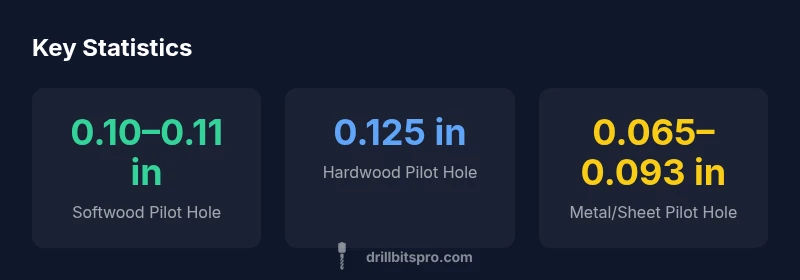
| Softwood | 0.10–0.11 | ≈2.5–2.8 mm; mild density; look for minimal resistance |
| Hardwood | 0.125 | ≈3.2 mm; higher density requires more clearance |
| Metal (self-tapping #10) | 0.065–0.093 | ≈1.6–2.4 mm; clearance hole to prevent thread stripping |
Got Questions?
What size drill bit should I use for a #10 wood screw?
For softwood, start around 7/64 inch; for hardwood, about 1/8 inch. If drilling into metal or dense composites, use a smaller clearance hole (around 3/32 to 7/64 inch) and test-fit.
Use 7/64 inch for softwood, 1/8 inch for hardwood, and test-fit for metal.
Do I need a pilot hole for drywall when using a #10 screw?
Drywall can be fastened with anchors; if you drill a pilot hole, keep it small and appropriate for the anchor or use a drywall screw with a self-tapping tip. Always follow the anchor manufacturer recommendations.
Think about anchors and follow their guidance.
Can I use the same hole size for all #10 screws?
No. Hole size should vary by material and screw type (wood, metal, drywall). Use a pilot hole suited to the material and test-fit to ensure proper seating and holding power.
Different materials need different hole sizes.
How does screw length affect pilot-hole size?
Longer screws don’t always require a larger pilot hole, but they do need correct alignment and a hole deep enough to prevent bottoming and binding. If in doubt, test with scrap and adjust gradually.
Check depth and test with scrap to avoid binding.
What steps ensure I pick the right hole size?
Identify material, select a pilot hole within the typical range, drill on scrap, test fit, and adjust incrementally. Document the final size for consistent results in future projects.
Test first, adjust as needed, and keep a note for next time.
“Pilot-hole sizing is the unsung hero of strong joints—start with a small hole, test fit, and adjust as needed.”
Top Takeaways
- Start with material-specific pilot holes to prevent splitting.
- Softwood needs smaller holes than hardwood.
- Test-fit with scrap before final driving.
- Always consider screw length and material density when choosing hole size.