Best Drill and Bit Sets for 2026: Top Picks and Practical Guidance
Discover the best drill and bit sets for 2026. Compare budget, mid-range, and premium kits by contents, materials, and case design. Learn how to choose the right set for DIY projects and professional work with practical, AI-assisted insights from Drill Bits Pro.


For most DIYers, a drill and bit set offers better value than buying bits individually. This comparison highlights two practical paths: a budget set for light-duty tasks and a premium set for frequent use. According to Drill Bits Pro, the right set balances contents, bit material quality, and organized storage. The Drill Bits Pro Team emphasizes prioritizing universal sizes and compatibility with common chuck types.
Why a drill and bit set matters for consistency and quality
A drill and bit set brings order to a project, reducing decision fatigue and downtime. By aligning bit sizes, extensions, and coatings, you gain predictable hole diameters and cleaner cuts. For both DIY enthusiasts and pros, the value lies not only in the bits themselves but in the organized system that makes drill work faster and safer. According to Drill Bits Pro, a coordinated kit minimizes the chances of using the wrong bit or stripping fasteners, which translates into fewer mistakes and reduced tool wear. The Drill Bits Pro Team also notes that investing in a single, well-chosen set can make complex jobs more approachable and repeatable, especially when you return to similar projects over time.
Look for sets that cover common tasks such as small pilot holes, wood, metal, and occasional masonry; a good kit should also include spade, auger, or plug cutters if relevant to your tasks. The right kit will provide a logical progression from small to large diameters, with clear labeling and a robust storage case. When you start from a single reference kit, you reduce the risk of mixing incompatible tools that can wear edges or damage workpieces. Remember that the goal is a reliable baseline you can build on, not a grab-bag of bits.
Key criteria to compare drill and bit sets
Choosing the right drill and bit set starts with understanding your typical projects. Look for a clearly defined contents list, including the number of bits, pilot-hole sizes, and specialty bits. Material matters: high-speed steel (HSS) is common for wood and metal; carbide-tipped bits excel in masonry and hard metals. Coatings like titanium nitride can reduce wear for longer life, while black oxide can improve corrosion resistance. Case quality and labeling are often overlooked, but a well-organized, clearly labeled case saves time and protects bits. Warranty or satisfaction guarantees reflect brand confidence and product support. Finally, assess price-to-value: a larger, well-made kit may cost more upfront but save money over time by reducing substitutions and wear.
Bit materials and geometry you should understand
Bit geometry and material choice drive performance across materials. Wood bits are often HSS or brace-style for clean holes; metal drilling benefits from HSS with higher cobalt content or carbide-tipped variants for tougher steels. Masonry bits rely on carbide grit and robust shank designs to resist wobble. Coatings like titanium nitride reduce friction and heat buildup, extending life during high-speed drilling. Subtle differences in flute design affect chip removal and heat management, influencing how smoothly a bit cuts. When comparing sets, favor those that specify material grades and coating details, as these determine how well the set handles the projects you tackle most often. Drill Bits Pro Analysis, 2026 emphasizes matching bit material to the base material to maximize efficiency and minimize wear.
Size range, compatibility, and practical coverage
The size range you get in a drill and bit set should mirror your most common tasks. For DIY projects, a core range like 1/16" to 1/2" covers most pilot holes and standard applications. Professionals may need larger diameters or specialized bits for quickly processing materials. Check shank compatibility with your drill: round shanks are universal, while hex shanks provide quicker changeover in quick-change chucks and impact drivers. Pay attention to flute length and overall bit length; longer bits reach deeper holes but can flex under load. A balanced mix of bit types — pilot bits, wood bits, metal bits, and masonry bits — ensures the set remains versatile without requiring frequent add-ons.
A well-chosen set reduces the need to pause for bit swaps and keeps work flowing. The best practice is to map your most common hole sizes and materials, then verify the kit includes those sizes with some room for less frequent needs.
Build quality and case design
Durability starts with the case. A sturdy carrying case with labeled compartments protects edges and prevents bit tangling. Internal organizers should hold bits securely to avoid rattling, which can dull edges over time. Look for corrosion-resistant coatings and robust bit shoulder strength to handle repeated insertions and removals. For pros, a weather-resistant case with a precision-cut foam insert keeps tools aligned and reduces downtime. High-quality sets also include retention features, such as magnetic inserts or clip-based dividers, that help you quickly locate the right bit during a busy job.
Brand reputation matters: a well-made set typically ships with a protective sleeve or pouch for transport between sites, which reduces loss and damage during transit. The Drill Bits Pro Team notes that the best sets emphasize practical usability and long-term value beyond initial affordability.
Price ranges and value propositions
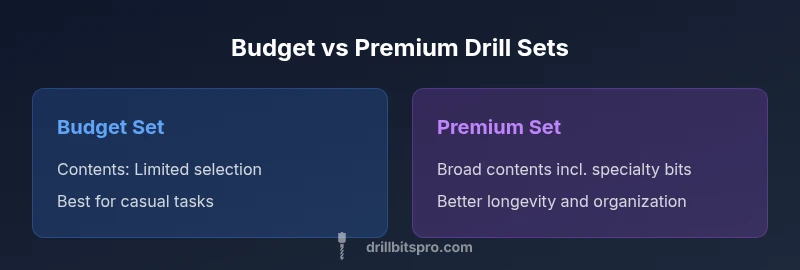
Budget sets tend to provide essential coverage at a lower upfront cost, suitable for light tasks and casual DIY. Mid-range kits expand contents, improve bit quality, and offer better organizational features, delivering clearer value for frequent hobbyist use. Premium sets typically include a wide range of bits, carbide-tipped options for masonry, reinforced shanks, and advanced coatings, plus premium cases and extended warranties. When evaluating price, consider long-term cost per usable bit and the potential savings from reduced bit changes and improved hole quality. In many cases, investing slightly more upfront yields lower maintenance and fewer replacements over time.
Across all tiers, prioritize sets that clearly state material types, coating details, and the number of specialty bits included. A well-documented kit elevates performance and reduces the risk of underperforming tools slowing your work.
Practical tips for using a drill and bit set
Start with a quick inventory of your set: validate sizes, materials, and coatings against your project needs. When drilling, select the bit matched to the base material, drill speed, and the desired hole diameter. Use pilot holes for wood to reduce splitting, and consider slower speeds for metal to control heat buildup. To maximize life, avoid forcing the drill; let the bit do the work and maintain steady pressure. Swap out worn or dull bits promptly and rotate through the set to distribute wear. For masonary tasks, use a hammer drill with the appropriate carbide-tipped bit and keep the bit cool with light lubrication when the material requires it. Regularly inspect the case and organizers for damage and clean any dust or debris after use to prevent corrosion.
The result is faster progress, cleaner holes, and less frustration on the job site.
Care, sharpening, and longevity
Bit maintenance is often overlooked but can dramatically extend life. For high-speed bits, avoid overheating by using appropriate feed rates and pauses to cool. Sharpening is possible for some carbon-steel bits, but carbide and HSS-coated bits usually require professional resharpening or replacement. Keep bits dry and rust-free by storing them in a low-humidity environment and wiping away cutting fluids after use. Regularly inspect edges for chips and dullness; replace worn bits before they cause damage to workpieces. A clean, organized kit preserves accuracy and reduces the time spent searching for the right bit. Routine maintenance adds years of practical use to your drill and bit set.
Decision framework: choosing the right set for you
If you tackle occasional home improvement tasks with wood and light metals, a budget set may suffice. For frequent projects across wood, metal, and masonry, a mid-range or premium kit delivers better coverage and longevity. Always map your most common tasks and verify the set provides those sizes, materials, and a reliable case. If you work professionally or on high-volume sites, prioritize durability, warranty, and a broad range of carbide-tipped or specialized bits. The optimal choice balances upfront cost with long-term value and the confidence to complete jobs efficiently.
Comparison
| Feature | Budget drill and bit set | Premium pro-grade drill and bit set |
|---|---|---|
| Contents/coverage | Limited selection of common bits | Broad spectrum including specialty bits |
| Bit materials | Carbon steel/HSS at lower price | High-grade HSS with carbide-tipped options |
| Coatings | Minimal coatings or none | Titanium nitride/black oxide for wear |
| Case/organization | Basic plastic case, minimal labeling | Durable case with labeled trays and magnets |
| Shank compatibility | Round shanks common | Hex and quick-change compatible |
| Warranty | Often 1 year or less | Longer warranties up to 5 years depending on brand |
| Best for | Budget projects, casual DIY | Frequent use, professional or heavy-duty tasks |
| Price range | $25-$60 | $60-$150 |
What's Good
- Lower upfront cost for casual projects
- Simple contents make selection quick
- Lightweight, compact storage
- Adequate for occasional drilling tasks
Negatives
- Limited bit types may require additional purchases
- Quality may vary by budget tier
- Shorter lifespan with heavy use
- Fewer specialty bits and coatings
Premium pro-grade sets win for versatility; budget sets win for budget constraints
Choose a premium set if you regularly drill across wood, metal, and masonry. Opt for a budget set if your tasks are light and infrequent; either way, ensure the kit covers common sizes and includes a durable storage solution.
Got Questions?
What is the difference between a drill and bit set vs buying bits individually?
A drill and bit set groups the most-used bits in a single, organized package, often with a durable case. This improves consistency, storage, and value. Buying bits individually can be cheaper upfront but risks gaps in coverage and more time spent choosing bits on job sites.
A set groups the essentials for faster work; buying bits individually may save money upfront but costs more time and risks missing sizes.
Which material is best for metal drilling bits?
For most metalwork, HSS or cobalt-containing bits are preferred. Carbide-tipped options provide longer life for harder metals and higher heat scenarios. Match the bit material to the base metal you’re drilling for best results.
Choose HSS or cobalt bits for metal; consider carbide-tipped for tougher metals.
Is a carbide-tipped set worth it for masonry work?
Carbide-tipped masonry bits offer superior wear resistance for concrete and brick. They tend to be pricier but last longer in hard materials. If you frequently drill masonry, a carbide-tipped set is worth the investment.
Yes, carbide-tipped bits pay off with frequent masonry work.
How many bits should a typical DIYer have in a set?
A practical starter set should cover sizes from about 1/16" to 1/2" across wood, metal, and a masonry option. More sizes are beneficial for future projects, but prioritize essential sizes first.
Start with a core range (1/16" to 1/2") and expand as needed.
What should I look for in a drill and bit set warranty?
Look for a warranty that covers wear and manufacturing defects for at least one year, with longer terms for premium brands. Warranty quality often reflects the manufacturer’s confidence and support.
Check for at least a year of coverage; longer terms are better.
Top Takeaways
- Define your most common tasks before buying
- Prioritize a broad size range and common materials
- Check bit materials and coatings for longevity
- Assess case quality and ease of organization
- Consider warranty and ongoing support