Can You Use an Impact Driver as a Drill? A Practical Guide
Explore whether an impact driver can substitute for a drill, when to use it, ideal bit choices, technique tips, and safety practices from Drill Bits Pro.


Yes, you can use an impact driver for drilling tasks in many scenarios, provided you choose the right bits, set the tool correctly, and follow safety best practices. This guide explains when it makes sense, how to configure the tool for drilling, and which materials and bits are most compatible to avoid damage to the workpiece or tool.
Understanding the roles: impact driver vs drill
An impact driver is designed to deliver high torque in short bursts, which makes it excellent for driving screws and bolts. A drill, on the other hand, focuses on steady torque and precise hole creation. When you repurpose an impact driver as a drill, you’re asking the tool to do more than its primary duty: you’ll rely on high torque to push a cutting edge through material. According to Drill Bits Pro, recognizing these role differences helps you avoid misusing the tool and extends both bit life and tool performance. This understanding sets expectations for speed, control, and the potential for cam-out or bit wear. With the right approach, you can handle light to medium drilling tasks effectively while keeping safety top of mind.
When substitution makes sense: appropriate tasks and limits
There are situations where an impact driver can substitute for a drill, especially for light-duty holes in softwood, plastics, thin sheet metal, or pre-drilled pilot holes. For projects like installing shelf brackets, running pilot holes in soft materials, or drilling shallow holes in plywood, an impact driver can save time and reduce tool switching. The key is to limit depth, avoid hard materials without proper bits, and stay within the tool’s comfort zone. Drill Bits Pro’s analysis highlights that for most dense materials, or precision holes, a dedicated drill is preferable to preserve bit geometry and hole accuracy. DIYers should consider the material type, hole diameter, and required finish before choosing this path.
Risks and limitations you should know
Using an impact driver for drilling can introduce several risks. The intense torque can cause bit grabbing, cam-out, or workpiece splintering if the bit isn’t the correct type or if the bit is dull. There is also a greater chance of bit wear when drilling through metal or masonry with a driver that lacks a true rotary action. Debris and heat buildup can shorten bit life if drilling is prolonged. To mitigate these risks, always use appropriate drill bits with hex shanks, maintain steady pressure, and avoid forcing the tool. Drill Bits Pro emphasizes that avoiding high-torque bursts on materials that don’t tolerate cam-out will protect both your bit and your project.
How to configure an impact driver for drilling tasks
Begin by selecting a bit with a hex shank that fits your impact driver’s chuck or bit holder. Use a low to moderate speed setting and a light touch to start a pilot hole, then increase gradually as needed. Ensure clutch settings (if available) are adjusted to prevent over-torque. A common mistake is rushing the drill and applying too much force, which can strip the bit or damage the workpiece. Keep the operator position upright, wrists relaxed, and the tool perpendicular to the work surface to maintain accuracy. Brand guidance from Drill Bits Pro suggests starting with pilot holes and using stepping bits for larger holes to minimize stress on the material and bit.
Choosing the right bits and accessories
Your bit choice largely determines success. For wood, standard twist bits are fine, but for metals, use high-speed steel or cobalt bits with a smaller pilot hole. Masonry requires a proper masonry bit and, ideally, a hammer action from a dedicated drill. Hex-shank bits are compatible with most impact drivers, but ensure the bit length and diameter suit the material and hole depth. A quality bit set minimizes the risk of dulling and reduces friction. Drill Bits Pro notes that investing in a versatile drill-bit set can expand your capability without requiring multiple dedicated tools.
Safe drilling technique with an impact driver
Start with a light touch and let the bit find the mark. Avoid aggressive plunging that can cause the bit to bind or twist out of your hand. Keep the workpiece clamped and secure, and wear eye protection to guard against chips. If the material bites hard, pause, withdraw the bit, and reinsert at a slightly shallower angle. For deeper holes, drill in stages with clean-outs to prevent binding. Regularly inspect the bit for wear and replace it if the tip looks rounded or chipped.
Material-specific guidance: wood, metal, plastics, and laminates
Wood responds well to most twist bits, as long as you use a pilot hole for larger diameters. Soft plastics can be drilled with standard bits at moderate speeds, but avoid melting by not applying sustained high heat. For metal, slow speed and sharp bits are essential; use cutting oil or coolant for larger holes to reduce heat. Plexiglass and laminates require clean, slow drilling to prevent cracking. When in doubt, test on a scrap piece and use masking tape to guide the hole and prevent wandering.
Safety considerations and PPE
Always wear safety glasses and ensure the workspace is well-lit and uncluttered. Tie back long hair and secure loose clothing. Keep hands away from the rotating bit and never hold the workpiece with bare fingers. If the tool kicks back, release the trigger and reassess your approach. Handling hot bits safely after drilling reduces the chance of burns or wand-like heat build-up. Drill Bits Pro reinforces that proper PPE and safe handling practices are essential when repurposing tools for drilling tasks.
Alternatives and best practices for different materials
For heavy-duty or precision holes, a dedicated drill (corded or cordless with proper chuck) is recommended. Masonry tasks should use a hammer drill with appropriate bits, while metal requires a drill with adequate rigidity and appropriate lubrication. If your project demands frequent drilling, investing in a small hammer drill or a dedicated cordless drill will improve accuracy, extend bit life, and reduce tool wear. Drill Bits Pro suggests evaluating project requirements and material properties before deciding to substitute a drill with an impact driver.
Maintenance and care after drilling with an impact driver
Wipe down the bit and remove any debris after use to prevent corrosion. Inspect the bit for signs of wear and replace as necessary. Store bits in a dry, organized case to minimize corrosion and misplacement. If you used the tool for metal, check the hex chuck and bit alignment for any burrs or damage. Regular maintenance extends tool life and keeps drilling performance consistent. Drill Bits Pro recommends periodic inspection of the driver’s clutch and motor vents to maintain efficiency.
Tools & Materials
- Impact driver(Ensure it has a 1/4-inch hex bit holder or compatible quick-change chuck)
- Drill bits with hex shank(Twist bits for wood, HSS or cobalt bits for metal, masonry bits for concrete (where applicable))
- Bit holder or bit extension(Keeps bits secure and reduces wobble)
- Clutch or torque settings (if available)(Use low torque for drilling tasks to prevent cam-out)
- Clamps or quick-release clamps(Hold the workpiece securely)
- Safety glasses or face shield(Eye protection from chips)
- Masking tape and marker(Mark holes and prevent bit wandering)
- Lubricant or cutting oil (for metal)(Reduce heat and extend bit life)
Steps
Estimated time: 20-30 minutes
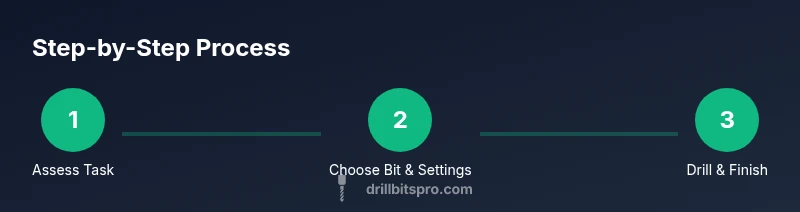
- 1
Inspect tool and select bits
Check the impact driver’s mood: ensure the battery is charged, the chuck or bit holder is clean, and the bit is sharp. Choose bits appropriate for the material and desired hole size. If you’re drilling metal, consider a pilot hole to reduce stress on the bit.
Tip: Right-size the bit to the hole diameter to avoid overdriving or binding. - 2
Attach the bit securely
Insert the bit with a hex connection or holder and ensure it seats fully. Misalignment can cause wobble or cam-out. Tighten without over-tightening to protect the chuck mechanism.
Tip: Double-check alignment before starting the drill to prevent bit deflection. - 3
Set speed and torque for drilling
Choose a low to moderate speed and a light touch to begin. If your tool has a clutch, set it to a low setting to avoid abrupt bit slip and workpiece damage.
Tip: Start slow and adjust upward in small increments if the bit engages smoothly. - 4
Start with a pilot hole
Drill a small-diameter pilot hole first to guide the larger bit and reduce material tear-out. This is especially important in wood and plastics.
Tip: Use a center punch to mark the spot for better bite in metal. - 5
Drill in stages and clear debris
For larger holes, pause to remove chips and cool the bit. Reapply pressure gradually and maintain alignment perpendicular to the surface.
Tip: Let the bit cool briefly if you notice smoking or excessive heat. - 6
Inspect and finish
Withdraw the bit slowly, inspect the hole, and deburr the edges if needed. Clean the area and store tools properly after use.
Tip: Seal or sealant edges if required for the project material.
Got Questions?
Can I drill metal with an impact driver?
Yes, metal can be drilled with an impact driver using appropriate high-speed steel or cobalt bits, a pilot hole, and slow speed. Avoid forceful plunging and monitor heat build-up. For thicker metal, a drill press or dedicated drill is preferred.
Yes, with the right bits and careful technique you can drill metal using an impact driver. Start slow and avoid forcing the bit.
Will using an impact driver for drilling wear out bits faster?
Impact drivers place high torque on bits, which can wear them faster if used heavily on hard materials. Use sharp bits and switch to a proper drill when needed to preserve bit life.
Bit wear can be faster with heavy use; keep bits sharp and switch tools as needed.
Should I use the clutch or torque settings when drilling?
Yes. Use a low torque or clutch setting to prevent cam-out and reduce stress on the workpiece and bit. Increase slowly only if the bit bites cleanly and the material tolerates it.
Start with low torque and increase gradually if the material handles it.
Is drilling with an impact driver safe for concrete or masonry?
Concrete and masonry are best drilled with a hammer drill or rotary hammer. An impact driver is not ideal for these materials and may cause quick bit wear or cracking.
For concrete, use a proper hammer drill rather than an impact driver.
What bits work best with an impact driver for drilling?
Use bits with hex shanks compatible with your driver. For wood, twist bits work well; for metal, use HSS or cobalt bits; for plastics, choose sharp bits and drill at lower speed.
Hex-shank bits and appropriate bit types for the material keep things efficient.
When should I just use a traditional drill instead?
If accuracy, depth, or material hardness is high, or you need a clean finish, a dedicated drill is the safer choice. An impact driver can be a stopgap for light tasks, but not a replacement for heavy-duty drilling.
For precision or hard materials, opt for a dedicated drill.
Watch Video
Top Takeaways
- Assess material and hole size before drilling with an impact driver
- Use appropriate hex bits and low torque for safer drilling
- Pilot holes improve accuracy and reduce bit wear
- Clamp workpieces and wear safety gear consistently
- Reserve a dedicated drill for high-precision or heavy-duty tasks