How Much Do Drills Cost in 2026? A Practical Guide
Discover how much drills cost in 2026 with practical price ranges for entry-level, mid-range, and professional models. Learn budgeting tips, features that influence price, and smart buying strategies for DIYers and pros.


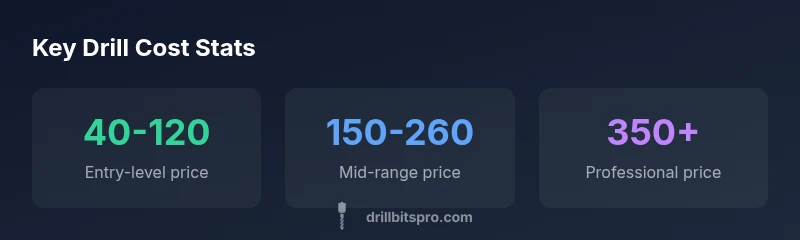
The typical price range for common drills varies by type, power, and features. For DIY use, entry-level corded drills often run around $40-$120, while mid-range hammer drills are usually around $150-$260, and professional SDS+ models can exceed $350. This article unpacks cost drivers and realistic budgets.
Price landscape in 2026: Understand the bands
The price landscape for drills in 2026 remains segmented by category, power source, and intended use. Basic entry-level corded drills typically appear in the low-to-mid hundreds of dollars, while cordless models tend to command a premium because you buy into a battery ecosystem. The Drill Bits Pro team found that, across DIY and professional segments, battery technology and motor design account for the majority of the sticker price. For many buyers, the choice between a simple, light-duty tool and a robust, masonry-ready machine is the single biggest determinant of cost. When budgeting, consider not just the initial purchase but also consumables like drill bits, batteries, and chargers, which add up over time. This is why a true cost estimate should reflect both upfront price and running expenses over the tool's life. For context, the cost landscape is also influenced by warranty terms and the availability of service networks, which can vary by region and retailer.
According to Drill Bits Pro, price stability in the entry segment can be impacted by promotions and store-specific bundling, while professional-grade tools reflect supplier support and parts availability. Planning around these factors helps buyers avoid overpaying and ensures you get a tool that fits your workload.
How to estimate your drill budget by use case
Most buyers fall into three archetypes: casual DIYers, weekend warriors, and professionals. Casual DIYers can justify an entry-level corded or lightweight cordless model for occasional tasks, usually in the $40-$120 range. Weekend warriors who tackle masonry or carpentry projects often opt for mid-range cordless or hammer drills in the $150-$260 range. Professionals who require high torque and reliability for daily use will lean toward SDS+ or heavy-duty hammer drills priced well above $350. Your budget should be guided by task frequency, material hardness, and battery ecosystem compatibility. If you already own a drill or a set of batteries, you can leverage them to cut incremental costs. Drilling drills should be matched to the most common materials you encounter; otherwise, you may waste money on tools you rarely use. Drill Bits Pro Analysis, 2026 emphasizes planning around use cases to avoid overspending.
Additionally, consider project cadence: a single masonry wall project might justify a mid-range hammer drill, whereas a light fixture install cycle may be well served by a budget corded option. By modeling your typical tasks, you can map price bands to practical outcomes and avoid impulse buys that sit unused in a toolbox.
What features drive price (and why)
Price increases are often driven by power, speed, and durability features rather than cosmetic details. Brushless motors deliver longer life and better efficiency but add cost. A key price swing comes from battery chemistry and capacity: Li-ion and higher amp-hour ratings add to price but save time through longer run-time. Chuck type and stroke length affect performance in concrete and metal drilling; more robust chucks support heavy tasks at higher RPM. Additional features such as variable speed triggers, adjustable torque, hammer action, and ergonomic design can push price upward. Finally, brand reputation and warranty terms influence perceived value; higher-end brands justify premium pricing through service networks and longer coverage. For buyers, it helps to map features to actual needs and avoid paying for capabilities you won't use.
Real-world testing shows that buyers who stick to essential features and a compatible battery ecosystem achieve better long-term value, especially when considering replacements and repairs. Drill Bits Pro analysis indicates that neglecting battery compatibility can lead to higher ownership costs over time.
Buying strategies to save money
Smart buying strategies help many buyers stretch their budget without sacrificing performance. Look for bundles that pair a drill with high-usage bit sets or replacement batteries; these configurations often deliver better per-use value. Consider refurbished or factory-reconditioned models from reputable sellers, which can carry meaningful discounts while still offering warranty. Time your purchase around major sales events and seasonality; end-of-year or back-to-school promotions can bring meaningful reductions. Compare total cost of ownership, not just sticker price: factor battery replacement costs, charger compatibility, and bit set availability. If you need a drill for occasional tasks, you might opt for a compact model with a short kit and plan to upgrade later. By combining sensible use-case assessment with pricing research, you can confidently select a drill that meets your needs without unnecessary overspend.
Another lever is to evaluate local inventory and regional promotions, as prices can vary significantly between retailers. According to Drill Bits Pro analysis, strategic timing and bundled purchases often yield the best overall value for DIYers and small shops alike.
Total cost of ownership beyond the sticker price
Total cost of ownership (TCO) includes more than the initial price. Battery life is a critical driver; replacing older batteries can cost as much as buying a new kit over time. Plan for spare batteries and a charger compatible with your selected drill, since you may need more runtime between charges in demanding tasks. Bit quality and availability influence ongoing costs; cheaper bits wear out faster and require more frequent replacements. Maintenance matters: keep the chuck clean, lubricate moving parts as recommended, and store tools properly to prevent rust. Warranty length and service network affect long-term costs and downtime. When you account for maintenance, battery lifecycle, and accessory costs, the apparent savings from a low-priced model may disappear quickly if it forces frequent replacements.
For buyers who use their drill heavily, investing in a slightly higher upfront price for better battery life and a robust warranty often pays for itself through reduced downtime and fewer replacements. Drill Bits Pro’s data-driven approach suggests projecting costs across a 3–5 year horizon to capture real ownership costs rather than focusing on sticker price alone.
Budget recommendations by scenario
- Entry budget (low): For light tasks, a basic corded model with a small bit set and a single spare battery can cover most home projects. Expect to stay near the $40-$120 range, but plan for eventual upgrade if you take on masonry work.
- Mid-range budget (mid): For versatile use, a cordless drill or hammer drill in the $150-$260 range balances performance and reliability. Add a mid-sized bit set and a spare battery for practical flexibility.
- Premium budget (high): For daily use and heavy-duty work, SDS+ and high-torque hammer drills are the best bet, typically $350 and up. Focus on batteries, bit quality, and service availability in your area.
The Drill Bits Pro team recommends aligning the budget with your typical workload and the materials you encounter most.
Common mistakes that inflate costs
Common missteps include buying the cheapest tool only to confront frequent failures or downtime. Another mistake is over-buying: investing in advanced features you won't use, such as high-speed settings or industrial-grade torque for light tasks. Ignoring the battery ecosystem during purchase can lock you into an expensive single-brand setup. Finally, neglecting maintenance or choosing low-quality bits leads to accelerated wear and more frequent replacements. By avoiding these mistakes and focusing on realistic usage, you minimize waste and extend the life of your drill. The bottom line: price matters, but total value over time matters more.
Price ranges by drill type and key considerations
| Drill Type | Typical Price Range | Key Considerations |
|---|---|---|
| Corded entry-level | 40–120 | Good for light tasks; no battery needed; limited portability |
| Cordless mid-range | 120–260 | Balanced power and portability; battery cost matters |
| Hammer drill mid-range | 150–260 | Masonry capability; weight and ergonomics matter |
| Professional SDS+ | 350+ | Maximum power for heavy-duty work; higher maintenance |
Got Questions?
What is the typical price range for entry-level drills?
Entry-level drills typically fall in the $40–$120 range, depending on corded vs cordless design and included accessories. These are best for light home projects and occasional use, with limited runtime and smaller bit sets.
Entry-level drills usually run around $40 to $120, depending on corded or cordless design and included accessories.
Are cordless drills more expensive than corded ones?
Cordless drills generally cost more upfront due to battery systems, motors, and battery packs. However, they offer portability and convenience for moving around a job site and can be cost-effective over time if you rely on cordless operation.
Yes, cordless drills usually cost more upfront because of batteries and motors, but they save you time and improve flexibility.
When should I upgrade from a consumer to a professional drill?
Upgrade timing depends on workload and material: if you frequently drill masonry, encounter high torque demands, or work daily, a professional or SDS+ drill is warranted. Expect higher upfront costs but longer service life and better reliability.
Upgrade when your tasks demand more power and durability than consumer models can provide.
Do refurbished drills come with warranties?
Refurbished drills can offer meaningful savings and often come with limited warranties. Always verify the warranty length, what it covers, and the seller’s return policy before buying.
Refurbished tools can be a good deal if they include a solid warranty and you buy from a trusted seller.
How does battery cost factor into total price?
Battery packs are a major component of total price. Decide on a kit with a battery count that fits your usage to avoid paying for extra packs you won't use.
Battery costs can be a big part of the price, so choose a kit that matches your needs.
What maintenance helps extend drill life and save costs?
Keep chucks clean, lubricate moving parts as recommended, store in a dry place, and replace worn bits promptly. Regular maintenance reduces downtime and extends tool life.
Regular cleaning and proper storage save money in the long run.
“Pricing reflects not just the sticker price but total ownership costs, including maintenance and battery life. A smart buyer weighs task needs, battery ecosystems, and support when budgeting for a drill.”
Top Takeaways
- Identify your task first to pick the right drill type
- Compare price bands, not just sticker price
- Factor battery life, batteries, and warranty into total cost
- Consider bundles to save on bits and accessories
- Plan for maintenance and battery replacement costs