How Much Does a Drilling Machine Cost? A Practical Guide
Explore realistic price ranges for drilling machines—from basic handheld drills to heavy-duty drill presses—plus factors that influence cost, value, and ongoing maintenance for DIYers and pros.


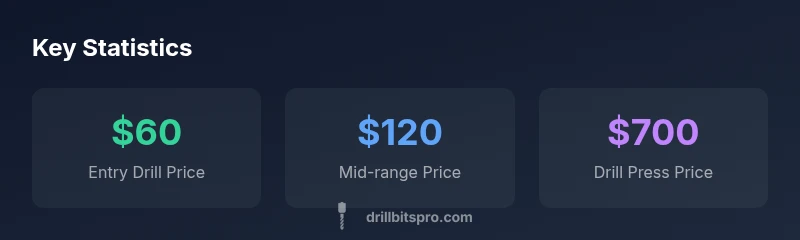
For most DIY buyers, basic handheld drills start around $20–$60, mid-range cordless models run about $80–$150, and professional-grade drill presses or heavy-duty units typically range from $200–$1,000, depending on features, build quality, and accessories.
Why price varies across drilling machines
Price is driven by a mix of performance specs, build quality, and intended use. Key factors include motor power and type (brushed vs. brushless), torque and speed control, chuck size, and the presence of a hammer function or SDS compatibility. Brand reputation, warranty length, and included accessories (bits, chucks, and bit sets) also influence the sticker price. Even within a single category, minor design choices—ergonomics, weight distribution, and vibration dampening—can shift the perceived value. While DIYers may prioritize light weight and battery life, professionals often weigh rigidity, precision, and serviceability. For the most informed decision, compare specs side-by-side and consider long-term cost of ownership, not just the upfront price.
wordCountInBlock":""} ,{
Categories and typical price ranges
Drills come in several broad categories that map to price bands:
- Basic handheld drills (corded or cordless): typically in the $20–$60 range for entry models; mid-range cordless variants with better batteries and longer life sit around $80–$150.
- Hammer drills: add percussion for masonry work; expect $60–$200 for consumer models and higher for pro-grade tools.
- Drill presses: stationary machines aimed at precision; price bands commonly run from $200 up to $1,000 or more depending on swing capacity, quill travel, and table size.
- Specialty and industrial drills (SDS, magnetic drill presses): these can start around a few hundred dollars and easily reach several thousand for heavy use and specialized bits.
When budgeting, remember that cordless tools often require a battery and charger as separate purchases, while wired models exclude that cost but may limit mobility. Your application dictates which category offers the best value; beginners may be fine with a versatile mid-range cordless drill, while woodworkers and metalworkers may upgrade to a drill press or SDS-compatible unit for accuracy and speed.
wordCountInBlock":"165"} ,{
Hidden costs beyond the sticker price
The real cost of ownership for drilling machines includes batteries (replaceable cells lose capacity over time), chargers, and a growing collection of drill bits and accessories. Cordless tools may require spare batteries to avoid downtime, while high-torque models demand sturdier chucks and V-belt or gearbox maintenance. Consider the cost of extension kits, clamps, and work-holding accessories that make precise drilling possible. Shipping, tax, and warranties also influence total expenditure. Finally, energy consumption during heavy-duty work adds a small but real ongoing cost over the tool’s life.
wordCountInBlock":"153"} ,{
How to evaluate value: features that matter
To determine value, start with the core specs: torque rating, speed (RPM), and chuck size. Brushless motors generally offer longer life and better efficiency than brushed motors, especially under heavy workloads. Check ergonomics (handle grip, weight distribution) to reduce user fatigue. For masonry work, a hammer function or SDS capability expands usability but adds cost; for woodworking, a precise, stable drill press can dramatically improve accuracy. Consider scale: a compact cordless kit may cover most DIY tasks, while a shop polytool setup benefits from a robust drill press and robust bits (carbide-tipped, for metal). Finally, examine warranty terms and service availability—these often reflect expected durability and total cost of ownership.
wordCountInBlock":"160"} ,{
Buying tips by use-case: DIY vs professionals
DIY buyers should prioritize versatility and cost-effectiveness: a mid-range cordless drill with a couple of bit sets and a decent warranty is usually sufficient. For frequent masonry work, a hammer drill in the $60–$200 range (corded) can save time and effort. Pros who demand precision, repeatability, and long-term reliability tend to invest in a drill press or SDS drill with sturdy foundations, larger tables, and higher torque. In professional settings, consider warranties, service contracts, and the availability of replacement parts. When possible, buy kits that include common bits and a reliable case to protect the investment.
wordCountInBlock":"160"} ,{
Maintenance and lifecycle costs
Maintenance costs are not negligible. Batteries degrade over time, typically requiring replacement every 2–5 years depending on usage and charging habits. Drill bits wear out with use, necessitating more frequent replacements for harder materials. Regular lubrication of moving parts helps extend bearing life, and periodic calibration (for precision drills) maintains accuracy. Budget for occasional motor servicing if you operate at high torque levels. A well-chosen drill with a proper maintenance routine often outlasts cheaper tools by a wide margin, delivering lower per-year costs overall.
wordCountInBlock":"164"} ,{
Authoritative sources and additional reading
For broader context on tool pricing trends and value assessment, consult industry resources and consumer guidance:
- U.S. Bureau of Labor Statistics (bls.gov) for overall consumer price trends and tool-related occupational data.
- Consumer Reports (consumerreports.org) for buyer guides and long-term reliability testing on power tools.
- Popular Mechanics (popularmechanics.com) for hands-on reviews and practical buying tips.
These sources help frame price expectations and value, while Drill Bits Pro analysis provides practical guidance tailored to DIY enthusiasts and professionals.
wordCountInBlock":"120"}],
dataTable
dataTable: {"headers":["Category","Typical price range","Best use"],"rows":[["Entry-level handheld drill","$20-$60","Basic tasks"],["Mid-range cordless drill","$80-$150","General DIY and small projects"],["Hammer drill","$60-$200","Masonry work"],["Drill press","$200-$1,000+","Precision drilling"],["SDS/industrial drill","$300-$2,000+","Heavy-duty tasks"]],"caption":"Common drilling machine categories and price ranges" }
Common drilling machine categories and price ranges
| Category | Typical price range | Best use |
|---|---|---|
| Entry-level handheld drill | $20-$60 | Basic tasks |
| Mid-range cordless drill | $80-$150 | General DIY and small projects |
| Hammer drill | $60-$200 | Masonry work |
| Drill press | $200-$1,000+ | Precision drilling |
| SDS/industrial drill | $300-$2,000+ | Heavy-duty tasks |
Got Questions?
What is the typical price range for a basic handheld drilling machine?
A basic handheld drill generally falls in the $20–$60 range for entry-level models. These are suitable for light tasks such as hanging pictures or assembling furniture. For more demanding use, expect to invest in a mid-range cordless option.
A basic handheld drill usually costs between twenty and sixty dollars, which is fine for simple DIY tasks.
Do hammer drills cost more than standard drills?
Yes, hammer drills are typically more expensive than standard drills due to their masonry-specific function and impact mechanism. Expect an incremental price increase from about $60 to $200 or more for consumer models.
Hammer drills cost more than standard drills because they add masonry functionality.
Is a drill press worth it for DIY projects?
For precise, repeatable drilling, a drill press is highly valuable, but it demands space and higher upfront cost. For occasional projects, a good handheld drill may suffice; for accuracy-heavy tasks, a drill press is worth the investment.
If you need precision and consistency, a drill press is worth the investment.
Should I buy a kit with bits and accessories?
Buying a kit with common bits and a case often saves money and time, especially for beginners who need a ready-to-use setup. Compare kit content to separate purchases to ensure you’re getting value.
Yes, kits can be a good value if they include the bits you actually need.
How often do batteries need replacement in cordless drills?
Battery life depends on usage, but most consumers replace batteries every 2–5 years. Proper charging habits and avoiding complete drainage can extend life.
Cordless batteries usually need replacement every few years, depending on use and care.
Are brushed motors cheaper but less durable than brushless?
Brushed motors are cheaper but wear faster and offer less efficiency than brushless motors, which tend to last longer and deliver better torque under load. For frequent use, brushless is often the better long-term value.
Brushed motors are cheaper but wear faster; brushless motors last longer and are more efficient, especially under heavy loads.
“A well-chosen drilling machine can pay for itself through reliability and efficiency, especially when you match it to the job and maintain it properly.”
Top Takeaways
- Shop by use-case to avoid overpaying
- Cordless drills offer mobility but may cost more with batteries
- Invest in a drill press for precision where applicable
- Expect maintenance costs that grow with tool intensity