How Much Is an Impact Drill? A Practical Buying Guide
Explore the cost range for impact drills, compare cordless and corded models, and learn how to pick the best value for DIY projects and professional work.


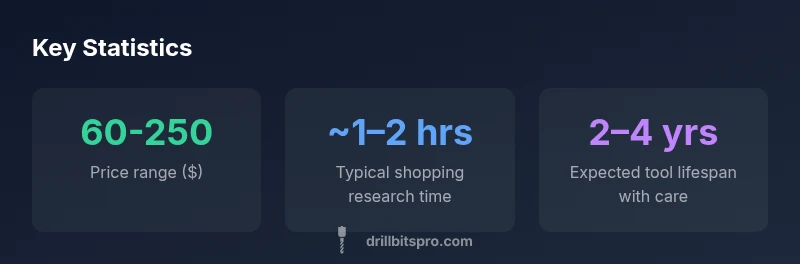
Typical price for a new impact drill ranges from about $60 to $250, influenced by corded vs cordless design, motor type, battery capacity, and included accessories. Basic corded models start near $60–$90, mid-range cordless options $120–$200, and pro-grade hammer drills can exceed $200. Prices rise with battery capacity, speed, and ergonomic features.
How much is an impact drill? A practical reality check
Price is driven by what the tool is designed to do and how long you expect it to last on the jobsite. According to Drill Bits Pro, most buyers will find that the price bands for a new impact drill fall roughly between $60 and $250. The wide spread reflects basic, compact corded options on the low end, and mid-range cordless or hammer drills on the higher end. The model you pick should align with your typical tasks: occasional home projects, more frequent DIY, or daily pro use. The goal isn’t to chase the cheapest price but to balance capability with durability for the work you perform most often.
Corded vs cordless: price drivers
Corded models tend to be cheaper upfront because they rely on a constant power supply and have fewer components to fail. Cordless drills add battery packs, charging circuitry, and sometimes extra motors for higher torque, which pushes up the price. Expect entry-level corded models in the lower bound of the market, while cordless models with larger batteries and higher voltage sit in the mid-range to upper-range. In practice, a DIYer who drills infrequently may save by choosing a corded model, whereas someone who needs mobility will pay a premium for a reliable cordless option.
Brushless motors and hammer action: impact on cost
Brushless motors deliver higher efficiency and longer life, translating to higher upfront costs but lower maintenance and longer tool life. Hammer action (the withstanding impact that helps drill into masonry) is standard on most mid-to-high tier drills and adds to the overall cost when paired with brushless technology. If your work never involves masonry, you can reasonably settle for a brushed motor with hammer function, saving money without sacrificing essential capability for wood and light masonry tasks.
Battery technology and runtime: price implications
Voltage and battery chemistry are major price levers. Common consumer setups use 12–18V packs, with 20V or higher options offering more power for tougher jobs. Larger-capacity cells mean longer runtime but also heavier tools and bigger price tags. If you only need light-duty drilling, smaller batteries will do; for sustained use, investing in a spare battery or a higher-capacity pack is prudent, even if it increases the upfront cost.
Budgeting for DIY vs professional use
For occasional DIY projects around the house, a mid-range cordless drill in the $120–$180 range often provides the best balance of performance and value. Tradespeople and professionals who drill daily or into hard materials will typically budget for higher-end models in the $180–$350 range, prioritizing durability, faster charge times, and longer battery life. If you anticipate heavy use, plan for potential battery upgrades and spare parts.
How to evaluate specs and avoid overpaying
Look for torque ratings relevant to your tasks, compatible chuck sizes, variable speeds, and a robust weight-to-power balance. Compare batteries and chargers to avoid buying multiple incompatible packs. Read warranty terms and check community feedback about heat management and failure rates. The aim is to match your job profile with a tool that offers adequate power, acceptable weight, and reliable battery performance without paying for features you won’t use.
Where to buy and when to look for deals
Public retailers, tool warehouses, and online marketplaces frequently rotate stock and promotions. Seasonal sales around holidays and end-of-year promotions can yield meaningful discounts, especially on mid-range models. Consider bundled deals that include extra batteries, chargers, or accessories to maximize value. Always verify return policies and warranty terms to ensure post-purchase安心.
Price tiers for impact drills
| Category | Corded price range | Cordless price range | Notes |
|---|---|---|---|
| Entry-level | $60-$90 | $70-$120 | Basic features, limited torque |
| Mid-range | $90-$170 | $120-$200 | Balanced performance and battery |
| Pro-grade | $180-$350 | $200-$350 | Brushless, higher torque, durable |
Got Questions?
What affects the price of an impact drill the most?
The main price drivers are motor type (brushless vs brushed), battery voltage and capacity, weight and ergonomics, chuck size, and whether the drill includes additional features like hammer action. Upgrades in these areas tend to push price upward.
The biggest price drivers are motor type, battery size, and hammer action. Higher specs mean higher cost.
Is it worth paying more for a pro-grade impact drill?
For infrequent DIY tasks, a mid-range model usually suffices. Professionals or frequent users benefit from longer life, faster charging, and better heat management found in higher-end models, which can reduce downtime.
If you drill daily or in tough materials, investing in higher-end models can save time and maintenance costs.
Can I use an impact driver instead of an impact drill?
Impact drivers excel at driving screws and fasteners; impact drills are designed for drilling plus hammer action in masonry. If you need both drilling and driving, choose a drill with a robust hammer mode and compatible bits.
Impact drivers are great for screws; drills handle holes. Some tools combine both capabilities.
What features should I look for to avoid overpaying?
Key features include appropriate torque, variable speed control, chuck size compatibility, battery compatibility across kits, and a reliable warranty. Avoid features you won’t use and focus on durability and serviceability.
Look for the essentials: torque, speed, battery compatibility, and a solid warranty.
Do cordless impact drills hold value well over time?
Cordless models tend to depreciate with newer battery tech, but reputable brands with battery ecosystem support can retain value longer. Consider ongoing battery availability and warranty coverage when assessing value.
Value depends on battery compatibility and brand ecosystem; newer batteries can help maintain resale value.
“"Choosing the right impact drill means balancing power, weight, and runtime for the jobs you actually do. Real value comes from fit to the task, not the price tag."”
Top Takeaways
- Define your budget before shopping to filter options quickly.
- Compare corded vs cordless to quantify the upfront price gap.
- Prioritize battery capacity and motor type for long-term value.
- Watch for bundles that add batteries or accessories for better value.