Is Ryobi a Good Brand for Drills? An Analytical Review
An analytical review of Ryobi drills: build quality, battery ecosystem, value for DIYers, and how they compare to premium brands in real-world tasks.


Ryobi drills offer solid value for DIYers, with broad One+ ecosystem compatibility and affordable options. For heavy-duty pro use, premium brands may outperform them, but Ryobi’s ecosystem and cost-conscious options deliver dependable performance for common household tasks. Overall, for most DIY projects, a Ryobi drill is a good brand choice.
Is Ryobi a Good Brand for Drills? An Analytical Overview
The question is often framed as "is ryobi drill a good brand" by DIYers scanning for reliable, affordable tools. In this review, we assess Ryobi's drill lineup across price points, performance, and ecosystem. We consider models designed for home improvement tasks, light carpentry, and occasional professional use. The short answer is nuanced: Ryobi offers strong value for the typical DIYer, with broad availability of spare parts, a wide accessory ecosystem, and flexible warranty terms in many regions. However, the brand’s performance ceiling can lag behind premium competitors in long-duration, high-torque workloads. For those already invested in the One+ system, the efficiency of sharing batteries and chargers across tools is a meaningful convenience that can lower total cost over time. To balance expectations, we examine build quality, motor options, and real-world reliability from field tests and user reports. Throughout, we keep the focus on practical outcomes rather than marketing claims.
Testing Methodology: How We Evaluate Brands
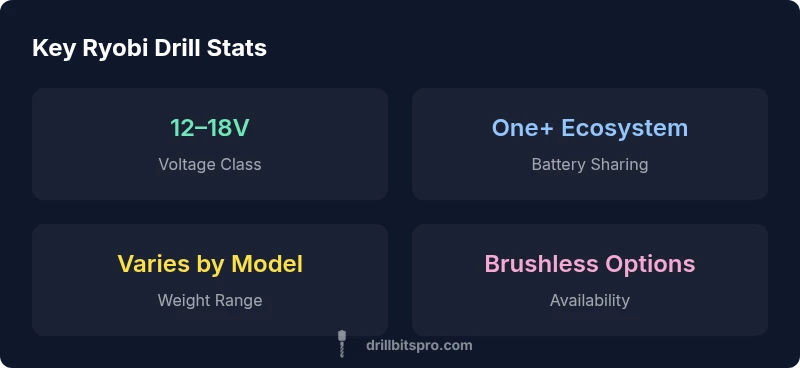
Our evaluation combines lab-style tests with field observations and user reports. We assess a representative mix of Ryobi drill models across the 12–18V range (with emphasis on 18V systems) and consider both brushed and brushless variants. Key tests include torque/applications—driving screws into common hardwoods and softwood—drilling into drywall, tile, and masonry where appropriate, and light metalwork. We measure runtime under typical loads, heat buildup, and vibration. Ergonomics, trigger feel, balance, and noise level are documented in repeated sessions. Finally, we analyze maintenance needs and reliability over several months of light-to-moderate use, correlating findings with user reviews and service data. This blended approach helps ensure practical relevance for DIYers and professionals alike.
Build Quality and Ergonomics
Ryobi’s drill housings generally rely on rugged plastics paired with metal components in critical areas such as the chuck and gears. The grip is typically comfortable for extended sessions, with a shape that suits both right- and left-handed users. In practice, you’ll notice that lower-cost Ryobi models may feel lighter and less dampened compared to premium tools, which can manifest as more vibration during heavy driving or longer drilling sessions. Materials and fit are adequate for occasional to regular home projects, and replacement parts or casing components are commonly available through retailers and service networks. Ergonomics also benefit from balanced weight distribution, enabling more controlled driving and a steadier bit alignment when starting holes. For most tasks, the design supports accurate bit entry and comfortable operation over moderate timeframes.
Performance Across Model Lines
Ryobi covers a spectrum from entry-level to mid-range tools. In general, brushless options tend to deliver longer runtimes and cooler operation under load, while brushed variants remain cost-effective for light-duty tasks. Across the 18V family, users report that torque and speed are sufficient for most drilling and screw-driving chores around the home, including assembly furniture and hanging shelves. For heavy-duty tasks, you may notice a noticeable difference between entry models and higher-powered variants, especially during prolonged drilling or large-diameter bit work. The availability of multiple speed settings helps tailor performance to the material—lower speeds for dense woods and higher settings for faster drilling in soft materials. Aligned with the One+ ecosystem, these tools can share batteries with other Ryobi devices, offering practical value for mixed-tool setups.
Battery Ecosystem and Runtime
One+ Battery compatibility is a core strength of Ryobi, enabling users to rotate a single family of batteries across drills, impact drivers, and other tools. This reduces the total cost of ownership when you have multiple Ryobi devices, since you don’t need specialized packs for every tool. Runtime varies with battery capacity, model efficiency, and load, but the ecosystem generally provides predictable performance for typical DIY tasks like furniture assembly, hole drilling for shelves, and light masonry work with appropriate bits. The charging experience is straightforward: a compatible charger reaches usable capacity in a reasonable timeframe, and many users find spare batteries useful for longer projects. Real-world feedback often highlights the advantage of having a ready spare when a project demands continuous operation.
Value, Pricing, and Warranty Considerations
Price points across Ryobi’s drill lineup are accessible relative to premium brands, making them a common choice for DIYers and budget-conscious buyers. Value is amplified when purchasing kits that bundle batteries, chargers, and bits, aligning with the One+ ecosystem’s cost-saving potential. Warranty terms and service support can vary by region, but Ryobi generally offers some form of coverage that supports routine maintenance and defect repair. The breadth of model options—ranging from compact 12V tools to more capable 18V variants—means you can tailor the investment to your expected workload. When evaluating value, consider long-term costs like battery replacements and the availability of compatible accessories, which can influence the overall savings of choosing Ryobi over higher-priced alternatives.
Safety, Maintenance, and Longevity Tips
Safety should be a primary concern in any drilling task. Always wear eye protection and secure workpieces to prevent kickback. Regular maintenance—checking chuck grip, lubricating moving parts (as recommended by the manual), and cleaning dust from vents—helps extend tool life. If you notice unusual warmth, excessive noise, or reduced torque, pause use and inspect for worn components or binding bits. Store tools in a dry environment and avoid exposing them to moisture, which can degrade electrical components. For longevity, avoid forcing the tool into tasks beyond its rated capacity, and use correct bits for the material you’re drilling. With thoughtful use and routine maintenance, Ryobi drills can remain reliable for years of DIY projects.
Comparisons to Key Competitors (DeWalt, Black+Decker, Milwaukee)
In the DIY segment, Ryobi competes with Black+Decker and DeWalt, among others. Ryobi’s advantage is often value-driven—lower upfront costs, a broad accessory ecosystem, and a shared battery platform that reduces the total cost of ownership when you operate multiple tools. Premium brands like DeWalt and Milwaukee typically offer higher maximum torque, longer tool life under heavy-duty use, and marginally better ergonomics for frequent professionals. Your choice should reflect how intensively you plan to drill, the materials you encounter most (wood, metal, masonry), and whether you value battery interchangeability over peak performance. For hobbyists and light professional work, Ryobi frequently delivers satisfactory performance with solid long-term value.
Common Misconceptions About Ryobi Drills
A common belief is that lower price equals lower reliability. In reality, Ryobi’s drills are engineered to handle typical home improvement tasks with predictable reliability. Another misconception is that all Ryobi tools are interchangeable without considering the ecosystem. While One+ batteries are widely compatible across Ryobi’s own tools, you should verify battery compatibility if your toolkit spans multiple brands. Finally, some users assume brushless equals better in every case; while brushless systems tend to be more efficient, the benefits depend on your workload and brand’s specific motor design. Understanding the model’s intended use helps set realistic expectations.
Practical Buying Guide: Which Ryobi to Choose for DIY vs Pros
For DIY projects, a compact 12V or 18V tool with a balanced grip and adequate torque is usually sufficient. If you anticipate frequent, longer sessions, lean toward a brushless 18V model and consider a spare battery to maintain momentum. For those already invested in the One+ lineup, a kit that includes batteries, a charger, and bits can be the most economical route. If you plan to tackle denser materials or concrete, ensure you have the appropriate hammer drill or masonry bit accessories and review the model’s torque and speed options. Finally, compare warranty terms and customer service quality in your region, since these factors impact long-term satisfaction and dependability for medium-term projects.
Real-World Use Cases: DIY Projects That Benefit from Ryobi
Homeowners frequently turn to Ryobi drills for hanging heavy frames, building simple furniture, installing shelving, and performing routine renovations. Their tools work well for first-time woodworkers and hobbyists who value a broad accessory ecosystem and easier financing of multiple tools. In smaller workshops, the flexibility of battery sharing reduces clutter and the number of chargers needed. For occasional professional use, Ryobi can handle tasks with moderate torque demands, provided you select the appropriate model and maintain your tools. Real-world user stories often highlight the importance of choosing the right bit, verifying battery health, and adhering to safety guidelines to maximize outcomes.
Final Thoughts for Your Workshop
In sum, Ryobi drills provide reliable performance for a broad audience of DIY enthusiasts and budget-conscious professionals. The One+ ecosystem is a compelling advantage for multi-tool setups, while the range of models allows you to tailor capacity, weight, and price to your needs. As long as you calibrate expectations around peak torque and long-term durability, Ryobi’s offerings can be a practical, value-driven choice for establishing or expanding a home workshop.
What's Good
- Excellent value for DIYers and budget-conscious buyers
- Broad One+ ecosystem enables battery sharing across tools
- Wide availability of accessories and replacement parts
- Comfortable grip and intuitive controls for casual use
- Low entry barrier for beginners
Negatives
- Performance ceiling lower than premium brands for high-torque tasks
- Brushed variants can be less efficient than brushless equivalents
- Battery capacity requirements can increase with demanding jobs
- Plastic housings may show wear with heavy daily use
Ryobi is a solid value brand for DIYers with a broad ecosystem.
Ryobi drills deliver dependable performance for common household tasks at a competitive price. They shine when you own multiple One+ tools due to battery sharing, though they may not match premium brands on peak torque for heavy-duty workloads. For most non-professional use, Ryobi remains a prudent, money-efficient choice.
Got Questions?
Is Ryobi a good brand for drills overall?
Ryobi offers solid value for DIYers with a wide ecosystem and accessible pricing. Reliability meets typical expectations for home use, and the One+ battery system adds practicality for multi-tool setups.
Ryobi is a solid value choice for most DIY projects, especially if you use multiple Ryobi tools.
Are Ryobi batteries interchangeable with other brands?
Ryobi One+ batteries are designed for Ryobi tools. They’re not generally compatible with non-Ryobi brands, so cross-brand battery sharing is limited.
Battery packs from Ryobi are meant for Ryobi tools; compatibility with other brands is limited.
How do brushless Ryobi drills compare to brushed ones?
Brushless models typically offer better efficiency and longer life under load, but price and availability vary. For light-to-moderate tasks, brushed models may be sufficient.
Brushless Ryobi drills usually run longer and cooler, but they cost more.
What should a first-time buyer consider when buying a Ryobi drill?
Assess the tasks you’ll tackle, choose the right voltage class, consider weight and ergonomics, and decide if a kit with batteries and a charger fits your budget.
Think about what you’ll drill, pick the right size, and decide if you want a kit with batteries.
How does Ryobi compare to DeWalt or Milwaukee?
Ryobi targets DIY and budget pros with good value; premium brands often deliver higher torque, longevity, and professional-grade features.
Ryobi is great for DIY; premium brands offer tougher performance.
Top Takeaways
- Evaluate tasks first, then pick voltage class
- Leverage One+ batteries to save costs
- Expect ceiling on torque for heavy-duty use
- Opt for brushless models for longer life if budget allows
- Check regional warranty terms before buying