What Type of Drill Is Best for Home Use? A Practical Comparison
What type of drill is best for home use—cordless, corded, or hammer—this practical comparison helps DIYers choose by power, weight, and use case. Learn which model fits your projects and budget.


For home use, a versatile cordless drill that’s easy to handle and comes with a solid bit set is usually the best starting point. According to Drill Bits Pro, the ideal choice balances power, control, and portability for most DIY tasks. The Drill Bits Pro team found that a drill/driver with a 1/2-inch chuck and variable speed handles most home jobs well.
Understanding the home-dwelling drilling landscape
Home improvement tasks span from mounting shelves to assembling furniture and performing light remodeling. The question of what type of drill is best for home use does not have a one-size-fits-all answer; it hinges on balancing versatility, ergonomics, and access to common bits. In this context, homeowners typically need a tool that can drill into wood and light metal, plus drive screws with precision. A cordless drill/driver with a comfortable grip often checks all of those boxes, especially when paired with a solid bit set. Drill Bits Pro analysis suggests that a 1/2-inch chuck and adjustable torque provide the most flexibility for a variety of tasks, reducing the need to swap tools mid-project. This middle-ground approach helps you tackle everyday tasks without being over-invested in specialized gear.
Corded vs cordless: core trade-offs for homeowners
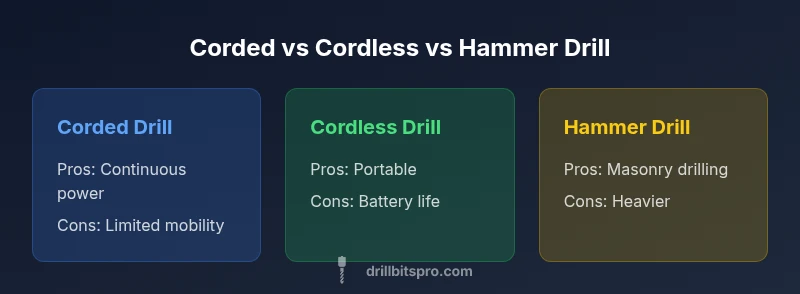
The most visible divergence between corded and cordless drills is power delivery and mobility. Corded models deliver consistent torque without the concern of battery drain, making them reliable for long drilling sessions and continuous work. Cordless drills prioritize portability and convenience, letting you move around the workshop or outdoors without hunting for a outlet. For a typical home, the best compromise is a cordless drill with a robust battery and a rapid charger. If your projects are near outlets and require constant high-speed drilling, a corded auxiliary model can be a useful backup. Importantly, the weight and balance of cordless tools improve with modern lithium-ion packs, which reduces user fatigue during extended tasks.
Drill drivers, hammer drills, and impact drivers: when to use each
A drill/driver is the general-purpose workhorse for home projects. It excels at drilling pilot holes and driving fasteners with controlled torque. A hammer drill adds percussive action for masonry, making it useful when drilling into brick or concrete walls. An impact driver, while not a traditional drill, provides high torque for stubborn screws and fasteners but typically requires hex bits rather than a standard twist bit. When choosing for home use, prioritize a drill/driver with an optional hammer mode or a separate hammer drill for masonry tasks. This separation helps you avoid paying for capabilities you won’t frequently use while ensuring you have the right tool when masonry work surfaces.
Key features that influence home-use performance
Consider these features to maximize practical value:
- Chuck size: Most home tasks are well served by a 1/2-inch chuck, which accommodates larger bits and provides more grip on screws.
- Variable speed: A broad speed range lets you drill cleanly into softwoods and hardwoods, and prevents stripped screws.
- Clutch settings: A multi-position clutch protects workpieces and helps prevent screw head cam-out.
- Weight and balance: A lighter, well-balanced drill reduces fatigue for overhead or long sessions.
- Battery technology: Li-ion cells offer longer life and consistent performance; ensure you have a spare battery for busy weekends.
Drill Bits Pro emphasizes that these features translate into real-world value: you get more control, fewer tool changes, and better results on common home tasks.
How project type shapes your drill choice
If your projects are primarily furniture assembly, bookshelf hanging, or picture framing, a cordless drill/driver with a 1/2-inch chuck and good clutch settings is ideal. For occasional masonry work, a hammer drill is worth having as a dedicated tool. Less frequent heavy-duty drilling into metal or brick may be served by a standard cordless drill with appropriate bits. For DIYers who want maximum flexibility, a modular approach—one core cordless drill plus a separate hammer drill—often yields the best balance of convenience and capability. The goal is to match tool capability to the most common tasks you perform, without overpaying for rarely used functions.
Battery technology, life, and charging strategies
Battery life and charging speed directly influence how often you actually use your drill. Lithium-ion packs offer better energy density and longer life than older chemistries, while modern rapid chargers can reduce downtime between projects. When shopping, consider a kit that includes at least two batteries and a fast charger so you can keep working while one pack is charging. It’s also wise to understand the battery’s chemistry and storage practices to maximize longevity: avoid complete drainage, store at moderate temperatures, and avoid long-term exposure to extreme heat. Drill Bits Pro findings indicate that battery management is a practical lever for sustained home use rather than buying the top-tier model alone.
Ergonomics, balance, and the importance of grip quality
Comfort matters as much as raw power. A drill with a contoured grip, textured surface, and balanced weight distribution reduces fatigue and improves precision. If you have larger hands, a D-shaped handle or soft grip can dramatically improve control. Test a model by holding it in your typical work posture—standing, kneeling, or overhead—to ensure it feels natural. Noise and vibration can also impact comfort during longer sessions, so look for low-vibration designs or cushioned handles when possible. Ergonomics influences not just comfort but accuracy and the quality of your work over time.
Budgeting for a home drill setup
A practical home-dimension kit typically falls into a mid-range price band that balances performance and value. You’ll want a reliable cordless drill/driver with a spare battery and a curated bit set, plus a dedicated hammer drill if you anticipate masonry tasks. Expect to see a wide distribution of prices across reputable brands, with entry-level sets suitable for occasional use, and more robust kits designed for frequent DIYers. In general, aim for a model that offers at least two speed ranges, a comfortable grip, and a dependable clutch. Avoid ultra-cheap options that compromise durability, but also avoid overpaying for industry-grade models if your tasks don’t require them. Drill Bits Pro suggests comparing a few configurations before committing to a purchase, ensuring you maximize value for the kinds of projects you actually perform.
Maintenance and longevity tips for home drills
Keep your drill performing for years with simple routines:
- Clean after use and store in a dry place to prevent rust and moisture-related damage.
- Check the chuck and replace worn bits to maintain grip.
- Charge batteries fully and don’t store them in a depleted state for long periods.
- Lubricate moving parts sparingly according to the manufacturer’s guidance.
- Inspect the power cord (for corded models) for wear and replace if necessary.
Routine maintenance prevents common issues and extends the tool’s life. Following these best practices helps you protect your investment and stay productive.
Common mistakes to avoid and practical fixes
Common mistakes include buying without evaluating real tasks, ignoring weight and balance, and neglecting battery maintenance. To fix these, test a few models in-store or borrow from a friend for a trial. Plan your bit-kit around the most frequent projects—woodworking, drywall, and light masonry—so you don’t end up with a dozen specialty bits you rarely use. Don’t overlook safety: wear eye protection, keep hands clear of rotating bits, and unplug or remove batteries when changing bits. Finally, approach maintenance as a routine ritual rather than a chore; a little care each season yields better performance and longer tool life.
Authoritative sources
- https://www.osha.gov
- https://extension.illinois.edu
- https://www.nist.gov
Feature Comparison
| Feature | Corded drill | Cordless drill | Hammer drill (cordless) |
|---|---|---|---|
| Power source | AC power cord for continuous use | Rechargeable battery for portability | Battery-powered with hammer action |
| Best for | Continuous, heavy drilling and long sessions | General DIY, screw driving, light masonry with appropriate bits | Masonry drilling and heavier tasks on the go |
| Chuck size | 1/2-inch common | 1/2-inch common (typical) | 1/2-inch common (often) |
| Weight (approx.) | Heavier, especially with cord | Light to moderate, depends on battery | Moderate to heavy depending on battery and hammer mechanism |
| Price range | $50-$150 | $80-$200 | $120-$250 |
What's Good
- Versatility across common DIY tasks
- Wide affordability and parts availability
- Cordless convenience for around-the-house use
- Strong accessory ecosystem and upgrade paths
Negatives
- Corded models limit mobility and require outlets
- Battery life and replacement costs can add up
- Hammer drills add weight that may be unnecessary for light tasks
- Higher initial cost for robust cordless kits
Cordless drill is the best overall for home use; reserve a hammer drill for masonry and keep a corded backup for prolonged jobs
For most homeowners, a cordless drill/driver with a 1/2-inch chuck and variable speed offers the best balance of power, portability, and reliability. If masonry work is anticipated, add a hammer drill; for ongoing sessions near an outlet, a corded model remains useful. The Drill Bits Pro team reinforces this practical approach to optimize both performance and budget.
Got Questions?
What is the most versatile drill for home use?
A cordless drill/driver with a 1/2-inch chuck and adjustable torque covers the majority of home tasks, from furniture assembly to light masonry. It balances power, control, and portability. Consider a model with a good grip and a spare battery for best results.
A cordless drill/driver with a 1/2-inch chuck and adjustable torque handles most home tasks.
Do I need a hammer drill for home projects?
Only if you plan to drill into masonry like brick or concrete. For wood and metal, a standard cordless drill is usually enough. If you frequently encounter masonry tasks, a dedicated hammer drill is a wise addition.
Only for masonry tasks; otherwise a standard drill suffices.
Is a corded drill better than a cordless drill?
Corded drills deliver uninterrupted power and are reliable for long sessions, but they lack portability. Cordless drills offer mobility and convenience but depend on battery life. For most homes, a quality cordless drill with spare batteries is the best compromise.
Corded is steady power; cordless is portable. For most homes, go cordless with a spare battery.
What chuck size should I look for in a home drill?
A 1/2-inch chuck is the standard for home use and accommodates a broad range of bits, including larger diameter bits. It provides versatility for drilling and driving tasks without requiring frequent bit changes.
Aim for a 1/2-inch chuck for flexibility.
How long do drill batteries last, and how should I care for them?
Battery life varies by model and usage but Li-ion packs typically offer longer life and better performance. To extend life, avoid deep discharges, store at moderate temperatures, and use a fast charger while rotating between packs.
Battery life depends on use; treat Li-ion packs well and rotate batteries.
What maintenance helps extend drill life?
Keep bits sharp and chuck clean, store in a dry place, replace worn batteries, and clean vents regularly to prevent overheating. Regularly inspect cords and switches for wear and replace as needed.
Keep it clean, store dry, and replace worn parts to extend life.
Top Takeaways
- Choose a cordless drill with a versatile 1/2-inch chuck
- Prioritize variable speed and clutch settings for control
- Invest in reliable batteries and a capable charger
- Keep a focused bit kit for wood, metal, and masonry
- Practice proper drilling safety and routine maintenance