Can You Drill and Tap a Weld? A Practical Guide for Metalworking
Learn how to safely drill and tap welded joints with practical steps, tool selection, and tips for DIYers and pros. Covers heat effects, lubrication, and quality control.


Yes, you can drill and tap a weld, but only when the weld is clean, accessible, and free from cracks or heat-affected zone damage. Use appropriate drill/tap sizes, secure the work, and apply cutting fluid to control heat. After tapping, inspect threads for alignment and deburr any rough edges.
Can you drill and tap a weld? What this guide covers
In 2026, many DIYers wonder if they can drill and tap a weld to add a threaded hole without compromising the joint. The answer is: it can be feasible under controlled conditions, but it requires careful planning. According to Drill Bits Pro, success hinges on weld quality, access, and tool discipline. This section outlines when tapping a welded joint makes sense, and the foundational checks before you start. The rest of the article will dive into material behavior, tooling choices, a safe step-by-step method, and quality control measures. You’ll learn to assess the weld, select appropriate drills and taps, and use cutting fluid to minimize heat and distortion. By following this guidance, you can add functional threaded holes to welded assemblies without sacrificing strength or safety.
Material behavior in welded joints
Welded joints behave differently from bare metal because the heat-affected zone (HAZ) complicates drilling and tapping. The weld metal and surrounding base metal can have different hardness and microstructure. Excess heat can soften or harden material temporarily, increasing the risk of thread pull-out or broken taps. Before you drill, verify crack-free welds and consider access to both sides of the joint. Proper fixturing reduces distortion, and cooling between operations helps maintain dimensional accuracy. By recognizing these material realities, you can select tools and speeds that minimize risk while preserving the joint’s strength. The Drill Bits Pro team emphasizes that understanding heat buildup and residual stresses is essential for a successful threaded hole in welded assemblies.
Tooling choices: bits, taps, and lubricants
Bearing in mind the material and geometry, choose cutting tools that handle heat and sudden changes in hardness. High-speed steel (HSS) or cobalt drill bits perform well on common welding materials, and taps should be matched to the final thread needed. For most welded joints in mild steel, a standard thread-cutting tap in conjunction with a suitable tap drill size is recommended; if you’re working with harder metals, consider carbide-tipped options and a slower feed rate. Lubrication reduces tool wear and heat; use a light cutting fluid or oil designed for metalworking. Secure clamping or a fixture prevents movement that could ruin threads. Always verify thread pitch with a gauge before tapping. Note that misalignment leads to binding and damaged threads; plan your entry path carefully.
Preparing the weld for drilling and tapping
Preparation is half the job. Start by cleaning the weld area to remove oil, scale, and debris that could contaminate the hole. Inspect for cracks or porosity that would undermine thread integrity. Mark the center of the hole accurately using a center punch, then secure the workpiece with clamps or a magnetic vise to prevent movement during drilling. If accessing both sides of the weld, you may need to reposition fixtures to maintain perpendicular drilling. Establish a calm, well-lit work zone and set up a controlled environment to prevent warping. Finally, decide on the drilling sequence: pilot hole first, then the final hole, then tapping, while maintaining clean coolant and a steady feed rate.
Step-by-step approach for drilling and tapping a weld
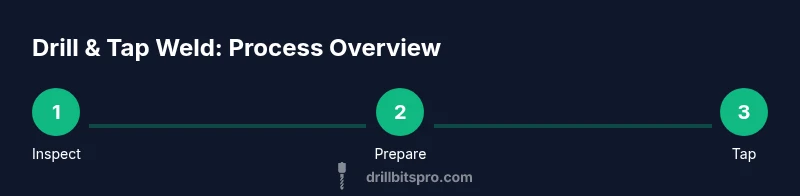
Note: Detailed steps are provided in the dedicated STEP-BY-STEP block below; this section expands on the approach. The general method starts with locating a safe area and preparing the joint, then using pilot-hole drilling to guide the final hole. After drilling, you tap the hole with an appropriate thread-cutting tool, using cutting fluid to manage heat. Deburr and inspect the threads with a thread gauge, and finally apply a light lubricant to avoid galling. Always test fit a threaded fastener before committing to a full assembly. This approach minimizes damage to the weld while delivering a functional threaded hole.
Common mistakes and how to avoid them
Key errors include overheating the weld, drilling through the crown, or misaligning the hole. Excess heat can alter the weld metal, reducing strength. Not securing the part invites chatter and mis-threading. Skipping lubrication accelerates tool wear and produces rough threads. Always validate with a test piece, and if the weld shows signs of cracking, abort the plan and consult a welding professional.
Inspection and finishing after tapping
Post-tap inspection includes checking thread engagement with a gauge, verifying perpendicularity, and ensuring no burrs remain. Deburring both inside and outside of the hole improves fit and reduces stress concentration. Re-torque after a short run to seat threads. Document results for future maintenance and consider applying a protective coating if the joint will see corrosion risk.
Real-world scenarios and case studies
Consider a welded bracket on a steel frame that requires a 1/4-20 tapped hole for mounting a component. The weld area is flat, with good access and a stable clamp. Following the steps outlined, the operator drills a pilot hole, finishes with a compatible tap, and confirms proper thread engagement. In other cases, welded joints with heavy residue or visible cracking warrant alternate approaches or professional welding evaluation.
Tools & Materials
- Drill motor or drill press(quality variable-speed drill; ensure power and speed range suited to metal)
- Drill bits (high-speed steel or cobalt)(select size to use a pilot hole plus final hole per tap design)
- Center punch(mark starting point clearly for accuracy)
- Taps (thread sizes appropriate for material)(hand or machine taps; consider plug/bottoming taps as needed)
- Lubricant/Cutting oil(reduce heat and extend tool life; use metalworking fluid)
- Thread gauge(verify pitch and diameter before tapping)
- Clamps or vise(secure weldment to prevent movement)
- Safety gear (eye protection, gloves)(mandatory for all drilling operations)
- Deburring tool(remove burrs after tapping for smooth threads)
- Tap wrench(for manual tapping or to drive non-spindle taps)
- Marker or scribe(optional for precise center marking)
- Cleaning cloth(keep area clean to monitor defects)
Steps
Estimated time: 1 hour 30 minutes
- 1
Inspect weld and plan location
Begin with a visual inspection of the weld for cracks, porosity, or signs of distortion. Choose a location with enough material to support a thread and access for tooling. Align your part so the drill will enter perpendicularly to the surface when possible, and mark the center with a punch.
Tip: Check from both sides if possible; a poor location is hard to repair later. - 2
Secure the workpiece
Clamp the welded piece firmly to a stable surface or use a dedicated fixture. Ensure there is no movement during drilling; even slight shifts can ruin threads or create crooked holes. Use soft jaws if clamping near the weld to avoid marring.
Tip: Use a magnetic vise for metal parts to minimize slippage. - 3
Center-mark the hole
With a center punch, create a deep, clear indentation at the exact center. This helps the drill start true and reduces wandering. Double-check alignment before drilling.
Tip: A small pilot indentation reduces bit walking. - 4
Drill a pilot hole
Start with a smaller pilot hole to guide the final hole. Keep the drill perpendicular and use steady, moderate pressure. Re-check alignment after the pilot hole is removed or if the weld shifts.
Tip: Cool the bit with cutting fluid as you drill to avoid overheating. - 5
Drill the final hole
Switch to the final hole size dictated by your tap. Maintain a steady feed; avoid forcing the bit, which can cause chatter or bit breakage. Stop when you reach the required depth for threading.
Tip: Do not over-penetrate; maintain controlled depth limits. - 6
Tap the hole
Lubricate the tap and carefully cut threads using a tap wrench or powered tapping setup. Keep the tool steady and perpendicular to the hole to prevent thread misalignment.
Tip: Back off periodically to clear chips and prevent binding. - 7
Deburr and inspect
Remove burrs inside and around the hole. Use a thread gauge to verify engagement and ensure threads are clean and straight. Dry-fit a fastener to confirm correct depth and pitch.
Tip: A clean finish prevents cross-threading and binding. - 8
Final test and finish
Run a light torque test on a test fastener to confirm fit. If needed, apply a light lubricant and recheck torque after a short interval. Document results for maintenance records.
Tip: If threads feel gritty, stop and inspect for misalignment or damage.
Got Questions?
Can you drill and tap any welded joint safely?
Not every weld is suitable. Only crack-free, accessible joints with sufficient material for threading should be tapped. If there are signs of cracking or excessive distortion, stop and consult a welding professional.
Generally safe when the weld is crack-free, accessible, and properly clamped. If you see cracks, don’t proceed.
What materials are easiest to tap after welding?
Mild steel is the most forgiving for drilling and tapping. Stainless steels and aluminum require different approaches and may need special lubricants or coatings. Always consult material guides for the best tool choices.
Mild steel welds are easiest; harder metals need special care.
How do I choose the right tap size when tapping a weld?
Refer to standard thread charts for the target diameter and pitch. For welded joints, use a tap drill that produces the correct thread engagement without thinning the surrounding material; avoid oversized holes that weaken the weld.
Check the thread chart and pick the drill size that gives proper engagement.
What safety precautions are essential?
Wear safety gear, ensure power tools are off when mounting, secure the work, and keep a clean work area. Avoid breathing metal dust and ensure proper ventilation if grinding nearby.
Put on PPE, secure the piece, and work in a well-ventilated area.
What if the weld shows porosity or cracking after tapping?
Cease further work on that weld. Porosity or cracking can indicate compromised strength. Re-welding or heat treatment by a professional may be required before attempting threads again.
If you see cracks or porosity, stop and consult a welding pro.
Watch Video
Top Takeaways
- Plan location carefully and secure the workpiece.
- Use the right drill and tap sizing to avoid weak threads.
- Lubricate to control heat and reduce tool wear.
- Deburr and verify with a thread gauge before final assembly.
- Inspect weld quality; abort if you detect cracking or porosity.