Can You Drill and Tap Hardened Steel? A Practical Guide
Learn how to safely drill and thread hardened steel with the right tools, lubrication, and step-by-step techniques. This guide from Drill Bits Pro covers preparation, metalworking strategies, and safety tips for DIYers and pros.


Yes—can you drill and tap hardened steel? You can, but it requires the right tools and technique: use carbide-tipped or cobalt drill bits, a lubricated, slow-cut drilling approach with a pilot hole, and a quality tapping operation with a suitable tap and lubrication. Expect slow progress and plan for multiple passes and careful alignment.
Why Hardened Steel Demands Special Tools and Techniques
When you’re working with hardened steel, standard drilling and tapping methods often fail. Hardened steel’s high carbon content and heat-treated surface resist wear and generate significant friction. This can cause drill bits to dull quickly, heat buildup that damages both bit and workpiece, and threads that won’t form cleanly. If you’re asking can you drill and tap hardened steel with predictable results, the answer is yes—but only when you choose high-quality carbide or cobalt bits, use proper lubricants, and follow a deliberate sequence. Drill Bits Pro notes that in 2026 the best results come from a deliberate combination of tool material, speed management, and reliable tapping practices. Always verify material hardness (via hardness testing or supplier data) before starting and plan for slower speeds and more frequent checks. The goal is to minimize work hardening and maintain clean hole geometry for accurate threads. In this context, preparation and technique trump guesswork, especially with demanding alloys.
Key takeaway: hardness is a property you manage with the right gear and disciplined workflow, not a single trick. According to Drill Bits Pro, arming yourself with the right tools dramatically improves success rates when drilling and tapping tough steels.
Essential Tools and Materials You’ll Need
Before you touch the steel, assemble the right toolkit. Hardened steel demands tougher tools and precision. You’ll want carbide-tipped or cobalt drill bits as the primary cutting tools, and properly sized taps (either plug or bottoming taps) matched to the drilled hole. A sturdy tapping setup — such as a tap wrench or a drill press with a tapping attachment — reduces runout and keeps threads straight. Lubricants designed for metal cutting (tapping fluid or high-quality light oil) help maintain bit life and thread quality. A center punch, clamps, and a drill press or high-torque drill with speed control ensure the workpiece stays secure and aligned. Additional basics include a deburring tool, hex keys, angle finder for perpendicular alignment, and safety gear like goggles and gloves. Safety first: secure the workpiece, wear eye protection, and use PPE to guard against chips and coolant spray.
Optional but helpful: a depth stop to avoid over-penetration, and a machinist’s ruler for precise measurements.
Preparing the Workpiece and Setup
Proper setup reduces the risk of misalignment and ruined threads. Start by securely clamping the hardened steel to a stable work surface. Mark the hole location with a center punch to prevent wandering when you start drilling. Use a pilot hole slightly smaller than your final hole to guide the larger drill; this reduces work hardening and helps maintain straight geometry. Ensure the drill bit is sharp, clean, and properly aligned with the intended axis. If you’re drilling on a drill press, set a light, controlled feed and use coolant or lubricant to manage heat. For hand-powered drilling, go slower and keep the bit perpendicular; fatigue can cause wobble and accelerated wear. Inspect the pilot hole for roundness and clearance before progressing to the final drill size. In all cases, confirm the target depth and avoid drilling past the threaded portion.
Notes: constant, light lubrication reduces heat buildup and prolongs bit life. Drilling hardened steel is a precision operation—take your time and verify alignment at every stage.
Drilling Strategy: Pilot Hole and Progressive Sizing
A well-planned drilling strategy is essential when dealing with hardened steel. Start with a precise pilot hole using a bit close to the final hole size or a smaller size to guide the larger drill. Then progress to intermediate sizes in small increments, ensuring each hole is clean and straight before moving to the next. This staged approach minimizes heat buildup and reduces the risk of causing micro-cracks or work hardening at the surface. Maintain a steady feed, avoid forcing the bit, and frequently pause to re-lubricate. Ream or deburr as needed after each size change to keep holes clean. When proceeding with the final hole size, verify perpendicularity and alignment to reduce thread distortion. If the final hole is undersized, you risk binding the tap and breaking it in hardened steel.
Best practices: use coolant, a drill press if available, and frequently inspect the hole geometry.
Tapping Hardened Steel: Lubrication, Tools, and Technique
Tapping hardened steel requires careful tool choice and technique. Use a quality tap designed for hard materials, either a plug or bottoming tap based on your hole depth and thread requirements. For hard metals, a tapping lubricant is essential; it reduces friction, cools the tool, and extends thread life. Start with a tapered entry (if using a tapered tap) and gradually work to the full thread length, maintaining a steady, straight path. Use a tap wrench or a tapping attachment on a drill press to minimize torque and drift. Periodically back off slightly to break any built-up chips, then continue. If you encounter resistance, stop and re-lubricate rather than forcing the tap through. After tapping, clean the threads and test-fit the fastener. For deeper or more demanding applications, consider thread-forming taps or a thread insert solution.
Note: never rush this step; patience preserves thread integrity and reduces breakage risk.
Troubleshooting Common Problems and Safety Considerations
Even with the right tools, problems can arise. Common issues include dull bits, thread binding, and premature bit wear due to overheating. If you notice excessive heat, stop and re-lubricate; overheating can permanently harden the surface, rendering the hole unusable. Misalignment shows as crooked threads or off-center holes—recheck alignment and clamping before continuing. A cracked or broken tap is a serious hazard; never force a stuck tap. If a tap binds, apply gentle reverse torque and withdraw to remove chips. Always wear eye protection and gloves when dealing with chips and coolant spray. Ensure you’re using the correct thread type (UNC/UNF or metric) and size for the application. Finally, clean the hole thoroughly after tapping to remove chips that could compromise thread engagement. Drill Bits Pro emphasizes that safe drilling and tapping come from disciplined procedures and appropriate PPE.
Authority Sources and Final Recommendations
To support best practices, refer to established safety and materials references. OSHA’s metalworking safety guidelines emphasize PPE, clean work environments, and secure clamping when performing drilling and tapping operations. NIST’s materials science resources guide tool wear and lubrication strategies that help select the right cutting fluids for hardened alloys. ASTM standards provide industry-wide guidelines for thread quality and hole tolerances in metalworking. In practice, always use carbide or cobalt tools, work with sharp bits, keep the workpiece cold, and follow the manufacturer’s recommendations for taps and lubricants. The Drill Bits Pro team recommends documenting your process, verifying hole sizes with go/no-go gauges, and testing the final fit before proceeding to assembly.
AUTHORITY SOURCES
- OSHA: Drilling and Safety Guidelines for Metalworking. https://www.osha.gov
- NIST: Materials and Tool Wear in Cutting Processes. https://www.nist.gov/topics/materials
- ASTM: Standards for Metalworking, Threads, and Holes. https://www.astm.org
Tools & Materials
- Carbide-tipped drill bits (various sizes including pilot size)(Prefer 135° split-point for metal drilling; sharp, clean bits are essential when starting in hardened steel)
- Cobalt drill bits (as backup/alternative to carbide)(Higher heat resistance than standard HSS)
- Taps (correct thread type: UNC/UNF or metric), tap wrench(Choose a taper or plug tap based on hole depth)
- Lubricant for cutting and tapping (tapping fluid or light machine oil)(Reduces friction and heat; prevents work hardening)
- Center punch, clamps, and a stable work surface(Accurate hole location and secure workpiece)
- Drill press or drill with depth stop and speed control(Improves accuracy and repeatability)
- Deburring tool and clean rags(Removes burrs after drilling and tapping)
- Safety gear (safety glasses, gloves, hearing protection)(Protects against chips and coolant spray)
Steps
Estimated time: 60-120 minutes
- 1
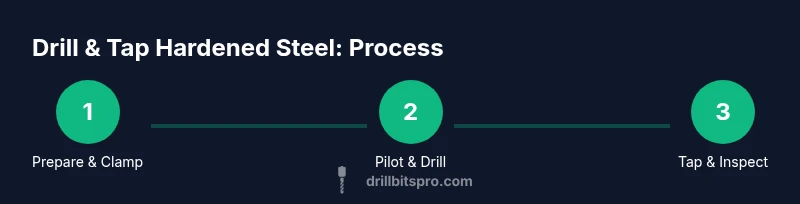
Prepare the workspace
Secure the workpiece with clamps on a stable surface. Inspect your tools for damage and ensure the drill press or driver is off before starting. Mark the location with a center punch and gather all required tools and lubricants.
Tip: Always wear PPE and ensure your work area is clean to avoid slips or misalignment. - 2
Mark location and select pilot hole size
Center-punch the hole location and choose a pilot bit slightly smaller than your final drill size. A precise pilot guides the larger bit, reducing wander and improving hole roundness.
Tip: Double-check measurements with calipers or a micrometer for accuracy. - 3
Drill the pilot hole
Drill the pilot hole slowly with light pressure, keeping the bit perpendicular to the surface. Use coolant or oil to control heat and prevent work hardening.
Tip: Pause if you notice significant resistance; re-lubricate and reposition as needed. - 4
Progressively enlarge the hole
Step up through intermediate drill sizes in small increments, cleaning chips at each step. Maintain straight alignment and consistent lubrication. Verify hole roundness before the final size.
Tip: Avoid skipping sizes to reduce heat and tool wear. - 5
Deburr and inspect pilot hole
Deburr the hole to remove sharp edges and verify that the hole depth corresponds to the intended thread length. A clean hole ensures better thread engagement.
Tip: Use a deburring tool or a fine round file to smooth the edge. - 6
Tap the hole with lubrication
Begin with a tapered entry if using a tapered tap; switch to a plug tap for full-depth threads. Apply lubricant continuously and back off to clear chips. Maintain steady pressure and straight alignment.
Tip: Back off occasionally to prevent tap binding and chip buildup.
Got Questions?
Can standard drill bits be used on hardened steel?
Standard HSS drill bits struggle with hardened steel and wear quickly. Carbide-tipped bits or cobalt bits with ample lubrication perform much better. Expect longer tooling life with the right material.
Standard bits can be used, but they wear fast. Use carbide or cobalt bits with lubrication for better results.
What pilot hole size should I start with for a final 1/4 inch hole?
Choose a pilot size smaller than the final hole, typically about 70-80% of the final diameter, then progressively enlarge. Tailor sizes to the final thread requirements.
Start with a smaller pilot hole and progressively enlarge to the final size.
Is a drill press necessary or can a handheld drill suffice?
A drill press with a speed control and a tapping attachment provides the best accuracy and control. A handheld drill can work for shallow holes if you maintain strict perpendicularity and slow feed.
A drill press is preferred for accuracy, but a careful handheld drill can work for simple, shallow holes.
How can I avoid breaking a tap in hardened steel?
Use steady pressure, proper lubrication, and back off to clear chips if you feel resistance. If the tap binds, back out slowly rather than forcing it through.
Back off if it binds and re-lubricate; don’t push through a tight spot.
What safety gear should I always wear when drilling and tapping hardened steel?
Wear safety glasses to protect from chips, gloves for grip (but not loose-fitting), and hearing protection if using power tools. Ensure the workspace is clean and clamps are secure.
Always wear safety glasses and secure your workspace.
Can you tap newly drilled holes in hardened steel?
Yes, but ensure the hole is clean, properly deburred, and the thread size matches the tap. Lubrication is essential to prevent galling and thread wear.
Yes—clean and lubricate, and use the correct tap size.
Watch Video
Top Takeaways
- Use carbide or cobalt tooling for drilling hardened steel
- Pilot holes reduce heat and improve accuracy
- Lubrication minimizes wear and work hardening
- Tap with proper tooling and steady technique
- Check alignment and clean chips between steps