Central Machinery Drill Press: A Complete How-To Guide
Learn to safely set up, operate, and maintain a central machinery drill press with step-by-step guidance, essential tools, and practical tips.


According to Drill Bits Pro, you will learn how to safely set up and use a central machinery drill press, select the right bits, clamp your work, and control depth and speed for clean holes. By the end, you'll perform a drill press operation with confidence, minimize chatter, and avoid common mistakes.
Overview of the central machinery drill press and its core features
A central machinery drill press is a compact, bench-friendly machine designed to drill precise holes with controlled depth and alignment. In most workshops it serves as the backbone of wood and metal projects, enabling repeatable holes, accurate right-angle perpendicular drilling, and clean deburring. A typical benchtop unit features a sturdy cast-iron column, a variable-speed spindle, a keyed chuck, a tilting table, and a depth stop with a quill return. The column guides the spindle, keeping the drill true as you feed the bit. The chuck holds the bit, while the table supports the workpiece. A depth stop ensures consistent hole depth across multiple pieces, which is essential for assembly.
According to Drill Bits Pro, understanding these core parts helps you diagnose drift, chatter, and misalignment quickly. When you know which component controls depth, which one controls speed, and where to clamp your work, you can plan safer and more precise operations. This section sets the stage for practical how-to guidance you can apply right away.
Safety foundations for working with a drill press
Safety is the foundation of any successful drilling project. Before you touch a switch, verify that you are wearing proper PPE: safety glasses, hearing protection if the job is loud, and snug-fitting clothing with hair tied back. Keep the work area clean and free of loose scraps that could snag the bit or pull you in. Always unplug the machine when changing bits, adjusting the belt or depth stop, or cleaning the table. Use clamps or a vise to secure the workpiece; never hold it by hand. A depth stop helps you avoid drilling too deep, while a sturdy table and flat workspace prevent drift. Regularly inspect the chuck, arbor, and quill for wear and replace worn parts before they fail under load.
Planning and workspace setup: lighting, vices, and clamps
A clean, well-lit workspace makes precision work more predictable. Place the drill press on a solid, level benchtop with the workpiece within easy reach. Mount a dependable vise or clamps to hold your stock securely; a sacrificial fencing board on the table reduces tear-out and protects the table surface. Ensure good lighting over the work area so chips, markings, and hole depths are easy to verify. Keep a small scrap block handy to test drilling parameters before working on the actual piece. Having a reference ruler or depth gauge nearby helps you maintain consistent hole depths across multiple parts.
Selecting the right drill bits and speeds for materials
Choosing the right bit and speed is essential for clean results. For wood, a sharp high-speed steel bit with a sharp point and proper rake works best at moderate speeds. For metal, especially steel, use slower speeds and apply cutting oil or lubricant to reduce heat and prolong bit life. Start with a smaller pilot hole when drilling thicker stock, then step up to the final size. Always consider the bit material—carbide-tipped bits stay sharp longer but can be more brittle for manual feeds. For a central machinery drill press, verify the belt setting aligns with your desired RPM range and adjust gradually while observing the bit’s performance and surface finish.
Workholding, center punching, and depth control
To minimize wandering and ensure hole accuracy, secure the stock with clamps or a vise. Use a center punch to create a small indent at the drilling point, helping the bit bite precisely where intended. Raise the quill slightly to check clearance before starting, then begin at a slow feed rate. Set a depth stop to limit how deep you drill, and confirm the stop remains at the target depth after each piece. If your stock is irregular or thin, place a sacrificial board on the table to prevent tear-out and to save the table surface.
Step-by-step workflow overview (high-level)
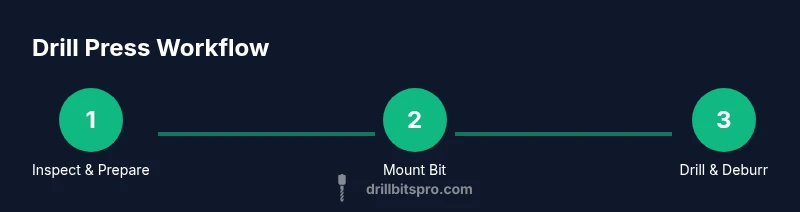
This section outlines the general workflow you’ll perform in sequence: prep and inspect the machine, mount the bit, clamp the workpiece, set depth and speed, drill, deburr, and finish. You’ll pause after each major stage to verify alignment, depth, and surface finish. This overview helps you plan your tasks and reduces the chance of errors when you actually execute the detailed steps in the dedicated STEP-BY-STEP block.
Maintenance, calibration, and safe storage
Regular maintenance keeps a central machinery drill press performing reliably. After use, unplug the machine and clean metal chips and dust from the table, column, and belts. Check belt tension and re-tension if necessary, and inspect pulleys for glazing or wear. Apply a light machine oil to moving metal parts to reduce friction, and reseat the chuck if it wobbles when the bit spins. Store cutting tools in a dry location to prevent corrosion and keep the power switch accessible but out of reach of young operators. Calibration checks, such as ensuring the table is square to the column and the depth stop hits true depths, should be performed monthly for best accuracy.
Common problems and troubleshooting tips
If you notice drift, re-check the workholding, ensure the bit is sharp, and confirm the table is square to the column. Chatter typically means the bit is undersized for the material, the feed is too fast, or the stock is unsupported; adjust speed and support the stock with a sacrificial board. Boring a hole that stops early may indicate dull bits or incorrect alignment. If the spindle stalls under load, verify the motor is functioning and there is no binding in the belts or pulleys. Remember to perform a test hole on scrap stock before proceeding with a final drilling operation.
Safety checklist you can print and follow
Print a concise safety checklist covering PPE, stock preparation, bit selection, and depth control. Keep it near the drill press for quick reference during each project. Revisit safety practices after finishing and before starting a new project to reinforce good habits.
Upgrading and optimizing performance with accessories
Consider accessories such as a larger worktable, a digital depth gauge, additional vices, or a more precise fence to improve accuracy and throughput. Upgrades should complement your current setup and not overwhelm the machine’s capacity. When selecting accessories, ensure compatibility with your model and confirm that any added weight won’t compromise stability. Prioritize features that enhance safety, repeatability, and ease of use.
Tools & Materials
- Central Machinery drill press (benchtop model)(A stable base and square column are essential for precision holes.)
- Safety glasses or face shield(Eye protection required for all drilling operations.)
- Clamps or vise(Secure stock firmly to prevent movement.)
- Center punch(Marks the drilling point to prevent wandering.)
- Drill bits assortment (wood and metal, various sizes)(Sharp bits for clean holes; include pilot bit sizes.)
- Depth stop ruler or gauge(Controls hole depth for consistency.)
- Spare drill chuck key(Keep an extra key handy to avoid downtime.)
- Sacrificial board(Protects workpiece and table from tear-out.)
- Lubricant or cutting oil (for metal drilling)(Reduces heat and extends bit life.)
- Brush or chip removal tool(Keep chips clear for visibility and safety.)
- Waste container or tray(Contain chips for easier cleanup.)
Steps
Estimated time: 60-90 minutes
- 1
Inspect and prepare the machine
With the drill press unplugged, check the table for levelness and clean away any debris. Inspect the quill, chuck, and belt for wear. Confirm the depth stop and table clamps are secure before you begin. This initial check helps prevent misalignment and damage during drilling.
Tip: Document any unusual wear and replace worn parts before proceeding. - 2
Install the drill bit and set up the chuck
Choose a bit appropriate for your material and secure it in the chuck with the key. Tighten firmly, then jog the quill to ensure the bit is centered and true. If you’re using a pilot bit, install it first to guide larger diameters.
Tip: Never over-tighten the chuck; it can damage the bit shank. - 3
Secure the workpiece and set depth
Place the sacrificial board and stock on the table, clamp securely, and align the mark with the bit. Lower the quill slowly to test contact without drilling, then set the depth stop to your target depth.
Tip: Always test on scrap stock to confirm depth settings. - 4
Set speed and feed, then drill
Select the appropriate belt position for your material and bit size. Feed the bit gently into the stock, maintaining steady pressure and watching for any deflection or chatter. Stop when you reach the set depth and retract slowly.
Tip: Use cutting oil for metal; it reduces heat and improves finish. - 5
Deburr and finish
withdraw the bit, retract slowly, and disconnect power if needed. Inspect the hole, remove any burrs with a deburring tool, and clean chips from the surface. This step ensures a smooth, usable hole and prevents surface damage during assembly.
Tip: Deburring reduces the risk of sharp edges causing injuries. - 6
Clean up and store
Unplug the machine, remove clamps, and wipe down surfaces. Store bits in a labeled case and return the depth stop to its default position. A quick post-project check helps maintain accuracy for next time.
Tip: Keep a tidy workspace to extend tool life and safety.
Got Questions?
What is a central machinery drill press best used for?
A central machinery drill press excels at producing accurate, repeatable holes in wood and light metals. It provides perpendicular drilling, controlled depth, and consistent hole sizing when properly set up and maintained.
It’s ideal for precise hole work in wood and light metal when you maintain setup and safety.
Is a benchtop model suitable for metal drilling?
Yes, for lighter metal tasks and hobby projects, a benchtop model can be effective with proper speed control, good workholding, and lubrication. For heavy metal drilling, consider a larger machine with greater rigidity.
Benchtop models work for light metal work, but heavy metal drilling may require a larger setup.
How do I prevent drill drift on a drill press?
Prevent drift by securely clamping the stock, using a center punch, ensuring the table is square to the column, and starting with a pilot hole if needed. Check alignment before each cut.
Clamp the work and punch the mark to stop drift.
What maintenance should I perform regularly on a central machinery drill press?
Regular maintenance includes cleaning chips, lubricating moving parts, inspecting belts and pulleys, and checking table alignment. Periodic calibration helps keep accuracy consistent over time.
Keep it clean, lubricated, and aligned for best results.
What safety gear should I wear when using a drill press?
Wear safety glasses, hearing protection if needed, and avoid loose clothing. Tie back hair and keep hands clear of the chuck while the bit is spinning.
Protect your eyes and ears, and keep loose items away from moving parts.
How do I set the depth stop correctly?
Calibrate the stop by testing on scrap stock to the desired depth, then lock it in place. Verify by drilling a test hole before proceeding with the final work.
Test the depth on scrap stock to ensure accuracy.
Watch Video
Top Takeaways
- Secure your stock with clamps for repeatable results
- Set and verify depth before drilling
- Choose the correct bit and speed for the material
- Maintain a clean, OSHA-conscious workspace
- Inspect and maintain the press regularly