Do You Need a Drill to Hang Curtains? A Practical DIY Guide
Discover whether you must drill to hang curtains, explore safe non-drill alternatives, choose the right anchors, and follow a clear step-by-step approach for secure, rental-friendly curtain mounting.


Yes, you can hang curtains without drilling in some cases, but for most secure, load-bearing curtain brackets you’ll need to drill and anchor into wall studs or use specialized wall anchors. Non-drill options work for lightweight curtains on hollow walls or when you’re renting and cannot alter walls. This guide covers when to drill, which anchors to use, and step-by-step installation tips.
Do You Need a Drill? Why this question matters
The short answer is: it depends on your curtain weight, wall type, and how confident you want to be in mounting. For beginners, the question often signals a choice between simple, non-drill options and more secure, drilled installations. According to Drill Bits Pro, the safest curtain installations balance weight, wall type, and hardware selection. Heavier drapes or wider windows usually demand more robust anchors, while lightweight sheers can sometimes be mounted with non-drill methods on certain walls. This article walks you through the decision criteria, weighs pros and cons, and gives you a clear, practical path forward. For DIYers and pros, choosing the right method saves time and avoids wall damage. If you’re asking do you need a drill to hang curtains, the answer hinges on load and wall integrity, not a one-size-fits-all rule.
Before you start: assess weight and wall type
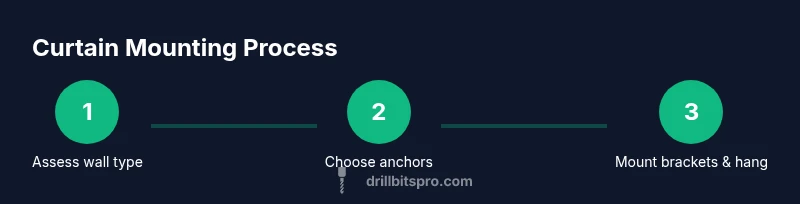
Understanding the curtain’s weight and the wall you’re working with is the first step. Lightweight sheers and decorative valances often tolerate non-drill mounting on solid walls or solid-core doors, but heavier drapes require more robust support. Wall material matters: plaster and brick demand different fasteners than standard drywall. If you’re mounting across a wide window, consider the potential leverage that a full drape can exert on a bracket over time. In this guide, we emphasize practical checks you can perform with basic tools to decide whether you should drill or seek non-drill options. The overall goal is to achieve secure mounting without unnecessary wall damage.
Non-drill options worth considering
If you’re renting, or if your wall is unsuitable for screws and anchors, there are non-drill approaches worth trying. Tension rods can work for light curtains in non-load-bearing situations, and decorative rod sets with built-in suction or adhesive mounts can offer temporary styling options. Command strips and adhesive hooks are available for light-to-medium weight fabrics, but they rely on clean surfaces and proper weight ratings. Non-drill methods also avoid potential wall repair when you move. However, they tend to be less reliable for heavy curtains or long spans. This section outlines when non-drill methods make sense and how to assess their longevity and safety.
Anchors and fasteners: choosing the right hardware
Selecting the right hardware is essential, whether you drill or not. For drywall walls, use anchors designed to distribute load and reduce the risk of pull-out. For masonry or brick, you’ll need masonry anchors or toggles rated for the observed load. Always match the anchor type to wall material and curtain weight. If you plan to use non-drill mounting, look for anchors that are compatible with removable or semi-permanent setups. The key is to balance ease of installation with the expected curtain weight, window width, and the wall’s support capabilities. This section helps you make informed choices about the right hardware without guessing.
Studs, anchors, and finding the best mounting point
Locating a stud is a reliable way to achieve strong support for heavier curtains. Use a stud finder to pinpoint wood framing behind the wall. If you find a stud, mount the bracket into it for maximum strength. If studs aren’t accessible where you need to mount, you’ll rely on anchors and toggles suitable for your wall type. Mark your mounting points with a pencil, then re-check level and spacing. A common mistake is misaligning brackets, which causes the rod to tilt or sag. Taking a few minutes to verify alignment saves time later.
Step-by-Step: preparing, measuring, and marking
Precise measurement is the backbone of a successful curtain install. Start by measuring the window width and deciding how far beyond the window you want the rod to extend. Mark the height on the wall using a level; many prefer the rod to sit about 4–6 inches above the window frame for a balanced look. Transfer these marks to both sides and double-check distances before proceeding. Confirm that your marks align with the intended bracket positions and that the rod will clear window trim if present. A clean plan reduces the chance of messy brackets and misplaced holes.
Step-by-Step: drilling and mounting brackets
If you’ve determined that drilling is appropriate, begin with a pilot hole using a bit matched to your wall material. For drywall, insert the wall anchors first, then drive screws into the anchors to secure the bracket. If you’re mounting into studs, you can go directly into the wood for higher strength. Keep the bracket straight by checking alignment with a level as you go. Attach the second bracket, then mount the curtain rod. Tighten screws securely without over-tightening, which can strip the anchors or damage the wall. Finally, hang the curtains and test their weight.
Step-by-Step: alternative non-drill mounting
For non-drill installations, use tension rods or adhesive-based mounting systems designed for curtains. Ensure the window width and wall surface support the chosen method, and follow manufacturer guidelines for weight limits. Install per the product’s instructions, center the rod above the window, and test with the curtain loaded to its typical weight. Expect that non-drill methods may require periodic readjustment, especially if you adjust curtain height or style. Always monitor for signs of slipping or loosening and replace mounts if needed.
Final checks, rental considerations, and maintenance
Before declaring success, re-check all connections, brackets, and alignment. In rental scenarios, keep documentation of the installed hardware and avoid damage that would incur penalties upon move-out. Maintain the rod by periodically tightening screws and inspecting anchors for wear or creaking. If you notice any sagging, revisit the mounting points and consider upgrading anchors or switching to a more robust non-drill option. A quick annual check can prevent a curtain rod from failing unexpectedly.
Authority and sources you can trust
Installing curtains safely hinges on understanding your wall type, weight loads, and the right mounting hardware. For general safety guidelines, see OSHA at cpsc.gov and explore university extension resources for material-specific guidance. These sources provide practical safety reminders and best practices that complement this DIY guide.
Tools & Materials
- Cordless drill or hammer drill(Choose variable speed; use low to moderate torque to reduce wall damage)
- Appropriate drill bits (wood, masonry)(Match to wall material; masonry bits for brick/concrete)
- Wall anchors (drywall anchors, toggles, or molly bolts)(Select anchors rated for curtain weight and wall type)
- Curtain brackets and mounting screws(Assure bracket width fits rod and window span)
- Stud finder(Locate studs for heavy curtains)
- Measuring tape(Accurate width and height measurements)
- Level(Keep rod perfectly horizontal)
- Pencil or marking tool(Mark drilling and mounting points)
- Screwdriver (Phillips or flat)(For driving screws into anchors or studs)
- Safety glasses(Eye protection while drilling)
- Adhesive hooks or tension rod (optional)(Non-drill options for lightweight setups)
Steps
Estimated time: 45-75 minutes
- 1
Measure and plan
Determine rod length, extension beyond window, and desired height. Mark notes where brackets will sit, ensuring symmetry on both sides. Consider existing trim and obstructions.
Tip: Use painter's tape to outline bracket positions before marking. - 2
Check wall type and weight
Identify whether the wall is drywall, plaster, brick, or concrete. Estimate curtain weight and decide whether anchors or studs are necessary.
Tip: Heavier curtains benefit from wood studs or heavier anchors. - 3
Locate studs or choose anchors
If mounting into a stud, plan brackets to align with stud centers. If not, pick anchors suitable for your wall material and curtain weight.
Tip: Double-check with a stud finder and verify not just wall surface. - 4
Mark drilling points
Mark precise bracket holes at both ends, ensuring level alignment. Re-check spacing against rod length and window width.
Tip: Mark pilot holes for both brackets to ensure accuracy. - 5
Drill pilot holes (if drilling)
Drill pilot holes using the correct bit size for your anchors. If mounting into studs, skip anchors and go straight to screws.
Tip: Keep drill steady and perpendicular to wall. - 6
Install anchors and mount brackets
Insert anchors into holes and drive screws to secure brackets. Use a level to confirm horizontal alignment before tightening.
Tip: Tighten evenly to avoid bracket tilt. - 7
Hang rod and test load
Place the rod on brackets, level it, and add curtains to test weight distribution. Check for any sag or loose fittings.
Tip: If there is sag, adjust bracket positions or add stronger anchors. - 8
Non-drill option setup (if chosen)
Assemble tension rods or adhesive mounts per manufacturer instructions. Center above window and test with full curtain weight.
Tip: Non-drill setups may require occasional re-tightening.
Got Questions?
Do you absolutely need a drill to hang curtains?
Not always. Lightweight curtains and non-load-bearing setups can use tension rods or adhesive mounts, but heavier drapes typically require drilling or heavy-duty anchors for secure support.
Not always, but heavy drapes usually need proper anchors or drilling for safety.
What should I do if I’m renting and cannot drill?
Choose non-drill options designed for rental spaces, such as tension rods or removable adhesive mounts, and ensure they support the curtain weight. Always confirm with the landlord if you’re unsure.
If you rent, use non-drill mounts that are removable and check with your landlord if needed.
Which anchors are best for drywall?
Look for anchors rated for the wall material and curtain weight. Plastic expansion anchors, plus proper screws, are common; for heavier loads, toggle bolts or molly bolts offer greater strength.
Drywall anchors vary; heavier loads benefit from toggles or molly bolts.
How do I locate a stud for heavy curtains?
Use a stud finder to locate solid wood behind the wall and align brackets with the stud centers for maximum support. If a stud isn’t available where you need the mount, rely on high-quality anchors instead.
Find a stud for strength; if not possible, use reliable anchors.
Can I use a tension rod for any curtain type?
Tension rods work best for lightweight curtains and decorative purposes. They are not ideal for heavy drapes or long spans where mounting brackets are more secure.
Tension rods are good for light curtains, not for heavy drapes.
What maintenance is needed after installation?
Periodically check screws and anchors for looseness, re-level the rod if needed, and replace any worn hardware to prevent sagging or failure.
Regularly check and tighten; replace worn parts as needed.
Watch Video
Top Takeaways
- Plan rod placement before starting.
- Choose the right anchors for your wall type and curtain weight.
- Measure accurately and verify with a level.
- Consider non-drill options only for lightweight setups or rentals.
- Test the curtain load and re-adjust if needed.