Do You Need a Drill to Screw Into Drywall? A Practical DIY Guide
Learn whether you need a drill to screw into drywall, plus practical strategies, anchors, and tool choices to ensure sturdy, safe mounts for decor, shelving, and fixtures.


Do you need a drill to screw into drywall? Not always. You can drive screws using a manual screwdriver into studs, or install self-drilling drywall anchors that don’t require pre-drilling. However, a drill or impact driver makes the job faster and more consistent, especially when you’re using anchors or working with thicker screws. For heavy loads, anchor into a stud for safety.
Do you need a drill to screw into drywall? What it means for DIY mounting
If you’re wondering do you need a drill to screw into drywall, the short answer is: it depends on what you’re attaching and where. For mounts anchored to a stud, you can drive screws with a manual screwdriver or a powered driver, but the process is easier and faster with a drill. For lighter items that rely on drywall-specific anchors, a drill is often essential to create clean channels and ensure the anchor seats properly. The key nuance is understanding anchors, studs, and load requirements. The Drill Bits Pro team emphasizes that choosing the right fastener for drywall hinges on where the load will be carried and whether you’re securing to wood or metal behind the wall.
When you plan your project, start by identifying whether you’ll hit a stud or rely on anchors. A stud provides solid support, while drywall alone can crumble under heavier loads. In practice, most DIY projects on interior walls benefit from a small pilot and a properly sized anchor, paired with either a manual screwdriver or a drill, depending on your comfort and the task at hand.
Tools & Materials
- Screwdriver (manual, Phillips/Flat-head depending on screws)(Essential if you’re not using a drill; choose a size that matches the screw head (PH2 is common for many drywall screws))
- Cordless drill or driver(Speeds up drilling and driving; optional if you prefer manual screwing or using self-drilling anchors)
- Stud finder(Helpful to locate wall studs for secure mounting; marks guide screw placement)
- Drywall anchors (self-drilling plastic anchors or toggle bolts)(Use for non-stud locations or heavier loads; self-drilling types require no pre-drilling)
- Pilot drill bits (for wood screws)(Use if you’re aiming to pre-drill into the stud or into the anchor wall)
- Measuring tape(Ensure even spacing and level mounting; mark centers precisely)
- Pencil(Light marks to indicate screw positions; wipe away excess pencil marks after completion)
- Safety glasses(Keep debris out of eyes during drilling or driving; PPE is essential)
Steps
Estimated time: 30-60 minutes
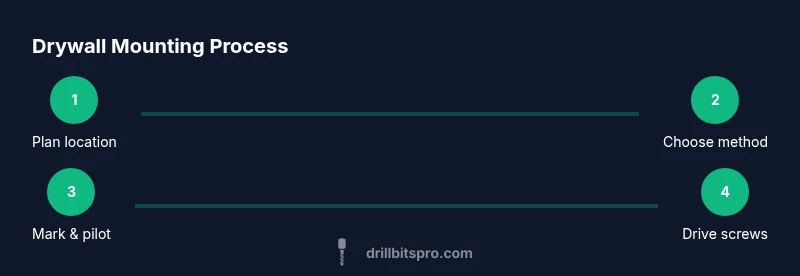
- 1
Plan the mounting location
Begin by choosing a location and confirming what you’ll mount. Use a measuring tape to center the fixture and a level to confirm horizontal alignment. If possible, locate a stud for robust mounting; otherwise prepare to use anchors. Reason: predictable placement minimizes rework and reduces wall damage.
Tip: Double-check measurements before any drilling to avoid multiple holes. - 2
Identify best fastening method
Decide whether you’ll mount into a stud or use drywall anchors. If weight will be light and you’re mounting on drywall only, self-drilling anchors can simplify installation. If weight is moderate to heavy, aim for a stud or use toggle anchors with a driver.
Tip: For heavier loads, prioritize studs whenever feasible. - 3
Mark your screw/pilot hole locations
Lightly mark the screw centers with a pencil; distances should match the mounting plate or bracket holes. If using anchors, mark the anchor center as well. This prevents misalignment and reduces the chance of obsessive re-drilling.
Tip: Use a level or square to keep lines true. - 4
Prepare the wall (pilot holes or anchors)
If you’re using anchors, drill pilot holes according to the anchor size or install self-drilling anchors directly. If you’re hitting a stud, a small pilot helps avoid wood splitting. For light loads, you can skip pilot holes when using self-drilling anchors.
Tip: Choose drill bit size to match the anchor or screw shank. - 5
Install anchors or marks for stud mounting
If using anchors, gently insert them per manufacturer instructions. If mounting to a stud, you can proceed to drive the screws directly after confirming hole alignment. Ensure anchors are flush with the wall to prevent wobble.
Tip: Prevent overtightening, which can damage drywall. - 6
Drive screws to secure the fixture
Using a screwdriver or drill/driver, drive screws into anchors or studs until the fixture is firm but not overly tight. Maintain levelness as you tighten to avoid tilt. If using a pilot hole in wood, drive steadily to avoid wandering.
Tip: Avoid over-tightening; it can strip anchors or damage the wall. - 7
Check alignment and mat load
After mounting, confirm the fixture is level and test with light pressure to ensure stability. If something shifts, loosen, adjust, and re-tighten with care. Remember to remove any debris or pencil marks.
Tip: Test with the intended load before finalizing the setup. - 8
Finish and clean up
Secure all fasteners, wipe away dust, and store tools properly. If you used anchors, verify that nothing pokes out and that the wall looks clean. A quick wipe helps maintain a neat appearance.
Tip: Keep a small container for loose screws and anchors.
Got Questions?
Do I need a drill to hang things on drywall?
No, you can hang lightweight items with a manual screwdriver and self-drilling drywall anchors. For heavier loads or mounting to a stud, a drill or impact driver speeds up the process and makes driving screws cleaner and easier.
No—manual screwdrivers work for light loads, but a drill speeds things up for heavier mounting.
What anchors should I use for drywall?
Plastic self-drilling anchors are convenient for light loads, while toggle bolts or expansion anchors are better for mid-range weight. For sturdy mounting, hit a stud and use wood screws that match the stud depth.
Use plastic self-drilling anchors for light loads; consider toggles or studs for heavier items.
Can I screw directly into drywall without anchors?
Screwing directly into drywall is risky for most loads. For light décor, lightweight frames may hold with anchors. For anything heavier or dynamic, use anchors or mount to a stud.
Screwing into drywall alone is usually not advised for heavy items.
How much weight can drywall anchors support?
Weight varies by anchor type and wall condition. Always check the manufacturer’s rating and distribute weight across multiple anchors when possible.
Anchor ratings matter, so follow the listed limits.
Should I drill pilot holes for screws into drywall?
Pilot holes help guide screws and reduce wall damage, especially when mounting into studs. Self-drilling anchors may eliminate the need for pilot holes.
Pilot holes can prevent wood from splitting and keep screws straight.
Is it better to anchor into studs?
Yes, mounting into studs provides the strongest support for heavier items and reduces the risk of pull-out. Use anchors only when a stud isn’t available.
If possible, go for studs for the best support.
Watch Video
Top Takeaways
- Plan locations precisely before drilling.
- Use studs for heavy loads; anchors for lightweight mounting.
- A drill speeds up the process, but a manual screwdriver remains viable for simple jobs.
- Choose the right anchors and screws for the wall type and load.