How to Drill for a 6-32 Tap: A Practical Guide
Learn to drill for a 6-32 tap with precision. This step-by-step guide covers drill size, lubrication, tapping technique, safety, and troubleshooting for metalworking projects.


Drilling for a 6-32 tap requires a precise approach: use a No. 36 drill (0.1065 in), a 6-32 tap, and proper lubrication. This guide teaches drill size selection, alignment, tapping technique, and quality checks to ensure clean, accurate threads for small metalwork projects.
Understanding the goal: drill for 6-32 tap
Drilling for a 6-32 tap starts with a clear objective: create a clean, round hole that will receive a fine-thread tap. The hole's diameter, concentricity, and edge condition determine thread quality and fastener reliability. From a practical standpoint, success hinges on choosing the correct drill size, maintaining perpendicular alignment, and applying lubrication to reduce friction. According to Drill Bits Pro, success begins with a precise plan and verified tooling. The Drill Bits Pro team found that common tapping failures stem from misalignment, dull cutting edges, or insufficient lubrication—especially with small-diameter taps. In this section we establish the core goal, common constraints, and practical expectations for drilling for a 6-32 tap.
Why 6-32 taps are common in DIY and metal work
6-32 taps are among the most frequently used small-thread taps in DIY projects and light metalworking because they strike a balance between a compact screw size and adequate strength. They show up in electronics housings, camera fittings, small brackets, and hobbyist machined parts. The small diameter demands careful hole preparation, consistent lubrication, and precise tapping technique to avoid cross-threading or binding. For professionals, the 6-32 tap is a standard utility that travels well in tool kits, reducing the need for many different thread sizes on the job. Mastering this size unlocks reliable hardware connections in tight spaces.
Selecting the right drill size and tap drill chart
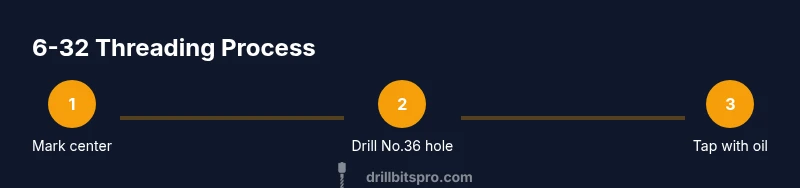
The conventional tapping drill for a 6-32 thread is No. 36, which equals 0.1065 inches. This standard is widely taught in tapping charts for steel and general metals. Because materials vary in machinability and heat generation, you should verify with manufacturer data or a trusted tapping chart before full production. When in doubt, start with No. 36 on scrap material and check for fit and thread quality. If you observe binding, recut the hole or verify the drill is sharp and perpendicular to the work surface. Drill Bits Pro Analysis, 2026 emphasizes sticking to a proven tapping chart and validating with trial runs on scrap pieces.
Safety considerations before tapping
Tapping small threads involves rotating tooling near your hands and generating heat. Always wear eye protection and secure the workpiece with clamps or a vise. Use a drill press when possible to maintain perpendicularity; if you use a handheld drill, keep the tool steady and the feed light. Lubrication is essential to minimize heat, wear, and galling. Maintain a clean, organized workspace to prevent accidents or dropped tools. If you’re drilling and tapping in confined spaces, plan chip evacuation and ensure the drill chuck is properly tightened to avoid slippage.
Preparing the workpiece and setup
A clean start is essential. Mark the drilling location with a center punch to prevent wandering, then verify alignment with a square or jig. Secure the workpiece firmly in a vise or with clamps to prevent movement during drilling. If possible, use a drill press with a straight, rigid column. Prepare all tools and lubricants within reach so you do not lose control or misalign the tool mid-process. The setup should minimize runout and chatter that can ruin hole geometry. A well-prepared setup reduces rework and improves thread quality.
Drilling technique and hole quality checks
Apply a light coating of cutting fluid to the drill point and workpiece. Start at a slow speed to establish a clean pilot hole, then advance with steady pressure. Use peck drilling—drill a short depth, withdraw to clear chips, then resume—to prevent chip packing and overheating. After drilling, inspect the hole for burrs and runout. If the hole isn’t true, adjust your setup or re-drill on scrap. Ensure the hole depth is adequate for the full thread engaging length, but avoid drilling too deep beyond the intended depth. A true, burr-free hole supports smoother tapping.
Deburring and chamfering the hole
Deburr the hole to remove sharp edges and prevent thread damage. A small deburring tool or a fine file can work well; finish by chamfering the entry so the tap starts smoothly. Clean away any chips and oil before tapping to prevent cross-threading and premature wear. Proper deburring reduces the risk of chips catching on the tap and causing misalignment during entry. A clean hole helps the threads form consistently and improves the final fit of the screw.
Lubrication and tapping technique
Apply a light film of cutting oil to the tap and the hole for reduced friction and heat. Begin tapping with a tap wrench or by hand, ensuring the tap remains perpendicular to the work surface. Turn forward a small amount, then back off slightly to break chips and clear debris. Maintain steady pressure and consistent speed; avoid forcing the tap, which can break the tool or distort the thread. When you near depth, reduce feed to avoid bottoming out the hole and damaging threads. Proper lubrication and technique are essential to clean, accurate threads.
Thread quality checks and measurement
After tapping, test the thread by threading in a 6-32 screw or a thread gauge. Check for smooth engagement with minimal resistance and ensure the screw sits flush or as designed. If the screw binds or cross-threads, back out and inspect the hole and the tap position. A quality check may include measuring thread pitch and depth with a gauge to confirm compliance with the standard. Verifying thread engagement early prevents assembly problems later in the project.
Material-specific tips (steel, aluminum, brass)
Different base materials respond differently to drilling and tapping. Steel often requires slower feeds and more lubrication to manage heat and chip formation. Aluminum benefits from lighter pressure and frequent chip clearing to prevent binding and galling. Brass can gall if lubrication is insufficient; adjust speed and oil accordingly. Always test on a scrap piece of the same material to calibrate cutting parameters before touching the final part.
Common mistakes and troubleshooting
Common mistakes include misalignment, dull tooling, overheating, and skipping deburring. If you encounter cross-threading, back out, realign, and start again. If the tap binds, stop and inspect; forcing a brake could break the tap or damage the part. A dull drill or a chipped edge can produce rough holes and poor threads. Keep the work area clean, chips evacuated, and tools sharp. When in doubt, re-check measurement and the drill’s condition; a little extra preparation pays off in thread quality.
Maintenance, storage, and final checklist
After completing the project, wipe down and dry all tools. Apply a light coating of oil to prevent rust and store taps and drills in a dry, organized case. Maintain a small set of common sizes and re-sharpen drills when needed. Before assembly, perform a final visual and tactile check of the hole and thread engagement. The Drill Bits Pro team recommends a repeatable, documented process for small-thread drilling and tapping to ensure durable, reliable results.
Tools & Materials
- No. 36 drill bit (0.1065 in)(Sharp HSS or cobalt; use with a drill press when possible)
- 6-32 tap(Right-hand thread; match material and finish)
- Cutting oil or tapping fluid(Light coating on bit and tap surfaces)
- Tap wrench or T-handle(Control turns and prevent over-torque)
- Center punch(Mark hole center to prevent wandering)
- Clamps or vise(Secure the workpiece firmly)
- Calipers or thread gauge(For final verification of pitch and depth)
- Deburring tool(Remove burrs after drilling)
- Coolant or spray bottle(Optional for long or hard cuts)
Steps
Estimated time: 90-120 minutes
- 1
Secure the workpiece
Clamp the part firmly in a vise or on a jig to prevent movement. Ensure the surface is clean and free of debris. This prevents alignment drift during drilling and tapping.
Tip: Use soft jaw padding or a protective strip to avoid marring the workpiece. - 2
Mark center and hole location
Use a center punch to mark the drilling point. Align any reference marks with a machinist square to ensure perpendicularity.
Tip: Double-check position from multiple angles to avoid misplacement. - 3
Choose and prepare drill size
Set up a No. 36 drill for the 6-32 tapping size. Verify the drill bit is sharp and properly secured in the chuck.
Tip: If you’re unsure of material, test on scrap first. - 4
Lubricate and drill pilot hole
Apply light oil and drill at a slow speed, keeping the drill perpendicular. Use pecking technique to clear chips and reduce heat.
Tip: Withdraw slightly to wipe away chips after every few turns. - 5
Deburr and chamfer the hole
Remove burrs and bevel the entry to ease tapping and reduce edge resistance. Wipe away chips and excess oil.
Tip: A small chamfer helps the tap start straight. - 6
Lubricate the tap
Apply cutting oil to the tap before starting. Keeping a light film reduces friction and stabilizes thread formation.
Tip: Spin the tap by hand to feel it engage before using the wrench. - 7
Begin tapping
Start the tap with steady, gentle pressure, keeping it perpendicular. Advance a little, then back off to break chips.
Tip: Do not force the tap; let the tool cut the thread. - 8
Advance to depth
Continue turning using small increments until you reach the desired depth. Back off periodically and clean out chips.
Tip: Use a depth stop or mark the tap with a foil to gauge depth. - 9
Finish inspection
Thread the screw into the hole to verify fit. Check for even engagement and absence of binding.
Tip: If binding occurs, re-check alignment and deburr as needed. - 10
Remove and test
Carefully remove the tap and inspect the hole for burrs. Clean the area before final assembly.
Tip: Wipe surface with a lint-free cloth to prevent residue. - 11
Final checks
Run a test thread in a scrap piece and compare to the intended tolerance. Confirm the hole depth and thread pitch are correct.
Tip: Document any deviations for future projects. - 12
Maintenance plan
Clean tools, oil lightly, and store in a dry, organized case. Keep a small set of core sizes strictly maintained.
Tip: Regularly sharpen drills and replace worn taps.
Got Questions?
What is the standard tap drill size for a 6-32 tap?
The standard tap drill size for a 6-32 thread is No. 36, about 0.1065 inches. Always verify with a reliable tapping chart or manufacturer data before production.
The standard tap drill size is No. 36, which is about 0.1065 inches. Check a chart or manufacturer data to confirm for your material.
Can I use the same drill size for different materials?
No. The drill size can vary by material and hardness. Start with the standard No. 36 on scrap, then adjust based on material behavior and observed thread quality.
Drill size can vary by material. Start with No. 36 on scrap and adjust based on the results.
Which lubricants are recommended for tapping?
Use light cutting oil or tapping fluid to reduce friction and heat. Reapply as needed during longer tapping runs to maintain smooth cutting action.
Use a light cutting oil to reduce friction, and reapply if you lift the tap for longer runs.
What causes cross-threading and how can I prevent it?
Cross-threading is usually caused by misalignment or a dull tool. Prevent it by securing the workpiece, ensuring perpendicular entry, deburring, and taking light, even turns with the tap.
Cross-threading happens when the tap isn’t aligned or the hole isn’t deburred. Secure, align, and turn gently.
Is deburring necessary after tapping?
Yes. Deburring removes sharp edges that can cause injury and improve screw engagement. A small deburring tool or file works well.
Yes. Deburring makes it safer to handle the hole and helps the screw seat properly.
What should I do if the tap breaks?
If the tap breaks, stop immediately, back it out carefully, and inspect the hole. Do not force removal. Use penetrating oil and extraction methods if needed.
If the tap breaks, stop and carefully remove it. Don’t force it out; use a proper extraction technique.
Watch Video
Top Takeaways
- Confirm drill size No. 36 for 6-32 tapping before starting
- Keep workpiece secured and perpendicular to drill
- Lubricate and clean chips to prevent binding
- Test final thread with a 6-32 screw and gauge