How to Drill Without Dust: A Practical Guide
Learn how to drill without dust using extraction, shrouds, and smart techniques. This guide covers tools, setup, and safety for wood, metal, and masonry projects.


Learn how to drill without dust by applying dust extraction tools, shrouds, and the right drill bits. This guide explains vacuum-assisted drilling, enclosure methods, and PPE to minimize mess, protect lungs, and keep your workshop clean. Ideal for DIY projects and professional jobs alike. You'll learn how to select compatible tools, set up efficient workflows, and verify results with simple dust measurements.
Understanding Dust and Why It Matters in Drilling
Understanding the value of drilling without dust starts with health, visibility, and surface cleanliness. For DIYers, learning to drill without dust reduces cleanup time, protects airways, and keeps your work surface clear for measurements. According to Drill Bits Pro, effective dust control begins before you touch the drill. Start by choosing a setup that captures debris at the source and encloses the work area. In this section, we cover the core concept and why it matters across materials like wood, metal, and masonry. You’ll see how integrating a vacuum, a shroud, and strategic planning changes the quality of your results. When you think through the workflow, you’ll realize that dust control is not a chore but a core part of precision drilling. It also scales up from small hobby projects to professional jobs, where consistent cleanliness translates into safer environments and less post-project cleanup. Let’s lay a practical foundation: what to expect, what to buy, and how to arrange your space for maximum dust capture.
drill without dust is more than a cleaner bench; it’s safer, faster, and more predictable for outcomes across materials.
Core Techniques for Dust Control
To truly minimize dust, you must capture it at the source and manage the work area. The most reliable method combines a dedicated dust extractor, a shroud or hood that fits your drill, and a sealed workspace. Start with a test run on scrap material to confirm suction strength and airflow. The key is maintaining continuous dust capture while you drill, rather than hoping cleanup will be effortless afterward. This approach benefits all common materials—wood, metal, and masonry—by reducing airborne particles and improving visibility. Remember that technique matters almost as much as tools: steady feeds, appropriate bit speeds, and minimal retractions keep debris from escaping and complicating cleanup. In real-world projects, dust control translates into safer environments, less cleanup time, and higher precision in hole placement and edge quality.
Tools and Bits for Dust-Free Drilling
A robust dust-free setup starts with the right tools and bits. Use a drill with a compatible shroud or an external dust extraction attachment, paired with a HEPA-filter vacuum connected directly to the shroud. Have a set of carbide-tipped bits for masonry, high-quality brad-point bits for wood, and twist bits for metal. A center punch and pilot bit help guide accuracy and reduce wandering, which otherwise creates extra dust. Protective equipment like N95 respirators or P100 masks and safety glasses should be worn at all times. Keep plastic sheeting or a drop cloth to seal the work area, and use painter’s tape to secure edges and prevent leaks around the drilling zone. This combination minimizes debris escape and makes cleanup straightforward.
Workspace Setup and Safety Barriers
Set up a contained workspace to prevent dust from migrating to adjacent areas. Start by laying down plastic sheeting or a drop cloth, then seal the perimeter with painter’s tape to close gaps where dust can escape. Position the dust extractor close to the drilling zone and ensure the hose reaches the shroud or drill bit without kinks. If a dedicated dust extraction unit isn’t available, a high-quality shop vacuum with a HEPA filter can be used, but it must be run continuously during drilling. Standby materials like rags and extra bags for waste ensure you can tidy up quickly after each hole. Finally, test the setup with a dry run on scrap wood or metal to verify dust capture and airflow before proceeding to the actual work.
Material-Specific Strategies: Wood, Metal, Masonry
Different materials produce different dust profiles and require tailored strategies. For wood, brad-point bits and properly sized pilot holes reduce tear-out and dust, while a shroud keeps chips close to the hole. For metal, use slow to medium speeds and sharp bits to minimize heat and fine particles; keep lubrication or cutting oil handy for clean cuts and reduced dust, as appropriate for the metal type. Masonry dust is notoriously fine; use carbide-tipped bits with water mist or a dedicated wet-dry dust extractor to suppress particles at the source. If you must wet-drill masonry, plan for slurry containment and ensure you’re working over a surface that can be cleaned without hazardous runoff.
Wet vs Dry Drilling and Dust Reduction
Dry drilling is common and often adequate when paired with an efficient dust extractor. Wet drilling adds water to suppress dust in masonry or concrete, but it creates slurry and requires careful disposal. Use water in controlled amounts and place a container to collect runoff. If you opt for wet drilling, ensure electrical safety by keeping cords dry and avoiding standing water near the drill. In metal or wood, water is generally unnecessary and can complicate bit performance, so rely on suction and shrouding instead. The goal is to maintain consistent dust capture while preserving tool performance and edge quality.
Safety, Maintenance, and Compliance
Regular maintenance of your dust-control setup is essential for consistent results. Clean or replace vacuum filters as needed and inspect the shroud seal for integrity. Check the power cord, switch, and drill chuck for signs of wear. Always store PPE in a dry, accessible place and replace disposable respirators after each project if they become saturated with dust. Dispose of collected dust according to local regulations, especially for masonry particles that might contain silica. Keeping your system in good condition reduces the risk of leakage and ensures you stay compliant with safety standards. Document your maintenance schedule for future jobs.
Common Mistakes and How to Fix Them
Common mistakes include assuming the shroud fits all drills, neglecting to seal the workspace, and ignoring airflow. If dust escapes, recheck the shroud fit, seal gaps with tape, and verify the vacuum is drawing air through the correct port. Feeding too aggressively causes bits to skate and dust to escape; slow down and maintain a steady rate. Rushing through setup without testing on scrap piece leads to misaligned holes and more cleanup. Finally, skip the PPE step at your peril—dust exposure can be a health risk over time. Fixing these issues reduces cleanup time and improves precision.
Integrating Dust-Free Drilling into Your Workflow
Incorporate dust-free drilling into your standard workflow by allocating workspace, setting up the extraction early, and testing the rig on scrap before doing final work. Document the setup that works best for your most common tasks (wood, metal, masonry) so you can reuse it easily. For longer projects, consider a modular dust-control station that can be moved between jobs. This approach reduces setup time, enhances safety, and helps you deliver cleaner results to clients or teammates. By treating dust control as a core part of the process, you build habits that improve quality and efficiency over time.
Tools & Materials
- Drill with integrated dust collection or compatible shroud(Ensure shroud fits your drill chuck and allows unobstructed bit rotation)
- HEPA-filter vacuum or dust extractor(Connect directly to the shroud for best suction)
- Dust extraction hood/shroud(Match to drill size and material)
- Plastic sheeting or drop cloth(Seal workspace boundaries)
- Painter's tape(Secure edges and seal gaps)
- Carbide-tipped drill bits (various sizes)(Use appropriate sizes for material)
- Brad-point bits for wood(Helps reduce tear-out and dust on wood)
- Pilot bit and center punch(Guide the bit and prevent wandering)
- Safety PPE (N95/P100 respirator, safety glasses)(Protect lungs and eyes from dust)
- Scrap material for test drilling(Practice and verify dust capture)
- Waste bags or bin for dust disposal(Contain and dispose responsibly)
Steps
Estimated time: 45-90 minutes
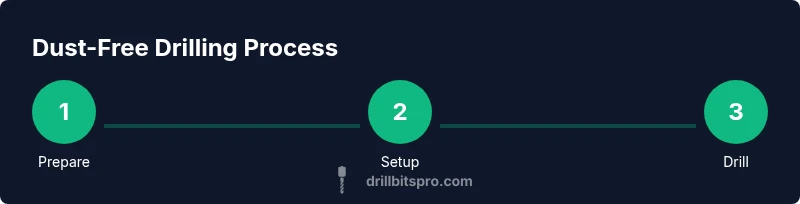
- 1
Prepare workspace and safety gear
Clear the area, lay down plastic sheeting, and don PPE. Confirm all tools are accessible and set up within arm’s reach. This establishes a controlled environment for dust-free drilling.
Tip: Have a test piece ready to verify dust capture before working on the real piece. - 2
Attach dust extraction and shroud
Mount the shroud on the drill and connect it to the vacuum. Ensure there are no loose fittings and that the suction is active before you start.
Tip: Do a quick fit check on scrap material to confirm proper dust capture. - 3
Seal the area and position vacuum
Seal gaps with tape and place the vacuum where it can draw air toward the hole. Verify airflow toward the shaft to minimize leakage.
Tip: Avoid blocking the vacuum inlet with dust or debris during operation. - 4
Mark center and select bit
Use a center punch for guidance, then select the appropriate bit. A pilot hole reduces wandering and dust generation.
Tip: Choose a bit slightly smaller than the final hole for clean edges. - 5
Drill with steady feed while vacuum runs
Apply consistent pressure with a controlled feed rate. Keep the drill perpendicular to the surface and maintain continuous suction.
Tip: Avoid twisting or pushing too hard; let the bit do the work. - 6
Inspect, clean, and dispose
Check hole quality and dust containment. Empty the collection bag, then wipe the area and remove plastic sheeting carefully.
Tip: Wash hands after handling dusty materials and store dust safely.
Got Questions?
What is dust-free drilling and why bother?
Dust-free drilling uses extraction, shrouds, and technique to reduce dust and debris during holes. It improves air quality, visibility, and precision.
Dust-free drilling uses extraction and proper technique to keep dust down and help you work more cleanly.
Do I really need a dust extraction system for small projects?
Yes, even small projects benefit from at-source capture to minimize cleanup and protect lungs. A compact system can be effective and easy to manage.
Even small jobs benefit from dust extraction to keep your workspace clean and safe.
Can I use any drill with a dust shroud?
Shrouds must fit your drill and collar size. Verify clearance around the chuck and verify that suction remains unobstructed during operation.
Make sure the shroud fits your drill and doesn’t block the chuck.
Which materials benefit most from dust-free drilling?
Wood, metal, and masonry all benefit when paired with correct bits and effective dust capture; the setup adapts to each material.
Wood, metal, and masonry all benefit from dust-free drilling with proper bits and suction.
What is the best way to set up a dust-free site?
Seal the workspace, position the vacuum at the hole, and use a shroud. Verify airflow before starting.
Seal the area, set up suction, and check airflow before you start.
What maintenance is needed after dust-free drilling?
Clean or replace filters, dispose of collected dust properly, and inspect seals for leaks.
Clean or replace filters and check for leaks after drilling.
Watch Video
Top Takeaways
- Plan workspace layout to contain dust.
- Use proper dust extraction from the start.
- Seal the area and test on scrap before final work.
- Prioritize PPE and equipment maintenance.