How to Get Started in Offshore Drilling: A Practical Guide
A step-by-step, educational guide to breaking into offshore drilling, covering training, safety, hands-on experience, job strategies, and long-term career planning.


You’ll learn a practical, step-by-step path to enter offshore drilling, including essential safety training, how to secure entry-level work, and how to build hands-on experience. This guide outlines concrete actions, realistic timelines, and risk-aware planning so you can start confidently and advance toward steadier roles on offshore rigs.
Why Offshore Drilling Offers Unique Opportunities
If you’re exploring how to get started in offshore drilling, you’re entering a field with strong demand, specialized skills, and clear avenues for progression. Offshore rigs operate in demanding environments, requiring workers who bring safety, technical curiosity, and a readiness to live in controlled, rotating schedules. The Drill Bits Pro team notes that a structured entry path—not just luck—puts beginners on a faster ladder to supervisory roles and higher credentialing. The allure isn’t just pay; it’s hands-on problem solving, learning-by-doing on real equipment, and the chance to contribute to critical energy projects. As you begin, focus on safety-first habits, a steady training cadence, and a plan to accumulate deliberate practice on tools and procedures before your first rotation.
The Core Path to Getting Started
Getting started in offshore drilling isn’t about a single milestone; it’s a portfolio of qualifications, fitness, and practical exposure. A practical path starts with clear goals, a verified safety training baseline, and a strategy to obtain hands-on time either through internships, apprenticeships, or entry-level contractor roles. Drill Bits Pro analysis shows that most successful entrants combine formal training with structured on-site shadowing and simulated drills. You should map a 12 to 24 month plan that includes safety courses, basic rig terminology, equipment familiarization, and soft skills like teamwork and clear communication. Early on, you’ll want to build a simple portfolio: safety certificates, a resume tailored to offshore roles, and records of any simulations or supervised tasks completed in training.
Foundational Safety and Training Requirements
Safety is non-negotiable on offshore rigs. Your starter plan should include mandatory safety and survival training, an overview of offshore procedures, and baseline medical clearance. Expect programs that cover life-saving drills, firefighting fundamentals, and evacuation procedures, plus general hazard recognition on a marine worksite. While requirements vary by country and operator, most entrants begin with a safety cornerstone and then layer in role-specific certifications. The right sequence is to complete foundational safety courses early, then add role-specific competencies such as equipment handling, hydraulics basics, and emergency response protocols. Throughout, maintain documentation of all trainings to streamline job applications and onboarding.
Gaining Hands-On Experience Before Your First Rotation
Hands-on exposure is the bridge between classroom learning and real-world offshore work. Seek opportunities to observe and assist under supervision, participate in controlled drills, and request feedback on your performance. Apprenticeships and contractor assignments are common roads into rigs, often starting with deckhand, roughneck, or roustabout roles that progressively introduce you to rig operations. Track the tasks you observe or perform, and proactively ask for increased responsibilities as safety and competence allow. If possible, arrange shadow days with experienced crew to learn routine checks, equipment layout, and communication protocols. Remember that practical experience compounds quickly when paired with reflective practice and timely feedback.
Building a Practical Knowledge Base
A practical knowledge base combines terminology, tool handling, and procedural familiarity. Start with core terms (drill string, BOP, mud system, riser) and pair them with basic equipment diagrams or simulator modules. As you learn, create a personal glossary and quick-reference cheatsheets for common fault codes or alarm messages. Build confidence by reviewing equipment manuals, inspection checklists, and maintenance records—these habits translate into quicker decision-making on the rig floor. It’s also valuable to learn about the safety management systems in place at your target company so you can align your questions and examples with their procedures.
Job Search Strategies for Offshore Roles
To land an entry-level offshore role, leverage a combination of online job boards, recruiter networks, and direct company outreach. Tailor your resume to highlight safety training, transferable skills (teamwork, communication, problem-solving), and any hands-on practice you’ve completed, even if it’s simulated. Prepare a concise elevator pitch that explains why you’re committed to offshore drilling and how your training aligns with their safety culture. Networking matters: attend industry open houses, join relevant professional groups, and seek referrals from mentors or instructors who understand rig life. When applying, emphasize reliability, willingness to rotate, and the ability to adapt to demanding schedules.
Planning for Long-Term Career Growth on the Rig
Once you gain a foothold, your focus should shift to sustained learning and credential advancement. Develop a plan that includes continuing safety re-certifications, advanced equipment courses, and supervisory training. Track milestones like hours worked, tasks completed, and feedback received to demonstrate progress. Communicate your career intent to supervisors and recruiters, and seek progressively challenging roles that expand your responsibilities. A long-term view helps you target higher-paying positions such as toolpusher or drilling supervisor, but those roles come with greater safety expectations and leadership requirements. Consistency, mentorship, and deliberate practice are the engines of growth in offshore drilling.
Tools & Materials
- PPE Kit (hard hat, safety glasses, flame-resistant coveralls, gloves)(Ensure compliance with offshore safety standards and company policies)
- Steel-toe boots(ANSI/ISO-compliant safety footwear suitable for wet decks)
- Life jacket / PFD(Appropriate size and buoyancy for deck operations)
- Resume and certifications dossier(Copies of safety training, medical clearance, and any prior onboarding docs)
- Training plan(A structured schedule of foundational and role-specific courses)
- Notebook and pen(For field notes, glossaries, and task logs)
Steps
Estimated time: 6-12 months
- 1
Define your offshore drilling goal
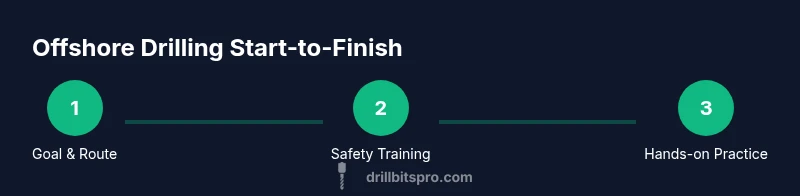
Clarify the kind of offshore work you want (deck crew, roughneck, operator trainee) and set a realistic timeline. A clear goal helps target the exact safety trainings and entry routes you should pursue first. Establish a short list of target companies and regions to focus your search.
Tip: Write down your 12-month plan and review it monthly to stay on track. - 2
Complete foundational safety training
Enroll in a foundational offshore safety program and any required survival training. This creates your baseline safety readiness and is typically required before hands-on work or site visits. Validate certificates with copies to prepare for onboarding.
Tip: Prioritize safety certifications that are widely recognized by major operators. - 3
Build a targeted resume and portfolio
Create a resume tailored to offshore roles, highlighting safety credentials, basic technical understanding, and any hands-on practice. Include short logs of drills or simulations to show practical engagement and reliability.
Tip: Include a brief summary of each course you completed and your key takeaways. - 4
Seek entry-level opportunities or apprenticeships
Apply to entry-level or apprenticeship roles on offshore rigs or with contractor teams. Leverage recruiters who specialize in maritime or energy sectors and aim for programs that offer on-the-job training.
Tip: Ask about rotation schedules and what a typical first assignment looks like. - 5
Engage in hands-on practice and simulations
Supplement classroom learning with simulator modules or supervised field tasks. Record your performance metrics and seek feedback to target improvement areas.
Tip: Schedule time for deliberate practice beyond required training hours. - 6
Learn rig terminology and safety culture
Study core terms (drill string, BOP, mud system) and understand the safety culture of your target operators. This helps you communicate clearly and fit into a team quickly.
Tip: Create a personal glossary you can reference on the job. - 7
Network with recruiters and mentors
Build relationships with recruiters, instructors, and on-site supervisors. A strong network can open doorways to internships, secondments, or referrals.
Tip: Prepare a concise pitch about your background and your commitment to offshore safety. - 8
Prepare for offshore life logistics
Understand rotation patterns, travel requirements, and on-site living conditions. Plan your transport, housing, and family arrangements to minimize stress during transitions.
Tip: Ask for a practical briefing on shift routines and on-call expectations. - 9
Document progress and plan next steps
Keep a simple log of tasks completed, hours worked, and feedback received. Use this record to inform future training choices and to demonstrate progress in interviews.
Tip: Use a weekly reflection to identify one improvement area.
Got Questions?
What is offshore drilling and who works on rigs?
Offshore drilling involves extracting oil or gas from beneath the seabed using rigs located offshore. Teams on rigs include deck crew, roughnecks, engineers, and supervisors who work in rotating shifts in a high-safety environment.
Offshore drilling uses rigs at sea to extract resources. Teams rotate through shifts, focusing on safety and precise operations.
What training is required to start offshore drilling?
Most entrants must complete foundational safety and survival training, plus any role-specific certifications. Training requirements vary by country and operator, so verify with the employer before onboarding.
You’ll need safety and survival training, plus role-specific certifications. Check with the employer for precise requirements.
How long does it take to start a career in offshore drilling?
It typically takes several months to a year to complete initial training, gain entry-level exposure, and secure a rotation. Individual timelines depend on training availability and job market conditions.
Most people spend several months to a year to begin offshore work after starting their training.
Are there entry-level roles without prior experience?
Yes, many operators hire for entry-level positions that include on-the-job training. These roles start you on the deck or support tasks and progressively build technical skills.
There are entry roles that provide on-the-job training to build your offshore skills.
What should I include in my resume for offshore drilling jobs?
Highlight safety certifications, any hands-on training, and examples of teamwork and reliability. Include a concise summary of your goals and readiness for offshore rotations.
Feature safety credentials, training, and teamwork experience in your resume.
Is offshore work physically demanding?
Offshore work involves long shifts, physical tasks, and adapting to a rotating schedule. Focus on health preparation, safety routines, and stamina-building activities.
Yes, it can be physically demanding; good health and preparation help a lot.
Watch Video
Top Takeaways
- Define a clear offshore entry path and target roles.
- Prioritize foundational safety training before exposure to rigs.
- Gain hands-on experience through simulations and supervised tasks.
- Build a role-specific resume and network with recruiters.
- Plan for long-term growth with ongoing certifications and leadership training.