Oil Well Drill Guide: Practical, Safe Step-by-Step Instructions
A practical, AI-enhanced guide to oil well drilling: equipment, safety, and step-by-step workflows for DIYers and professionals seeking reliable, maintenance-focused guidance.


This guide helps you plan, set up, and operate an oil well drill safely and efficiently. According to Drill Bits Pro, you’ll learn essential components, site preparation, drilling steps, maintenance routines, and troubleshooting tips. This practical framework is designed for DIY enthusiasts and professionals seeking reliable, hands-on guidance to execute an oil well drill confidently.
Core Components of an Oil Well Drill System
An oil well drill system is a complex assembly of equipment that turns rock into access for hydrocarbons. At the heart of the setup is the drill rig, which provides the mechanical energy to advance the drill string into the subsurface. The drill string itself is a sequence of joints and pipes connected together, transmitting rotation and weight to the bit at the bottom. Drill bits vary by formation—roller-cone bits for hard rock and PDC bits for softer sediments—each chosen based on geology and expected bit life. A controlled mud system circulates drilling fluid to cool the bit, carry cuttings to the surface, and stabilize the borehole. Supporting hardware includes casing to line the hole, cementing equipment to secure the casing, and a Blowout Preventer (BOP) for safety. In modern operations, a top drive or rotary table, together with logging tools, helps optimize drilling while keeping the crew safe. For those pursuing an oil well drill project, understanding these core components is essential before any fieldwork.
Safety and Compliance Considerations
Safety is the foundation of every drilling project. Personal protective equipment (PPE) must be worn consistently: hard hats, flame-resistant clothing, eye protection, gloves, and steel-toed boots. Before starting, perform a risk assessment, obtain the necessary permits, and establish clear communication protocols. Training on well-control procedures and BOP operation is mandatory, with periodic drills to ensure readiness. Regulatory compliance depends on your jurisdiction; in the United States, operators must follow standards from federal and state agencies, while many other regions have their own regimes. Drill Bits Pro emphasizes documenting safety checks, maintenance logs, and change orders as part of a compliant workflow. In 2026, keeping a transparent safety record supports audits and improves overall site integrity.
Site Preparation and Planning
Successful drilling begins well before (and after) mobilization. Site planning includes evaluating access roads, weather windows, and proximity to support facilities. Ground preparation should minimize environmental impact, with sediment controls, spill containment, and waste management plans in place. A pre-drill meeting aligns the crew on the objective, formation expectations, and the sequence of operations. Logistics planning covers fuel, fluids, spare parts, and equipment staging. The plan should also address contingencies for stuck pipe, equipment failure, or unexpected gas kicks. By detailing roles, responsibilities, and escalation paths, you reduce delays and keep the oil well drill on a safe, predictable track. Drill Bits Pro’s guidance highlights how thorough planning translates to fewer surprises on the rig floor.
Drill Bit Selection and Cutting Materials
Bit selection is a critical determinant of drilling performance and cost. PDC bits offer fast penetration in homogeneous formations, while roller-cone bits excel in mixed or hard rock. The bit’s wear resistance, cutters, and gauge influence hole quality and rate of penetration. Bit life depends on formation hardness, drilling parameters, and mud properties, so plan to rotate or change bits as needed. In some wells, hybrid approaches combine bit types to optimize drilling in varied intervals. Always verify clearance between the bit and the borehole wall to maintain hole integrity and avoid washouts. For an oil well drill, selecting the right cutting structure is as important as selecting the right mud weight and flow rate.
Drilling Fluids and Hole Management
Drilling fluids (mud) perform several jobs: cooling and lubricating the bit, transporting cuttings to the surface, and stabilizing the borehole wall. Mud weight, viscosity, and solids content must be tuned to formation pressure and fracture gradients. Gas detection and flow checks are essential to identify kicks early. Hole cleaning is achieved through appropriate flow rates and addition of weight materials when necessary. Proper hole management—avoiding washouts and caving—prolongs bit life and reduces non-productive time. Drill Bits Pro notes that disciplined mud scheduling and fluid chemistry optimization can dramatically affect drilling efficiency, especially in challenging formations common in oil well drill operations.
Maintaining Equipment and Extending Tool Life
Regular maintenance extends the life of critical components such as the drill string, mud pumps, and BOP. Inspect connections for wear, replace damaged gaskets, and torque fittings to spec. Pump maintenance should focus on filtration, cooling, and fluid quality to prevent overheating. Tools and measurement devices require calibration and storage in clean, dry conditions. A proactive maintenance plan reduces unexpected failures and keeps the well on schedule. The team should track hours of use, service intervals, and spare parts inventory. Drill Bits Pro emphasizes that predictable maintenance reduces total costs and increases reliability across oil well drill projects.
Troubleshooting Common Issues in Oil Well Drilling
Despite best planning, challenges arise. A stuck pipe can end a day’s work if not handled properly; anticipate using lubricants, back-reaming, and careful rotation to recover. Lost circulation occurs when drilling fluids fail to return, requiring mud weight adjustments and, in some cases, cementing actions. Bit wear outpaces expected life, signaling the need for a new bit or alternative cutting structure. Unplanned gas shows require gas detection, evacuation protocols, and adherence to well-control procedures. Drill Bits Pro advises documenting each issue and response to support learning and future prevention.
Environmental, Regulatory, and Best Practices
Environmental stewardship is integral to safe drilling. Contain and manage produced fluids, handle drilling wastes responsibly, and minimize surface disturbances. Cementing and casing operations should meet regulatory requirements and be executed by qualified personnel. Noise, dust, and traffic impacts should be mitigated with appropriate controls. Ongoing training, drills, and audit readiness are essential to maintain compliance and safety. By following a disciplined, well-documented process, your oil well drill operation can minimize risk, protect workers, and reduce environmental footprint over the project lifecycle.
Tools & Materials
- Oil well drill rig (on-site or portable)(Ensure operator is licensed and equipment is certified for the site)
- Drill string and drill bits (PDC/roller-cone as appropriate)(Size and type chosen for expected formation; bring spare bits)
- Drilling mud and mud pump(Mud weight and viscosity matched to formation pressure)
- Casing, cementing equipment, and annulus isolation(Needed to secure borehole and prevent contamination)
- Blowout Preventer (BOP) and control panels(Certified, tested prior to operation; essential safety device)
- Personal protective equipment (PPE)(Helmet, flame-resistant clothing, eye protection, gloves, boots)
- Gas detectors and well-control equipment(Continuous monitoring for kick risks and gas buildup)
- Mud logging and measurement-while-drilling gear(Optional but valuable for formation data and well planning)
Steps
Estimated time: 6-8 hours
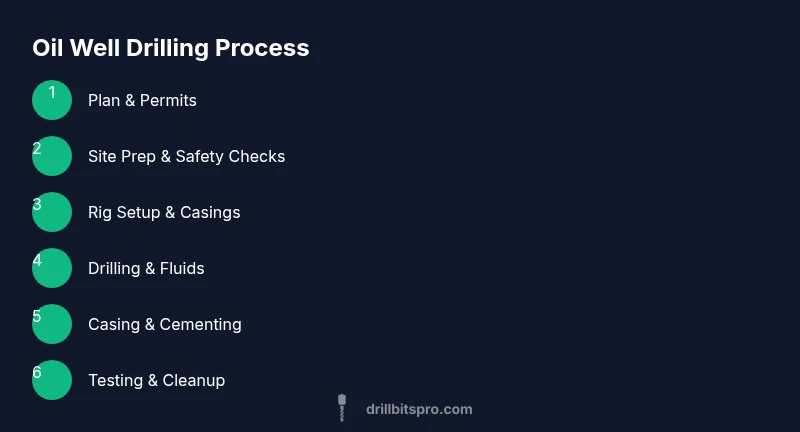
- 1
Define objective and plan
Clearly state the drilling objective, expected depth, target formations, and key success criteria. Develop the initial plan for logistics, safety, and contingencies. Confirm the plan with all crew members and stakeholders to ensure alignment.
Tip: Document the plan in a shared log and circulate updates to all relevant personnel. - 2
Prepare site and safety checks
Set up safety zones, PPE stations, and emergency contact points. Verify permits, weather windows, and the BOP readiness. Conduct a pre-task risk assessment and brief the crew on roles and escape routes.
Tip: Run a quick check of grounding, fire suppression, and first-aid readiness before mobilizing equipment. - 3
Assemble rig and run casing
Position the rig, connect the Kelly or top drive, and lower the casing into the borehole if required. Ensure all connections are torqued to spec and centralizers are properly placed to minimize stuck casing.
Tip: Use a slip-resistant surface and guide marks to prevent misalignment during pulling and running operations. - 4
Begin drilling with proper mud support
Start the drill string rotation while circulating mud to cool the bit and remove cuttings. Monitor mud weight, flow rate, and downhole pressures to maintain hole stability.
Tip: Keep an accurate record of drill rate, mud properties, and hole depth for correlation later. - 5
Adjust parameters and manage hole quality
If the hole shows signs of instability, adjust mud weight, rotation speed, and weight on bit. Check for washouts and adjust the drilling plan accordingly. Log all parameter changes.
Tip: Avoid aggressive weight-on-bit increases; small increments reduce the risk of formation damage. - 6
Perform log and formation evaluation
Use logging tools or mud logging to collect formation data, permeability indicators, and lithology. Reassess target zones and adapt drilling strategy to maximize information while limiting time and risk.
Tip: Coordinate with geologists to interpret logs promptly and adjust the plan as needed. - 7
Casing, cementing, and borehole integrity
Run casing to planned depth and cement to secure the borehole walls. Verify cement quality, bond, and isolation to prevent future leaks or contamination.
Tip: Schedule cementing operations with contingencies for pump downtime and weather delays. - 8
Closeout and demobilize
Clear the site, document final depths, logs, and equipment condition. Reconcile all materials, secure fluids, and prepare a post-operation report for stakeholders.
Tip: Capture lessons learned and update maintenance schedules based on the run data.
Got Questions?
What is the purpose of a blowout preventer (BOP) in oil well drilling?
A BOP is a safety device that seals the well to prevent uncontrolled release of fluids and gas. It’s essential for well control, especially in high-pressure zones, and is a primary line of defense against kicks and blowouts.
The BOP is a critical safety device that seals the well during pressure events to prevent blowouts.
How long does oil well drilling typically take?
Drilling duration depends on depth, geology, and equipment. It can range from days to weeks for a single well, with planning and contingency driving most of the schedule.
Drilling time varies widely, from days to weeks, depending on depth and geology.
What safety gear is essential for drilling?
At minimum, wear a hard hat, flame-resistant clothing, eye protection, gloves, and steel-toed boots. Add hearing protection and respiratory protection if conditions demand.
Wear hard hats, FR clothing, eye protection, gloves, boots, and additional PPE as needed.
What factors influence drill bit choice?
Formation hardness, rock type, and expected wear drive bit choice. Operators select from PDC, roller-cone, or hybrid bits based on anticipated wear and penetration rate.
Bit choice depends on rock type and formation hardness to balance speed and wear.
Is drilling mud hazardous?
Drilling mud contains additives and cuttings; handle according to safety data sheets and local regulations. Proper containment and disposal are crucial to minimize environmental impact.
Drilling mud can have hazards; handle and dispose of it per safety data and regulations.
What should you do if you encounter a kick?
Immediately initiate well-control procedures, increase mud weight within safe limits if trained, and alert the supervisor. Do not panic and follow established emergency protocols.
If you detect a kick, activate well-control procedures and follow your predefined emergency protocol.
Watch Video
Top Takeaways
- Plan thoroughly before drilling.
- Prioritize safety and compliance at all times.
- Choose appropriate bits and mud for the target formation.
- Maintain meticulous records throughout.
- Inspect equipment regularly to prevent failures.