No-Drill Blackout Blinds: A Step-by-Step Guide
Learn how to install blackout blinds without drilling. Explore adhesive, tension-rod, and magnet options, plus precise measuring, safety tips, and maintenance for renters and DIYers.


No-drill blackout blinds let you block light without hammering or screws. This guide covers adhesive-backed, tension-rod, and magnetic options, plus measuring and fit tips for a clean, renter-friendly setup. You’ll get practical, reversible methods, safety tips, and a clear plan to choose the right solution for your windows.
No-Drill Blackout Solutions: Practical Overview
Blocking light without drilling is a practical option for renters, temporary setups, and DIYers who want to protect walls and preserve aesthetics. No-drill blackout solutions rely on removable mounting systems that minimize wall damage while delivering strong light control. The Drill Bits Pro team has tested multiple approaches and found that adhesive-backed panels, tension-rod systems, and magnetic or clip-on options offer solid performance for most standard windows. When evaluating options, consider window size, weight of the shade, and whether you need temporary removal or frequent repositioning. This section lays out the core approaches and how they compare for durability, ease of use, and wall impact. According to Drill Bits Pro, no-drill options are especially popular for rental homes where wall damage is a concern and quick removal is a priority.
Choosing No-Drill vs. Traditional Installation
When you’re weighing no-drill blinds against traditional drilled hardware, consider light control, room aesthetics, and wall integrity. No-drill solutions are typically lighter and easier to remove, which reduces the risk of scuffs, nail holes, or paint peeling. Adhesive-backed panels provide strong surface contact but may leave residue if removed; tension rods are quick to install and reset but require a snug fit to avoid sagging; magnets or clips work well on metal or magnetic-friendly frames but may not suit all window shapes. Your choice should align with window type (flat vs. curved), frame material, and how often you plan to relocate the blinds.
Budget and Material Considerations
Budget-friendly no-drill options often use adhesive strips or tension rod hardware, while premium solutions may offer better light sealing, longer lifespan, and easier removal. Look for blackout fabrics with dense weaves, non-stretch backings, and compatible mounting surfaces (painted walls, glass, tile, or wood frames). Always verify the product’s weight rating and mounting weight to ensure compatibility with your window dimensions. For renters, reversible systems that won’t damage paint or wallpaper are especially valuable, and many manufacturers provide removable mounting options to preserve the original surface.
Measuring and Fit: Preparing for Success
Accurate measuring is essential to ensure a snug blackout effect and avoid light leaks. Measure the width and height of the window opening at three points (top, middle, bottom) and record the smallest width to ensure a proper fit. If you choose a tension-rod system, make sure the rod length can be adjusted to create a tight seal across the full window width. For adhesive-backed options, verify the surface is clean and dry before application, and consider using painter’s tape to temporarily map the placement. Accurate measurements save time and reduce rework, especially for non-standard window shapes.
Installation Safety and Surface Care
No-drill installations minimize wall damage but still require careful surface preparation. Clean the mounting surface with a mild cleaner to remove dust, oils, and residues that might weaken adhesion. If you’re attaching to painted drywall, avoid damp environments that could soften adhesives, and consider a test patch on an inconspicuous area first. For magnetic or clip-on systems, ensure the surface is compatible with the magnets or clips to prevent slippage. Always follow product instructions for curing times and load limits to protect both your blinds and your walls.
Maintenance, Cleaning, and Removal
Regular dusting with a microfiber cloth keeps the blackout fabric looking new and helps maintain light-blocking performance. For adhesive-backed systems, inspect the adhesive periodically and re-secure if you notice any loosening. When it’s time to remove, peel slowly at a gentle angle to minimize wall residue; if any residue remains, use a mild adhesive remover recommended for painted surfaces. Reusable or reusable-mount systems typically fare better for frequent repositioning, and choosing a kit with dry-erase-friendly surface maps can simplify reinstallation.
Troubleshooting Common Issues
Sagging fabric or light leaks are the most common complaints with no-drill blinds. Tighten tension rods or reposition the adhesive strips to create a tighter seal. For adhesive options, switch to a higher strength tape or add a second contact point at the corners. If magnets don’t grip securely, check the metal surfaces for paint or rust and clean or replace mounting points accordingly. Remember, imperfect fits can still yield meaningful improvements in darkness and privacy, especially in bedrooms or media rooms.
Tools & Materials
- Measuring tape(At least 1.5–2 meters for wide windows)
- Clean cloth and mild cleaner(For surface prep)
- Adhesive mounting strips or double-sided tape(Choose weight-rated strips)
- Tension rod kit or magnetic/clips(Ensure rod length fits window width)
- Painter’s tape or chalk marker(Mark placement gently)
- Scissors or utility knife(Trim fabrics or adjust width)
Steps
Estimated time: 30-60 minutes
- 1
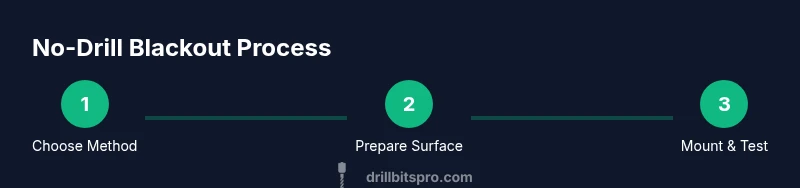
Assess window and choose method
Identify your window type and decide whether adhesive, tension-rod, or magnetic mounting best fits the frame and usage. Consider whether you will remove frequently, and whether the surface can tolerate adhesives. This initial choice determines installation steps and future adjustments.
Tip: Test a small area with painter’s tape to gauge mounting feasibility without committing. - 2
Prepare the window surface
Clean the window frame or glass area thoroughly and allow it to dry completely. A clean surface improves adhesion or grip and reduces the risk of slipping during installation.
Tip: Wipe with a microfiber cloth and a mild cleaner; avoid solvent-heavy cleaners that could damage finishes. - 3
Apply mounting hardware
Attach the adhesive strips according to the product instructions, or set up the tension rod to the correct width. Ensure the mounting point is level and centered for optimal light control.
Tip: Use a small level to verify horizontal alignment before pressing adhesives or securing the rod. - 4
Mount the blackout fabric or blind
Position the blackout panel so that it covers the window opening with minimal gaps. Press firmly if using adhesive, or adjust the rod/clips to achieve a snug fit across the top and sides.
Tip: Leave a slight clearance at edges to prevent binding and ensure smooth operation. - 5
Test fit and adjust
Close any gaps and test opening/closing with gentle pressure. Make minor adjustments to ensure a tight seal that blocks light effectively.
Tip: Walk around the frame and check for light leaks at all corners. - 6
Finalize and cleanup
Trim any excess material, remove tape residue if present, and store tools for future adjustments. Take note of any surface sensitivities for future removals.
Tip: Keep a small repair kit handy for quick touch-ups after removal.
Got Questions?
What is no-drill blackout blinds and how do they work?
No-drill blackout blinds use removable mounting systems such as adhesive strips, tension rods, or magnets to block light without drilling. They’re ideal for renters and temporary setups and can be removed without wall damage. Performance depends on window type and the weight of the blind.
No-drill blackout blinds use removable mounting systems like adhesive strips, tension rods, or magnets to block light without drilling. They’re renter-friendly and removable with minimal wall impact.
Are no-drill blinds as effective at blocking light as traditional blinds?
No-drill options can be highly effective, especially for standard windows. They may have small light gaps at edges, but thick blackout fabrics and properly sized mounts minimize leakage. For absolute darkness, combine multiple blocks or add secondary drapes.
No-drill options can block a lot of light, especially with proper sizing. There may be tiny gaps, but thick blackout fabric helps a lot.
Can renters install no-drill blackout blinds without damaging walls?
Yes. No-drill methods are designed to protect wall surfaces. Use removable adhesive strips or tension-based mounts that don’t puncture surfaces. Always follow product instructions and perform a test patch if unsure.
Yes, no-drill blinds are renter-friendly and can be removed without wall damage if you follow the instructions.
Do these blinds fit every window size and type?
Most no-drill options fit standard widths, but non-traditional or curved frames may require special adapters or different mounting strategies. Always measure precisely and choose products with flexible or adjustable components.
Most standard windows fit, but unusual shapes may need a special approach.
How long does installation typically take?
Most no-drill installations take about 30 to 60 minutes, depending on window size and your chosen method. Planning and measurement time at the start reduces overall install time.
Typically 30 to 60 minutes, with more time for tricky shapes.
How do I remove no-drill blinds without leaving marks?
Gently peel away mounting strips or tapes at a shallow angle. Use the product’s removal instructions to minimize residue, and clean the surface with a mild cleaner afterward. Some systems are designed for repeat removals with minimal surface impact.
Carefully peel the mounts at a shallow angle and clean the area afterward.
Watch Video
Top Takeaways
- Choose the right no-drill method based on window type and usage.
- Accurate measuring and surface prep drive success.
- No-drill options protect walls and are renter-friendly.
- Careful removal prevents residue and wall damage.