Weekend Drill: A Practical DIY Drilling Guide for All
Learn how to plan, prepare, and execute weekend drilling projects safely and efficiently. This guide covers tools, steps, safety tips, and troubleshooting for DIYers and professionals seeking practical results.


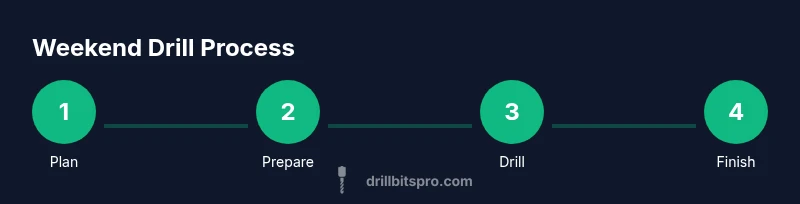
A weekend drill is about planning a focused drilling project that fits into a few productive hours. You’ll learn how to pick the right bits, assemble essential safety gear, set up a safe workspace, and follow a repeatable sequence that delivers clean holes with minimal effort. This guide outlines a practical, step-by-step approach designed for both DIY enthusiasts and pros.
Why Weekend Drilling Makes Sense
According to Drill Bits Pro, weekend drill projects unlock real efficiency when approached with a clear plan and the right gear. The goal is to convert a handful of spare hours into solid results without overcomplicating the task. Weekend drilling is ideal for small repairs, furniture assembly, or mounting hardware where accuracy matters more than brute force. By framing your job as a short, repeatable workflow, you reduce setup time, limit material waste, and stay motivated as you see tangible progress. For DIY enthusiasts and professionals alike, mastering a reliable weekend drill routine translates to fewer trips to the hardware store and more time enjoying your finished project.
Planning Your Weekend Drill Session
A successful weekend drill starts long before the bit touches wood, metal, or masonry. Begin by defining the project scope: exact hole counts, sizes, and positions. Gather all materials and tools in one organized setup to prevent mid-project trips. Create a quick checklist that covers safety gear, workspace protection, and waste disposal. Estimating the total time helps you carve out a realistic window—often 60–120 minutes for simple tasks or longer for multi-step jobs. Finally, protect a precise pilot-hole strategy to improve accuracy and reduce the risk of material splitting.
Safety First: Gear and Setup
Safety should never take a back seat, even for a quick weekend drill. Equip yourself with ANSI-rated safety glasses, hearing protection if using loud tools, and a respirator or dust mask for dusty materials. Keep a first-aid kit nearby and know where emergency shutoffs are located. Clear the workspace of tripping hazards, clamp the workpiece firmly, and use painter’s tape or a center punch to mark guides. A clean, well-lit area reduces mistakes and makes cleanup easier. If you’re drilling overhead or into masonry, extra caution and a more robust support setup are essential.
Choosing Tools, Bits, and Material Prep
Select the drill and bits appropriate for the material. Wood typically requires sharp high-speed steel or brad-point bits; masonry demands carbide-tipped or hammer drill bits; metal drilling needs high-torque, sharp bits and lubrication. Before you begin, inspect the drill chuck for grip, lubricate if necessary, and verify bit sharpness. Mark pilot holes to guide the bit and prevent wandering. If you’re unsure about the bit size, test on a scrap piece. For long-term results, keep your bit set organized and labeled by material.
Setting Up Your Workspace for a Weekend Project
A productive setup minimizes downtime and errors. Reserve a stable, flat surface with a clamp-ready edge. Protect nearby surfaces with scrap plywood or a work mat. Lay out a small toolbox with an extra bit set, a couple of drill bits of each type, and spare batteries if you’re cordless. Know where your dust collection or vacuum is located, and use it to keep the line of sight clear. If you’re drilling into walls or cabinetry, locate studs or framing to anchor securely and avoid damage.
Step-by-Step: A Simple Weekend Drill Project
This example focuses on mounting a shelf to wall studs, a common weekend task. Step 1: Measure and mark the hole locations precisely using a level and pencil. Step 2: Drill pilot holes at each mark to guide the larger holes. Step 3: Switch to the appropriate bit and drill to the final depth, starting slowly to prevent skidding. Step 4: Deburr holes and insert anchors if needed. Step 5: Attach the shelf brackets and test for levelness. Step 6: Clean up, store tools, and inspect the work for any burrs or loose fittings. Pro tip: use a scrap piece of wood behind the drywall to avoid drilling into hidden wires. This approach keeps the job manageable and repeatable for future projects.
Troubleshooting Common Issues
Wandering bits are a frequent source of frustration. If a bit bites too aggressively, slow the drill speed and start with a smaller pilot hole. If you encounter bit dullness, swap in a fresh bit rather than forcing the drill. Materials may chip if the drill is improperly aligned; realign and take shallow passes. Poor grip can lead to stripped holes—secure the workpiece and use clamps. For dusty or fine materials, consider a masking task to minimize mess and keep the area clean.
Finishing Touches and Clean-Up
Finish by inspecting each hole and ensuring it’s clean and free of burrs. Install any hardware, recheck alignment, and step back to verify overall appearance. Clean the workspace thoroughly: wipe surfaces, collect debris, and store tools in their dedicated spots. A tidy job site improves safety and makes you ready for the next weekend drill. If you’re adding multiple projects, create a quick log of what worked well and what could be improved for the next session.
Advanced Tips for Future Weekend Drills
As you gain experience, you’ll recognize patterns that speed up future weekend drills. Use a modular toolkit so you can swap tasks quickly. Practice consistent hole spacing with repeated layout lines and jigs. Consider pre-assembling components off-site when possible to minimize on-site complexity. Maintain your drill and bits with regular cleaning and lubrication to extend life. Finally, document your measurements and outcomes for a continuous improvement cycle.
Tools & Materials
- Cordless drill or corded drill(Ensure battery is charged; spare battery recommended.)
- Assorted drill bits (wood, metal, masonry)(Keep sharp; carry at least 3 sizes per material.)
- Safety glasses(ANSI-rated; wrap-around style preferred.)
- Dust mask or respirator(Use for dusty materials like drywall or masonry.)
- Hearing protection(Useful for extended drilling or concrete work.)
- Clamps (2-4)(Secure workpieces firmly to prevent movement.)
- Pencil/markers and measuring tape(Precise layout reduces repeats.)
- Painter’s tape and scrap plywood(Protect surfaces and catch debris.)
- Center punch or drill guide(Helps prevent bit wander on hard materials.)
- Lubricant or cutting oil(Useful for metal drilling to reduce heat.)
Steps
Estimated time: 60-90 minutes
- 1
Prepare workspace and plan
Clear a safe, well-lit area. Gather tools and materials, then review the project plan with measurements and hole counts. This upfront planning saves time and reduces mistakes.
Tip: Use a checklist to avoid missing essential items. - 2
Mark and clamp the workpiece
Position the piece securely and mark exact drilling points. Use clamps to hold it steady so you don’t have to hold it by hand.
Tip: Double-check alignment with a level before drilling. - 3
Start with pilot holes
Begin with small pilot holes to guide larger bits. This reduces bit wandering and material splitting, especially in hardwoods.
Tip: Pitch your initial bite low and increase gradually. - 4
Drill to final depth
Switch to the final bit size and drill at a steady pace. Avoid forcing the drill; let the bit do the work.
Tip: Back off briefly if you notice excessive heat. - 5
Deburr and prepare for hardware
Remove burrs with a deburring tool or sandpaper. If mounting hardware, ensure holes are clean and properly aligned.
Tip: Wipe away dust to improve fit. - 6
Test fit and cleanup
Test-fit hardware and ensure levelness. Clean the area and store tools properly for your next weekend drill.
Tip: Take notes for future improvements.
Got Questions?
What is a weekend drill and why is it useful for DIY projects?
A weekend drill is a targeted, time-bounded drilling project designed to be completed within a few hours. It helps DIYers achieve reliable results without long planning cycles, making it ideal for small installations or home repairs.
A weekend drill is a small, focused project you can finish in a few hours, great for quick home repairs or mounting tasks.
What tools and bits do I need to start a weekend drill?
Begin with a drill, a basic bit set for wood and metal, a masonry bit if needed, safety glasses, clamps, tape measure, and a pencil. Add a center punch for accuracy and a spare battery if you’re cordless.
You’ll want a drill, wood and metal bits, safety glasses, clamps, a tape measure, and a pencil to mark holes.
How can I prevent drill-bit wandering on hard materials?
Mark the hole with a center punch and start with a sharp pilot hole. Use steady pressure and a slow start to keep the bit on track, especially in hardwoods or tile.
Center-punch, start with a pilot, and drill slowly to keep the bit from wandering.
Can I drill masonry with a standard cordless drill?
Yes, with a carbide-tipped masonry bit and a hammer drill setting if available. If not, use a slow, careful approach and clear debris between passes.
Yes, with the right masonry bit and a hammer action—drill slowly and pause to clear dust.
What safety precautions should I take for overhead drilling?
Use a stable ladder or platform, wear eye protection, and secure the work to prevent drops. Keep cords out of the bit path and work with a partner if possible for added safety.
Set up a stable position, wear protection, and keep the drill and cords clear of your path.
How do I extend the life of my drill bits?
Keep bits sharp with regular honing and avoid overloading the drill. Use lubrication on metal drilling and avoid cooling with running water on hot bits unless specified.
Keep bits sharp, avoid overload, and lubricate when drilling metal for longer life.
Watch Video
Top Takeaways
- Plan the job in a single weekend session.
- Choose bits and drills suited to the material.
- Secure the workpiece and measure twice before drilling.
- Prioritize safety and clean-up for next time.