What drill goes through metal: the complete guide
Learn how to select the right drill bit for metal, set the correct speed, secure the workpiece, and use lubrication to prevent heat buildup. This Drill Bits Pro guide covers HSS, cobalt, and carbide options, plus practical techniques for aluminum, steel, and stainless steel.


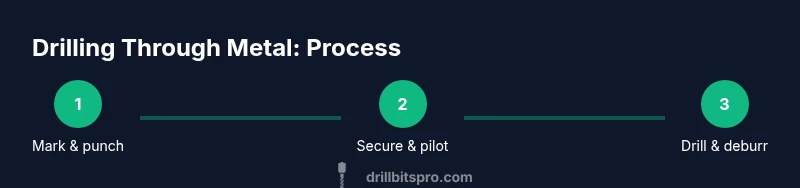
In this guide, you will learn how to drill through metal safely and effectively. We'll cover selecting the right drill bit (HSS, cobalt, or carbide), setting proper speed, securing the workpiece, starting with a pilot hole, and using lubrication to minimize heat. This approach reduces wear, prevents work hardening, and yields cleaner holes.
What drill goes through metal: defining the task
When you need to punch through metal, the choice of drill and technique determines the hole quality and tool life. According to Drill Bits Pro, the goal is to minimize heat, prevent wandering, and avoid work hardening. The exact phrase to guide your approach is what drill goes through metal—recognize that different metals require different bit types and speeds. In practice, you’ll balance material hardness, drill bit material, and lubrication to achieve clean, accurate holes without dulling the bit or damaging the workpiece. This guide walks you through selecting the right bit, preparing the setup, and executing safe, effective drilling strategies that work on aluminum, steel, stainless steel, and other common metals.
Types of drill bits for metal
Metal drilling is not one-size-fits-all. The most common families are HSS (high-speed steel), cobalt alloy, and carbide-tipped bits. HSS bits are versatile and affordable, suitable for softer metals like aluminum and mild steel. Cobalt bits (often M35 or M38) excel in harder metals, including stainless steel and some alloys, thanks to higher heat resistance. Carbide-tipped bits deliver outstanding wear resistance for high-hardness materials but are more brittle and expensive, best used in stationary setups or with minimal drift. For most DIY metal projects, a sharp HSS bit with proper lubrication handles aluminum and mild steel well; when stainless steel or hard alloys are involved, step up to cobalt or carbide and reduce drill speeds. Surface coatings like titanium or black oxide can reduce wear but do not replace proper material selection. Always ensure bits are sharp and true to avoid grabbing.
How to choose the right drill bit for your metal
Your choice depends on metal type, hole size, and drilling method. For aluminum and soft steels, standard HSS bits sized for your hole diameter work fine, with generous lubrication. For stainless steel or tool steels, switch to cobalt bits; their higher heat resistance reduces dulling. For very hard materials, carbide-tipped bits provide the longest life, but you must machine at slow speeds and with ample lubrication. Always match bit geometry to hole diameter: twist bits for general holes, step bits for large holes in thin sheets, and solid carbide for extreme wears. Verify shank compatibility with your drill (1/4", 3/8", etc.) and resist the urge to force a too-large bit through; bore a pilot hole if needed. Remember that pilot holes improve accuracy and reduce bit wear.
Preparation: securing, marking, and lubrication
Before you drill through metal, secure the workpiece firmly with clamps or a vise to prevent movement. Use a center punch or prick punch to create a small indent at the drilling point; this helps the bit start without wandering. Mark the hole location clearly with a precision marker or tape, then drill a shallow pilot hole if the target diameter is large. Apply a suitable lubricant or cutting fluid; metal tends to heat quickly, and lubrication reduces friction, extends bit life, and improves finish. If drilling fragile sheets, place a scrap piece of metal or a thick board under the workpiece to protect the surface. Ensure your drill is in good condition, with a sharp bit and proper chuck tightening.
Pilot holes, speeds, and drill press vs hand drill
Start with a small pilot hole to establish alignment and reduce resistance when the final bit engages the material. For metal, slower speeds are generally safer; as a rule of thumb, use lower RPM for harder metals and larger diameter bits. If you’re using a handheld drill, apply steady, light pressure and let the bit do the work; avoid pushing too hard, which can cause snapping or wandering. A drill press offers greater accuracy and straightness for through-holes—use it whenever possible for precision work. Keep feed consistent and avoid stopping mid-hole; withdraw the bit occasionally to clear chips and reduce heat.
Drilling technique: avoiding heat, noise, and burrs
Maintain a straight bit path to avoid offsets. Use continuous, moderate pressure, and withdraw periodically to clear chips. If you notice smoke, overheating, or dulling, pause to cool and re-lubricate. For stainless steel and harder metals, consider peck drilling: drill a short depth, lift, re-lubricate, then resume. After drilling, remove burrs with a deburring tool or file, and deburr both sides. Inspect the hole for concentricity and roundness; fix any deviation with careful rework on a slower speed.
Finishing and safety after drilling
Clean the work area, dispose of metal shavings properly, and store bits in a dry environment to prevent corrosion. Check the hole for burrs and smooth the edge with a round file or deburring tool. For critical applications, deburr and chamfer the edge to ensure safe handling and mating with fasteners. Always wear safety gear: eye protection, gloves, and, if cutting fluids are used, proper ventilation. Maintain your drill and bits by cleaning the flute and inspecting for wear before storage.
Common mistakes and troubleshooting
Common mistakes include using the wrong bit for the metal, drilling at too high speed, insufficient lubrication, and failing to clamp the workpiece. Wander or wiggle leads to oversized or off-center holes; always start with a center punch and pilot hole. If a bit binds, back it out gently, re-lubricate, and re-seat. For sticky metals, switch to cobalt or carbide bits and reduce speed. If bit dulls quickly, check feed pressure and coolant or cutting oil, and consider bit replacement.
toolsMaterialsNoteOnNextBlockOnlyPromptingTableNullValueLeftForFormattingNullValueAllowedForOptionalFieldsNullValueAllowedForRequiredFieldsNullValueAllowedForRequiredFieldsNullValueAllowedForOptionalFieldsNullValueAllowedForOptionalFields
Tools & Materials
- Drill (corded or cordless) with variable speed(Ensure chuck can accept the bit shank size you plan to use (e.g., 1/4", 3/8").)
- Metal drill bits (HSS, cobalt, or carbide-tipped)(Choose based on metal hardness; keep bits sharp.)
- Center punch or prick punch(Creates a starting indent to prevent wandering.)
- Clamp or vise(Secure the workpiece firmly before drilling.)
- Cutting fluid or lubricant(Reduces heat and wear; apply generously during drilling.)
- Safety glasses or face shield(Protect eyes from chips and debris.)
- Deburring tool(Used to remove burrs after drilling.)
- Masking tape (optional)(Helps mark location and reduce wandering on thin sheets.)
Steps
Estimated time: 25-60 minutes
- 1
Mark and center-punch the drill point
Mark the exact spot for drilling. Use a center punch to create a small dimple, which guides the bit and minimizes wandering as you start the hole.
Tip: A sharp center punch creates a precise starting point; avoid light taps that don’t form a clear indentation. - 2
Secure the workpiece
Clamp the metal securely in a vise or with strong clamps. Loose material will move and ruin hole accuracy or cause injury.
Tip: If the stock is thin, place a scrap backer to prevent bite marks on the far surface. - 3
Select and prepare the pilot hole
Choose a pilot hole slightly smaller than the final hole to ease penetration in harder metals. Align the bit and start slowly to establish true center.
Tip: Pilot holes reduce bit stress and improve concentricity. - 4
Drill with proper speed and lubrication
Set a conservative RPM appropriate to the metal; apply lubricant while drilling to reduce heat and wear. Maintain steady pressure—let the bit do the work.
Tip: Avoid pushing hard; this can dull the bit and cause chatter. - 5
Clear chips and check progress
Withdraw the bit periodically to clear chips and prevent binding. If needed, reapply lubricant and resume drilling carefully.
Tip: Chips clogging the flute indicate insufficient lubrication or too fast feeds. - 6
Deburr and finish
After drilling, remove burrs with a deburring tool or file. Check hole dimensions and edge quality, then clean the work area.
Tip: A smooth edge prevents wounds and ensures proper fastening.
Got Questions?
What drill bit is best for metal?
For soft metals like aluminum, standard HSS bits work well with lubrication. For stainless steel and harder alloys, cobalt bits are more resistant to heat. Carbide-tipped bits are best for very hard materials but are more brittle and costly.
For softer metals, use HSS; for stainless steel, choose cobalt; carbide is good for extreme hardness but handle with care.
Can I drill stainless steel without lubricant?
Lubrication is highly recommended when drilling stainless steel to reduce heat and prevent work-hardening. Without it, tools dull quickly and holes may be rough.
Lubrication is important when drilling stainless steel to keep the bit sharp and the hole clean.
Is a drill press necessary for drilling metal?
A drill press improves accuracy and straightness for through-holes, especially on thicker stock. A steady handheld drill can work for smaller projects with careful clamping and technique.
A drill press helps with precision, but you can drill metal with a good clamp and careful technique using a hand drill.
How do I prevent the drill bit from wandering?
Center punching and starting with a small pilot hole dramatically reduce wandering. Secure the workpiece firmly and stop to re-lubricate as needed.
Center punch and pilot holes keep the bit on target and prevent wandering.
What safety gear should I wear when drilling metal?
Wear safety glasses, gloves that won’t snag on rotating bits, and hearing protection if using loud tools. Ensure good ventilation if using cutting fluids.
Protect your eyes and hands, and have good ventilation if fluids are used.
Watch Video
Top Takeaways
- Choose the right bit (HSS, cobalt, carbide) for metal type
- Secure the workpiece before drilling to ensure accuracy
- Use a pilot hole to guide larger bits and reduce wear
- Lubricate to reduce heat and extend bit life
- Deburr edges after drilling for a safe finish