What Nail Drill to Use: A Practical Guide for 2026
Learn how to pick the right nail drill for nails, from hobbyist kits to salon setups. Compare speeds, bits, safety, and maintenance in a practical, AI-powered guide by Drill Bits Pro.


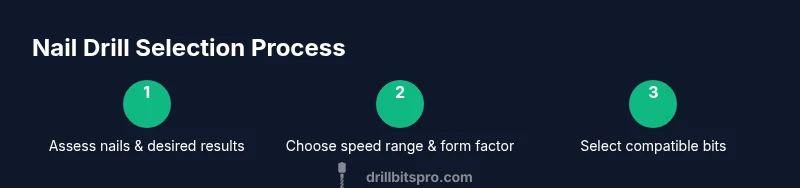
By the end of this guide you will know exactly what nail drill to use for your nail-care goals, how to compare speed, torque, and bit options, and how to set up a safe, comfortable workstation. You’ll also get practical maintenance tips and safety reminders to minimize heat and trauma during use.
What nail drills are and why you need to choose carefully
Nail drills, also called electric nail files, are handheld motors that spin exchangeably shaped bits to shape, buff, and remove keratin material from nails. They save time compared to manual files but require careful handling to prevent heat damage and soft tissue injury. According to Drill Bits Pro, choosing the right nail drill starts with understanding your nail type (natural, enhanced, or gel) and your project scope (maintenance, shaping, removal). In most cases, a hobbyist or professional will use a variable-speed pen-style handpiece with a flexible chuck and a broad bit kit. The key is to select a tool that matches your comfort, the anticipated workload, and your sanitizer/cleaning routine. In this guide we’ll define the core terms, outline the main options, and provide a practical decision framework so you can answer the question: what nail drill to use?
Differences matter: corded vs cordless and handheld form factors
Corded drills typically offer constant power and are favored in salons for reliability, while cordless models provide mobility for on-site work or home setups. Handpiece design ranges from compact pen-style to longer wand shapes, each with a grip that affects control during subtle shaping or aggressive removal. For most users, a cordless, variable-speed pen-style drill with a decently long battery life covers both maintenance and occasional gel-removal tasks, while a dependable corded model serves high-volume work. Consider your workspace lighting, ventilation, and how often you’ll travel with the tool when deciding which form factor to commit to.
How speed, torque, and heat influence results
Speed (RPM) and torque determine how quickly material is removed and how much control you have over the bit’s contact with the nail. Higher speed isn’t automatically better; it can generate heat that dries and damages the nail plate if not managed. Look for variable-speed control with a gradual ramp and a handpiece that stays cool at typical working speeds. A comfortable weight and balanced design reduce hand fatigue during longer sessions, which is critical when you’re shaping or refining nails across multiple clients.
Common nail drill bits and what they do
Carbide bits are a go-to for natural nails and soft enhancements due to their durability and aggressive material removal. Diamond bits excel at detailing and smoothing hard surfaces like gel or acrylic layers, while ceramic bits offer a balance of heat resistance and longevity. Sanding bands (resin or silicon carbide) are ideal for shaping curved nails and removing surface texture. A starter kit should include at least one carbide bit for safe initial work, a diamond bit for refinements, and assorted sanding bands for shaping and finishing. Always select bits compatible with your handpiece shank size and mandrel system, and replace worn bits promptly to maintain performance and safety.
Matching your needs: hobbyist, salon, or studio use
Entry-level hobbyists can get strong results with a basic variable-speed, pen-style drill and a compact starter bit kit. Professionals and salon environments benefit from a more robust setup: higher torque, wider RPM ranges, and a full bit assortment, plus features like a foot pedal, heat-dissipation improvements, and easy sanitization options. Budget ranges exist across tiers, but the best choice balances control, reliability, maintenance ease, and hygiene practices. A practical approach is to start with a mid-range model that offers variable speed, a comfortable grip, and a modest bit set, then expand as you gain experience and client demand.
Safety, ergonomics, and hygiene essentials
Safe operation hinges on proper ergonomics, gradual speed changes, and adequate ventilation. Keep hands steady with a neutral wrist position, work with short strokes, and avoid prolonged contact on a single spot to prevent heat buildup. Use eye protection and a mask to shield from dust, disinfect your drill and bits after each client, and sanitize the workstation to maintain hygiene standards. Regularly inspect cords or batteries and replace faulty components to avoid failure during a session.
Maintenance, care, and sanitation practices
Sanitation starts with cleaning bits and handpieces after each use, followed by disinfecting the surface and storage case. Use manufacturer-approved lubricants only if your model requires it, and never submerge electrical components in liquids. Store bits in labeled organizers to prevent wear and cross-contamination. Periodically replace worn-out bits and check for wobble in the chuck. Keeping a simple maintenance log helps you track service intervals and ensures your drill remains reliable over time.
Quick-start testing and setup guidance
Before you begin a client session, set up your drill in a clean, well-ventilated space. Install a starter bit, power on at a low speed, and test on a practice finger or foam pad to confirm control and noise levels. Move the bit in gentle, short strokes to feel for heat and resistance. After you’re comfortable, proceed to a real session with light pressure, pausing to assess heat and client comfort. End with a thorough sanitation routine and bit replacement checklist.
Tools & Materials
- Nail drill machine (variable-speed)(Choose a model with steady low-start speed and comfortable grip.)
- Foot pedal (optional)(Can help maintain control during long sessions.)
- Starter bit kit (carbide and diamond)(Essential for safe initial work and refinements.)
- Sanding bands and mandrels(For shaping and smoothing; ensure correct mandrel size.)
- Additional bits (ceramic or carbide variants)(Provides heat resistance and longevity for frequent use.)
- Lubricant/handpiece oil (if required by manual)(Only apply if your model requires lubrication.)
- Safety gear (eye protection, mask)(Protect eyes from dust and debris.)
- Practice nail dummy or finger(Important for safe testing before client work.)
- Cleaning brush and disinfectant wipes(Sanitize bits and surfaces after each use.)
- Storage case or organizer(Keeps bits sorted and protected.)
Steps
Estimated time: 25-40 minutes
- 1
Unpack and inspect equipment
Unbox your nail drill kit and visually inspect for damage. Check the handpiece, power cord, foot pedal, and bits. Look for burrs, cracks, or loose parts. Ensure the bit shanks fit your mandrel and are properly seated before powering the unit.
Tip: If you see any damage, do not use the tool; contact the supplier. - 2
Attach the first bit correctly
Choose a safe starter bit (carbide) and securely mount it in the handpiece. The bit should be straight and snug; avoid forcing into place. Spin the bit gently by hand to confirm it sits true.
Tip: Always unplug the drill before changing bits. - 3
Set initial speed and test on practice material
Power on the unit and set to a low speed. Gently contact the practice finger or foam pad to verify smooth operation, listen for any odd vibration, and monitor surface heat after 15–20 seconds.
Tip: Start slow to build control; increase gradually as you gain confidence. - 4
Practice basic shaping on a practice finger
Move the bit in short strokes along the practice finger, maintaining light pressure. Avoid staying in one spot to prevent heat buildup and potential nail damage.
Tip: Use a relaxed grip and keep your wrist neutral. - 5
Test safety and ergonomics
Check grip balance, adjust your hold, and ensure you can operate without bending your wrist. Take short breaks after work intervals to prevent fatigue during longer sessions.
Tip: Maintain straight wrists and good posture for comfort. - 6
Begin a real session with light pressure
Start with gentle smoothing around the cuticle and nail plate. Use multiple small strokes rather than a single long pass to manage heat and avoid nerve or tissue irritation.
Tip: Ask the client to report heat sensation and adjust accordingly. - 7
Post-use cleaning and sanitization
Power off and unplug. Remove the bit, clean with a brush, and disinfect the handpiece and workspace. Store bits in a labeled organizer and wipe the surface with an approved sanitizer.
Tip: Do not submerge electrical parts in liquid; follow manual guidelines. - 8
Establish a maintenance routine
Create a simple calendar for regular checks of wear, briquettes, and bit sharpness. Replace worn bits promptly and lubricate the handpiece if the manufacturer requires it.
Tip: Keep a log of maintenance tasks for reliability.
Got Questions?
How do I decide between a corded vs cordless nail drill?
Corded drills offer consistent power, which is reliable for high-volume use in salons. Cordless models are more portable and suitable for on-site work or home setups. Consider your workspace, voltage stability, and whether you need mobility before choosing.
Corded drills give steady power for frequent use; cordless drills are portable for on-the-go work. Pick based on where you’ll work most often.
What is the ideal speed range for natural nails?
Natural nails benefit from moderate speeds and careful heat management rather than maximum speed. Look for a drill with adjustable speeds and a ramp-up feature to avoid overheating during shaping or smoothing.
Use moderate speeds with good heat control to protect natural nails.
Can I use regular metal bits on nails?
Regular metal bits are not recommended for nails as they can heat quickly and cause damage. Use carbide, diamond, or ceramic bits designed for nail work, and replace worn bits promptly.
Avoid metal bits for nails; choose nail-specific bits and replace worn ones.
How do I clean and sanitize the nail drill after use?
Disassemble removable bits and use a dedicated brush to remove dust. Wipe the handpiece with an approved disinfectant, and store components in a clean, dry case. Avoid submerging electrical parts in liquid.
Clean the bits, wipe the handpiece, and store safely after every use.
What are the best bits for gel nails?
Diamond and carbide bits are commonly used for gel nails due to their heat resistance and effectiveness in removal and shaping. Start with a carbide bit for initial work, then refine with a diamond bit for detail and smoothing.
Use carbide for removal, then diamond for refining gel nails.
How long should I practice before using on clients?
Spend time on a practice finger to build control and heat management. Aim for several practice sessions before performing on a client, especially if you’re new to nail drills.
Practice repeatedly on a dummy finger before clients.
Watch Video
Top Takeaways
- Choose a variable-speed nail drill with a comfortable grip.
- Match bits to the task: carbide for removal, diamond for detailing.
- Prioritize heat management and client safety.
- Maintain gear with regular cleaning and bit replacement.