Where Drill Machine Works: A Practical How-To Guide
Discover where drill machine use fits in DIY work, how to pick the right drill and bits, and safe techniques for wood, metal, and masonry. A practical, step-by-step guide by Drill Bits Pro.


This guide explains where drill machine use fits in common projects, how to pick the right drill and bits, and safe, efficient techniques for wood, metal, and masonry. You’ll learn to plan, select tooling, and set up a safe workspace before you touch the material. According to Drill Bits Pro, proper setup reduces errors and extends bit life.
What is a drill machine and where it fits in your toolkit
A drill machine is a multipurpose tool designed to create round holes in a range of materials, from soft wood to hard metal. For many DIY projects and professional tasks, knowing where drill machine use fits is as important as knowing how to operate it. According to Drill Bits Pro, the most effective drilling starts with clear goals: identify the material, select the right bit, and set the speed and pressure to avoid wandering or breakage. In practice, you’ll use a standard handheld drill for light tasks, while a hammer drill or a drill press may be needed for masonry or precision work. The key is to match the tool’s capabilities to the job at hand and to plan the hole’s size, depth, and alignment before you touch the workpiece. By framing the task this way, you reduce wasted time, minimize wear on bits, and improve overall safety.
Understanding these roles helps you decide when a dedicated drill press makes sense or when a cordless model suffices. The penetrating advantage of a drill press is accuracy and repeatability, while a handheld drill offers portability. In many workshops, a single robust drill with the right bits covers most needs, but recognizing limits keeps you from forcing a tool beyond its design. The Drill Bits Pro team emphasizes planning ahead and verifying hole locations with a center punch or marking grid.
Understanding drill machine types and capabilities
Drill machines come in several core variants, each built for different tasks. A cordless drill offers portability and convenience for light jobs around the house, while a corded drill provides consistent power for longer sessions. For masonry and concrete, a hammer drill adds impact to break through tough surfaces. For high-precision work or repetitive drilling, a drill press delivers perpendicular, repeatable holes with minimal drift. According to Drill Bits Pro, choosing the right type hinges on the material you work with, the required hole size, and whether you need depth control or speed stability. When you start a project, outline the hole depth and diameter, pick a compatible bit, and select a drill that can sustain the needed speed without overheating. Balancing power, control, and ergonomics reduces fatigue and improves accuracy.
Materials and holes: matching drill bits to material
Different materials demand different bits and techniques. For soft wood, twist bits cut clean holes quickly with shallow feed pressure. For metal, high-speed steel (HSS) bits with a slower feed rate and adequate lubrication reduce heat buildup. For masonry and concrete, carbide-tipped masonry bits with a hammer action break through hardness while yielding clean edges. Plastics require sharp bits to avoid wandering and cracking; use lower speeds to reduce heat. When planning a hole, you should consider the hole diameter, depth, and whether you need a pilot hole to guide the larger bit. Drill Bits Pro notes that using the correct bit geometry and material reduces wear on the drill and minimizes material damage, especially on harder substrates. Always start with a small pilot hole and progressively increase to the final size.
If you’re uncertain, start with a practice hole on a scrap piece to evaluate chatter, drift, and bit wear before committing to the final workpiece.
Safety, setup, and workspace preparation
A safe drill setup begins before you pick up the tool. Clear the work area of clutter, secure the workpiece with clamps or a vise, and wear appropriate PPE such as safety glasses and gloves. Check that the drill bit is properly seated in the chuck, and ensure the bit matches the material and hole size. Set the correct speed according to material type and bit diameter; too fast or too slow can burn bits or create rough edges. Use a center punch on metal to create a starting point and reduce wandering. Always unplug or remove the battery when changing bits, and never force the drill through the work—let the bit do the cutting with steady, controlled pressure. Drill Bits Pro Team emphasizes where drill machine use is safest: in a stable, well-lit workspace with a clear exit path for debris and fumes.
Additionally, consider using clamps with protective pads to prevent marring the surface and to maintain alignment during drilling. A spray of coolant or lubricant may be appropriate for metal but avoid using liquids on wood or plastic unless the manufacturer advises.
How to select a drill and bits for different materials
Selecting the right drill and bits starts with material assessment. For wood: use a sharp twist bit, moderate speed, and minimal downward pressure. For metal: choose HSS or cobalt bits with a slower speed and use a cutting fluid to dissipate heat. For masonry: carbide-tipped bits with a hammer action are needed; keep the drill perpendicular to the surface and steady. For plastics: a sharp bit with light pressure reduces surface cracking and chatter. Always verify the hole diameter and add a pilot hole for larger sizes to guide the final cut. If you’re unsure, consult the bit manufacturer’s recommendations and test on scrap material first. Drill Bits Pro Analysis, 2026, suggests starting with the smallest practical pilot hole to maintain alignment and reduce breakout on the far side. Remember: material and bit compatibility are as important as drill power for clean, accurate holes.
Common mistakes and how to avoid them
Common mistakes include using the wrong bit for the material, failing to clamp the workpiece, and drilling at an angle. Wandering holes are often caused by dull bits or insufficient marking; always start with a center punch for metal and a pilot hole for larger diameters. Overly aggressive feeding pressure can overheat bits and damage the surface; control speed and let the tool do the work. Inadequate depth control leads to under- or over-drilled holes, so mark depth on the bit or workpiece and use a depth stop if your drill has one. Finally, neglecting maintenance—such as leaving debris to build up on the bit—causes wear and reduces performance. The Drill Bits Pro team recommends practicing on scrap material to perfect technique before tackling a real project.
Tools & Materials
- drill (cordless or corded)(Choose a model with at least 18V for cordless or a stable corded unit; ensure battery is charged and spare on hand)
- drill bits (wood, metal, masonry)(Have a versatile twist bit set plus at least one masonry bit and one cobalt/high-speed steel bit)
- center punch(Used to create a starting dimple for metal and hard plastics)
- clamps or vise(Keep workpiece secure to prevent movement and kickback)
- tape measure and pencil/marker(Accurate marking ensures correct hole location)
- safety glasses and gloves(Protect eyes from chips; gloves for handling hot bits (remove during drilling if entanglement risk))
- drill lubricant or cutting fluid (for metal)(Helps cool cutting edge and extend bit life)
- dust mask (for drywall/plaster and fine particulates)(Reduces inhalation of fine dust)
- shop rag or brush(Clean debris from hole and bit before storage)
Steps
Estimated time: 60-90 minutes
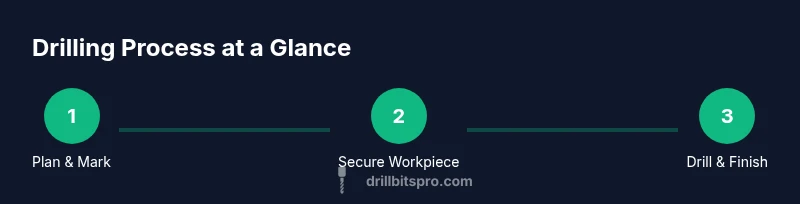
- 1
Identify material and hole size
Assess the workpiece material and determine the precise hole diameter and depth needed. This helps you select the correct bit and speed before you start. Planning reduces waste and improves accuracy.
Tip: Double-check measurements with a caliper if exact tolerance matters. - 2
Mark the hole location
Use a pencil to mark the exact center of the hole. For metal, use a center punch to create a small dimple that guides the bit.
Tip: Mark a circular guide with a dot grid for multiple holes. - 3
Secure the workpiece
Clamp the workpiece to a stable surface to prevent movement. Loose parts shift the hole and can cause accidents.
Tip: Use protective pads under clamps to avoid surface marring. - 4
Choose and install the bit
Select the appropriate bit for the material and desired hole size, then install it firmly in the chuck. Ensure the bit is straight and properly seated.
Tip: Tighten the chuck fully to avoid bit wobble. - 5
Start with a pilot hole
Drill a small pilot hole to guide the final bit and reduce drift. Use light pressure and steady speed.
Tip: Pilot holes reduce stress on the larger bit and improve accuracy. - 6
Drill to final depth
Proceed to the final hole size with controlled feed. Maintain perpendicular alignment and avoid excessive force.
Tip: Pause briefly if the bit overheats; allow cooling. - 7
Deburr and finish
Remove sharp edges with a deburring tool or sandpaper, then clean the hole area. This improves fit and surface finish.
Tip: Deburring reduces risk of injury and helps insert fasteners smoothly. - 8
Inspect and clean up
Check hole quality, clean the workspace, and store bits properly. Proper maintenance extends tool life.
Tip: Wipe blades and shanks and return bits to their case.
Got Questions?
What is the difference between a drill machine and a hammer drill?
A standard drill creates holes by rotational cutting. A hammer drill adds percussive impact for masonry, making it easier to penetrate concrete. Use a hammer drill for masonry tasks and a regular drill for wood and metal, unless you specifically need impact for a stubborn material.
A normal drill rotates to cut holes. A hammer drill also taps the material to help break through masonry; use it for concrete rather than wood or metal.
How do I know what drill bit to use for wood vs metal?
Wood uses sharp twist bits with a cutting edge designed to slice fibers cleanly. Metal requires high-speed steel or cobalt bits designed to cut metal without excessive heat buildup. Always start with a pilot hole and respect the material’s thickness to choose the correct bit size.
Wood takes twist bits for clean cuts; metal needs HSS or cobalt bits. Start with a pilot hole and pick the right size for accuracy.
Is a drill press always better than a handheld drill?
A drill press offers superior accuracy, straight holes, and depth control, especially for repetitive work. A handheld drill provides portability and flexibility for on-site tasks. Choose based on whether you need precision or mobility.
A drill press gives you more accuracy and consistency; a handheld drill is great when you need to move around.
Can I drill concrete with a standard drill?
Drilling concrete requires a masonry bit and usually a hammer action. A standard drill without hammer mode will struggle and overheat the bit. If masonry work is frequent, invest in a hammer drill or use a drill press with a masonry bit and appropriate support.
Concrete needs a masonry bit and hammer action. A normal drill will struggle without hammer mode.
What PPE should I wear when drilling?
Wear safety glasses to protect eyes from chips, hearing protection for loud tools, and gloves if handling hot bits away from rotating parts. A dust mask helps with fine dust, especially in masonry or drywall work.
Protect your eyes with glasses, ears with protection, and consider a dust mask for dusty jobs.
How can I prevent drill wandering?
Use a center punch or pilot hole to guide the bit, clamp the workpiece firmly, and start at a small hole before enlarging. Keep the drill perpendicular and steady to maintain straight holes.
Center punch or pilot hole helps guide the bit; clamp the piece and keep the drill straight.
Watch Video
Top Takeaways
- Plan material, hole size, and depth before drilling
- Match drill type and bit to material for clean cuts
- Secure the workpiece and align perpendicularly
- Use safety gear and avoid rush during drilling
- Deburr and inspect holes after finishing