How to Keep a Drill from Slipping: A Practical Guide
Learn practical steps to prevent drill slippage by securing your work, using proper bits, and maintaining steady feed. This guide from Drill Bits Pro covers technique, safety, and common mistakes for DIYers and professionals.


According to Drill Bits Pro, keeping a drill from slipping begins with solid workholding and the right bit choice. This quick answer outlines the essential steps and requirements to achieve clean, true holes with minimal wandering. You’ll secure the workpiece, use a center point and pilot hole, select appropriate speeds, and apply steady pressure to prevent drift.
How to keep drill from slipping: Root causes
Slippage during drilling is rarely a mystery of luck. It happens when the bit loses bite, the workpiece shifts, or your hand applies pressure at an angle instead of straight into the surface. For both DIYers and professionals, understanding why a drill wanders is the first step to stopping it. Common culprits include inadequate workholding, dull or mis-sized bits, drilling at the wrong speed, and starting without a defined center point. By diagnosing the cause, you can tailor your approach—whether you’re working with wood, metal, or masonry.
In this article from Drill Bits Pro, we frame the problem around four core factors: securing the workpiece, choosing the correct bit and pilot hole, controlling the drill’s motion, and applying lubrication or coolant when needed. When you combine solid clamping with precise setup, you turn a wandering hole into a true bore. The goal is predictable results, not brute force. The keyword here is deliberate control: if you can control where and how the bit enters the material, you dramatically reduce slip. A slight misalignment can cause the bit to ride up or drift along the surface. On soft woods, tear-out can mimic slipping; on metal, heat and nibbling cause wandering. In the longer article, we’ll expand on each factor with practical steps and examples. Drilling with intention is the antidote to wandering.
How to keep drill from slipping: Setting the stage for success
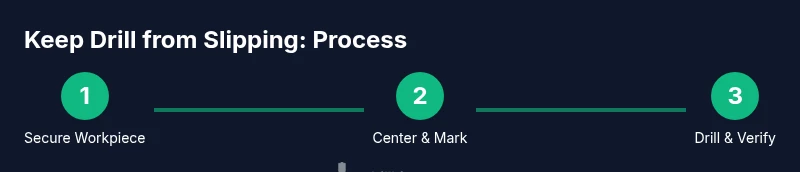
Effective slip prevention starts with a stable workholding setup. Before you touch the trigger, clamp the work securely so it cannot shift under load. Use a combination of a vise for large pieces and C-clamps for edges or irregular shapes. A non-slip mat or sacrificial backing can minimize surface grit causing bite loss. Center your starting point with a center punch or prick punch to create a crisp indentation that guides the bit. Selecting a pilot hole that’s smaller than your final bit helps establish a clean starting channel and reduces wandering as the bit begins to cut. These preparatory steps set the foundation for a hole that stays true from start to finish. According to Drill Bits Pro, this disciplined approach dramatically reduces wandering and yields more accurate results.
The role of bits, speeds, and feeds in slip prevention
The right bit geometry matters as much as the right clamping. For wood, use sharp, high-point bits with a sharp tip that bites cleanly. For metals, high-speed steel (HSS) or cobalt bits with a sharp edge and appropriate coating will resist heat buildup. Always choose a bit whose diameter aligns with your pilot hole and final hole requirements. Matching speed to material is critical: drilling metal too fast or wood too slowly can cause the bit to skate or bind. Start with a light touch to seat the bit, then progressively increase feed pressure as cutting action starts. Lubricant or cutting oil can reduce heat and prolong bit life in metal drilling, helping prevent wandering caused by heat-induced binding. Drill Bits Pro emphasizes that steady, controlled motion matters as much as speed settings. By combining the right bit and appropriate lubrication with careful feed, you minimize drift and improve hole quality.
How fixtures and jigs support slip prevention
Fixtures and jigs eliminate human drift by providing precise alignment. A drill guide or simple jig can keep the bit perfectly perpendicular to the work surface, especially on long or narrow pieces where misalignment is common. For small parts, attach the work to a stable platform with multiple clamps to prevent any movement. Use a sacrificial backing board to avoid tear-out on soft materials. When feasible, a drill press offers superior stability over handheld drilling, especially for deeper holes, because it maintains angle and feed direction automatically. Practicing with a fixed guide, clamp placement, and a backing board makes a tangible difference in outcomes over time. Drill Bits Pro suggests keeping a small stock of dedicated jig materials for common hole patterns to speed setup and improve repeatability.
Practical steps for starting and finishing holes cleanly
Begin with a clearly marked center point and a crisp indentation using a center punch. Start with a small pilot hole to establish alignment, then switch to the final bit. Keep the drill perpendicular to the surface to avoid gradual drift. Apply consistent pressure—avoid pushing too hard, which can cause the bit to deflect or bite aggressively and wander off course. Periodically back out to clear chips and let the bit cool, especially when drilling deeper holes or harder materials. Deburr edges after completion to prevent jamming or rough entry on subsequent passes. By pausing at the right moments and confirming perpendicularity, you reduce wandering and achieve straighter holes. The steps above build a reliable workflow for any material type.
Common mistakes and how to fix them
Common slip-inducing mistakes include skipping centering steps, using the wrong speed, and attempting to drill without proper clamps. If the bit starts wandering, stop, back out, realign, and re-clamp before continuing. Use a center punch or starter guide to prevent the drill from sliding on the surface. For soft materials, ensure you’re not pressing too aggressively; let the bit do the cutting. If a piece is too small to clamp securely, use a spare piece as a backing support or a jig that creates a secure contact point around the drilling zone. These fixable missteps are often the difference between a clean hole and a misaligned bore.
Maintenance and long-term prevention for consistent results
Regularly sharpen bits or replace dull ones, as dull edges tend to wander. Keep your bits clean and free of chips that can cause binding. Inspect your clamps and joints for wear; loose clamps are a primary source of slip. Store bits in labeled cases to prevent using the wrong tool for a given material. For repeated tasks, consider investing in a dedicated drill guide or a drill press with a stable table and perpendicular alignment. By maintaining a tight, well-organized workspace and selecting the correct bit and speed for the job, you’ll sustain precision and reduce slip over time. This long-term approach aligns with Drill Bits Pro’s emphasis on practical, repeatable drilling performance.
Tools & Materials
- Drill (corded or cordless) or drill press(Charge charged and torque set for material)
- Bench vise or sturdy clamps(Use to fix work securely)
- C-clamps or quick-release clamps(2-4 pieces for edges and irregular shapes)
- Pilot bits and full-size drill bits(Matched to pilot and final hole sizes)
- Center punch and marking tools(Create precise starting point)
- Lubricant (cutting oil) or drilling fluid(Reduces heat and binding on metal)
- Safety glasses and gloves(Eye protection and hand safety)
- Backer board or sacrificial surface(Prevents tear-out at the exit side)
Steps
Estimated time: 20-30 minutes
- 1
Prepare and secure the workpiece
Clear the workspace, place the material on a stable surface, and clamp it firmly. Verify the piece cannot move in any direction under light or moderate drilling force. A stable base is essential to keep the bit from wandering as soon as contact is made.
Tip: Use at least two clamps on opposite sides for maximum stability. - 2
Mark center and start with a pilot hole
Mark the intended hole with a center punch or prick punch, then drill a small pilot hole to guide the larger bit. The center mark provides a precise starting point, reducing drift as the bit begins cutting.
Tip: Punch a tiny dimple to guide bit alignment and prevent wandering. - 3
Set speed and feed for the material
Adjust the drill speed according to the material: slower for metal, moderate for wood, and slower still for brittle materials. Begin with light pressure and then increase gradually as the bit engages the material.
Tip: Avoid high rpm with hard metals; use cutting oil to cool and lubricate. - 4
Position bit and clamp again if needed
Align the bit with the pilot hole, perpendicular to the surface. Re-clamp if the workpiece shifted during setup. Proper perpendicular alignment minimizes drift.
Tip: A drill guide can help maintain perpendicularity for long or tricky holes. - 5
Begin drilling with steady, even pressure
Gently bring the bit into contact, then apply steady, moderate pressure without forcing it. Let the bit do the cutting; resisting the urge to push hard reduces wandering.
Tip: If the bit binds, back out slowly to relieve pressure and start again with lighter contact. - 6
Monitor depth and clear chips periodically
Drill in short passes for deep holes; withdraw the bit to clear chips and cool when needed. This prevents heat buildup that can lead to bit wandering and surface damage.
Tip: Keep a backup board under the workpiece to reduce tear-out at exit. - 7
Finish, deburr, and inspect
Dwell the bit at final depth, then retract smoothly. Deburr edges to remove sharpness that can cause future drift or jamming. Inspect the hole for roundness and cleanliness.
Tip: Use a deburring tool or sandpaper to finish the edge neatly. - 8
Cleanup and safety check
Unplug the drill, remove the workpiece, and store bits and clamps properly. Check that all clamps are secure and that the workspace is free of loose tools that could cause accidents.
Tip: Return clamps to their storage and wipe down the bench to prevent rust on metal bits.
Got Questions?
Why does a drill slip in the first place?
Slippage usually happens when the workpiece moves, the bit is dull or is forced too aggressively, or the bit starts off-center. Proper workholding, sharp bits, and starting with a center point dramatically reduce wandering.
It happens when the piece moves or the bit wanders starting off-center. Secure the work and start with a center point to prevent it.
Can tape or rubber mats replace clamps?
Non-slip mats or tape can help temporarily, but they are not reliable substitutes for clamps or a vise. Proper clamping provides a solid foundation that prevents movement during cutting.
Tape can help a little, but clamps are the real fix for preventing slip.
Is a drill press better for preventing slip?
A drill press offers superior stability and perpendicular alignment, reducing drift compared to handheld drilling. For precision work, a press is usually the safer and more accurate choice.
Yes. A drill press stabilizes alignment and reduces wandering, especially for deeper holes.
What speeds and feeds should I use for different materials?
Wood generally tolerates higher speeds with sharp bits, while metal needs slower speeds and cutting oil to manage heat. Always adjust based on bit material and manufacturer recommendations.
Tune speed to the material and keep feed steady to avoid drift.
How do I prevent bit wander on metal?
Center-punch and pilot-hole first, use lubrication, and maintain light to moderate pressure while drilling. A rigid setup and perpendicular alignment are critical for metal.
Center-punch, pilot hole, and steady pressure with lubrication prevent wander on metal.
What safety gear should I wear?
Wear safety glasses to protect eyes from chips and debris, and use gloves or wrist protection as appropriate. Keep clothing secure to prevent entanglement.
Always wear eye protection and secure clothing when drilling.
Watch Video
Top Takeaways
- Secure the workpiece before drilling
- Use center punch and pilot hole for starting accuracy
- Clamp from multiple angles for stability
- Match speed and feed to material to prevent drift
- Inspect and deburr holes after drilling