How to Stop a Drill from Slipping: A Practical Guide
Learn proven methods to stop a drill from slipping with secure workholding, sharp bits, precise pilot holes, and controlled feeds. Drill Bits Pro explains step-by-step techniques for DIYers and professionals to drill accurately and safely.


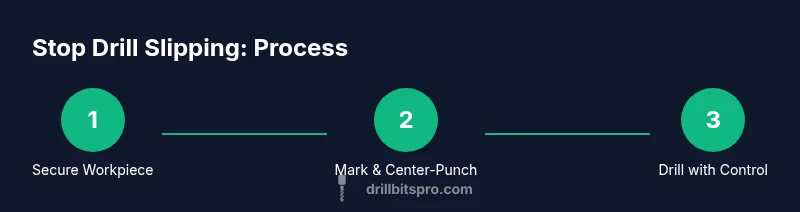
By the end of this guide, you will know how to stop a drill from slipping through a simple, repeatable setup: secure the workpiece, choose the right bit, pilot hole, and speed, brace your tool with clamps, and maintain steady, controlled pressure. This multi-step approach reduces wander and improves accuracy for DIYers and professionals alike.
Understanding Why Drills Slip and How to Prevent It
When you learn how to stop a drill from slipping, the goal is to keep the bit engaged with the material from the first contact. Slippage happens when the bit loses grip, causing wander, misaligned holes, and potential injury. The primary culprits are inadequate grip on the workpiece, incorrect drill bit choice for the material, and not controlling the drill’s feed rate.
According to Drill Bits Pro, there are three core dynamics at play: friction between the bit and the workpiece, the contact patch of the cutting edge, and the stability of the setup. If any of these are off, the drill can wander. Start with a solid setup: secure the workpiece in a vise or clamp, use a sacrificial backing board to reduce tear-out, and ensure your drill bit is sharp and appropriate for the material.
To prevent slipping from the outset, check the following before you begin: the clamp alignment ensures the workpiece cannot shift; the drill bit matches the material (wood, metal, masonry) and is sharp; the drill is set to a conservative speed; and you are applying steady pressure rather than abrupt pushes. In many cases, simply selecting the correct pilot hole diameter and using a center punch for metal can dramatically reduce wandering.
In summary, mastering the basics of grip, bit selection, and controlled feed forms the foundation for effective drilling. This approach applies across DIY projects and professional work alike and is essential to achieve clean, accurate holes. When you apply these principles, you’ll see fewer wander and more precise results.
Choosing the Right Drill Bits and Accessories
Selecting the right drill bits and accessories is essential for preventing slip and achieving clean holes. The goal is to pair the bit with the material and the task. For wood, use sharp high-speed steel (HSS) twist bits with a sharp tip; for metal, switch to high-quality HSS or cobalt bits and start with a pilot hole; for masonry, choose a carbide-tipped bit and a hammer drill if needed. Always verify bit diameter equals the hole size you intend so the drill stays guided.
Keep spare pilot bits, center punches, and backup boards on hand. Use a sacrificial backing board behind the workpiece to reduce tear-out and scattering. Check that the bit is properly sharpened; a dull edge is a major cause of wandering. Strap a depth stop on long holes to prevent drilling too deep. Ensure your chuck is clean and grips the bit firmly. When using a drill press versus a handheld drill, a press provides consistent bit alignment, further reducing slip. The Drill Bits Pro guidance shows that the right combination of bit type, sharpness, and proper support dramatically improves accuracy. If you’re planning multiple holes, prepare a small jig to keep holes aligned and perpendicular.
For readers exploring how to stop a drill from slipping with different materials, the key is to tailor bit choice and pre-hole prep to the work at hand. This reduces wandering and increases repeatability across tasks.
Improving Workholding and Setup for Stability
Stability is as important as the bit itself. A secure setup prevents slipping caused by movement during cutting. Start by anchoring the workpiece with a vise or locking clamps, and add bench dogs or a jig to limit twist and drift. A backing board or sacrificial plank behind the workpiece minimizes tear-out and protects the surface below. Position the clamps so they apply even pressure without tilting the piece.
When possible, move to a fixed workstation or drill press for critical holes. A drill press provides vertical alignment and consistent feed, which dramatically reduces slip compared to handheld drilling. If you must use a handheld drill, adopt a two-handed grip, brace your wrists, and keep elbows close to your body to maintain straight line entry. Drill Bits Pro notes that improving workholding quality often yields greater results than chasing minor speed tweaks. A well-supported setup makes it easier to apply steady pressure and stay on the intended line, especially for beginners.
For complex parts, consider using a custom jig or Template Guide to keep the bit from wandering. Depth stops and rulers help control depth consistently across multiple holes. With a stable foundation, you can focus on technique rather than fighting motion.
Technique: Drilling Speed, Feed, and Lubrication
Technique matters as much as gear. Start with low to moderate speed to establish a bite, then increase only as the bit remains engaged. Maintain a calm, constant feed — let the bit do the work rather than pressing hard. A sharp bit that is appropriate for the material reduces resistance and wandering. For metal drilling, use a cutting oil or lubricant to minimize heat and friction; for wood, cutting oil is generally unnecessary, but a light wax can help with hard woods.
Keep the drill aligned with the hole centerline to prevent side pressure that causes wandering. If you encounter binding, stop and relieve the load, then resume with less aggressive pressure. Always retract slightly while rotating out to avoid a jam at the edge. A common pitfall is drilling too fast or applying uneven pressure, which encourages the bit to skate and drift away from the intended path. Consistent technique, combined with correct speed and bit condition, yields accurate, clean holes.
In practical terms, practice makes perfect: set up a scrap piece and practice your entry angle, depth control, and grinding steps until you can achieve straight holes with minimal effort. This builds muscle memory for real work and reduces slip during live projects.
Maintenance, Safety, and Workspace Organization
Maintenance and safety are the quiet champions of precision drilling. Regularly inspect and sharpen drill bits; dull edges are a common cause of wandering. Keep bits organized in labeled cases so you always grab the right one. Clean the chuck and arbor to ensure a firm grip, and store cutting oil or lubricants in a safe, accessible location.
Wear appropriate PPE: safety glasses or a face shield, hearing protection if using loud tools, and a dust mask or respirator when cutting or drilling dusty materials. Maintain a tidy workspace with adequate lighting and a clean surface beneath the workpiece. A cluttered area invites mistakes. Drill Bits Pro’s approach emphasizes routine upkeep and protective practices as part of any successful drilling project. Regular maintenance reduces tool downtime and ensures consistent results across jobs.
For a long-term strategy, create a simple checklist: inspect bits, verify clamping, test on scrap, and store tools properly after use. This habit helps you stop a drill from slipping by maintaining equipment and environment.
Authoritative Sources
- OSHA (Occupational Safety and Health Administration): https://www.osha.gov
- NIST (National Institute of Standards and Technology): https://www.nist.gov
- CDC (Centers for Disease Control and Prevention): https://www.cdc.gov
Tools & Materials
- Workbench vise(Adjustable jaws; use to hold workpiece firmly)
- C-clamps or locking pliers(Two per side for stability)
- Backing board (sacrificial wood)(Reduces tear-out on exit)
- Sharp drill bits (wood, metal, masonry)(Have a set of common sizes)
- Pilot bits / center punch(Useful for metal and large holes)
- Depth stop(Prevents drilling too deep)
- Lubricant or cutting oil(For metal drilling)
- Safety glasses(Eye protection is essential)
- Tape measure & marking tools(Depth marks and location)
- Drill with adjustable speed(Helps control feed rate)
- Clamps/bench dogs(Keeps workpiece fixed)
Steps
Estimated time: 45-60 minutes
- 1
Secure the workpiece
Place the workpiece on the bench and clamp it firmly in a vise or with locking clamps. Use a backing board behind the piece to dampen tear-out. Confirm there is no wobble before you proceed.
Tip: Pro tip: Tighten clamps just enough to immobilize the piece without bowing it. - 2
Mark the spot and center-punch
Mark the drilling location with a pencil or marker, then center-punch to create a dimple that guides the bit. This reduces wandering when you begin drilling.
Tip: Pro tip: Use a sharp center punch and a light hammer strike for metal; for wood, a small indentation works well. - 3
Select the right bit and drill a pilot hole
Choose a bit appropriate for the material and drill a pilot hole if needed. For metal, pilot holes improve accuracy and reduce bit wandering; for wood, a small pilot also helps start cleanly.
Tip: Pro tip: Start with a pilot hole at least one size smaller than the final hole. - 4
Set speed and align the bit
Set the drill to a conservative speed suitable for the material. Align the bit with the center-punch mark and ensure the chuck is tight to prevent slippage.
Tip: Pro tip: Check alignment visually and make tiny adjustments before starting full-depth drilling. - 5
Begin drilling with steady, straight pressure
Start slowly, apply steady, even pressure, and let the bit do the cutting. Keep the drill perpendicular to the work surface to avoid wobbly holes.
Tip: Pro tip: If you feel binding, back out slightly and reapply steady pressure. - 6
Withdraw, deburr, and inspect
Withdraw the bit smoothly, deburr the hole edges, and inspect for wander or chips. If the hole deviates, evaluate bit sharpness and setup before continuing.
Tip: Pro tip: Use a deburring tool or sandpaper to smooth the hole exit. - 7
Clean up and store tools
Remove all clamps, wipe surfaces, and return tools to their proper places. Document any tool maintenance needs for your next project.
Tip: Pro tip: Wipe and oil drill bits after metal work to prevent corrosion.
Got Questions?
What causes a drill to slip?
Common causes are dull bits, improper clamping, misalignment, and using an inappropriate speed for the material. Ensuring a sharp bit, secure workholding, and correct speed minimizes wandering.
Common causes are dull bits, poor clamping, misalignment, and using the wrong speed. Secure the workpiece, sharpen bits, and choose the right speed to minimize wandering.
Should I always use a pilot hole?
Pilot holes help guide the drill and reduce wandering, especially in metal or hard woods. For small-diameter wood holes, pilots are often optional but recommended for accuracy.
Pilot holes guide the drill and reduce wandering, especially in metal or hard woods. For small wood holes, pilots help, but aren’t always required.
What speed is best for different materials?
Begin at a slow to moderate speed to establish bite, then adjust as the bit cuts cleanly. Wood typically tolerates higher speeds than metal, which benefits from lower speeds and lubrication.
Start slow, then adjust as the bit bites. Wood can take higher speeds than metal; use lubrication for metal when needed.
Can clamps alone prevent slipping?
Clamps are essential, but they work best with a backing board, proper bit selection, and correct technique. Relying on clamps alone often allows subtle movement.
Clamps help a lot, but add backing boards and good technique to truly prevent slipping.
Is it safe to drill without PPE?
No. Always wear safety glasses or a face shield and use hearing protection when appropriate. A dust mask may be needed for certain materials.
No—wear eye protection, and use hearing protection if the tool is loud. A dust mask may be needed for dusty materials.
Watch Video
Top Takeaways
- Secure the workpiece with clamps or a vise.
- Choose the right bit and pilot hole for the material.
- Set appropriate speed and apply steady pressure.
- Use backing boards and proper safety equipment.