How to Tell If Drill Brushes Are Bad: Safety Guide
Learn how to inspect drill brushes for wear, identify warning signs, and replace safely. Practical, step-by-step guidance for DIYers and pros to prevent damage and injuries.


By the end of this guide you will know how to tell if drill brushes are bad by inspecting bristle integrity, backing plate wear, and mounting fit. You'll learn common warning signs, the risks of continuing to use worn brushes, and a safe, step-by-step way to test and replace them. Ideal for both DIYers and professionals seeking practical safety guidance.
What are drill brushes and why they wear out
Drill brushes are rotating scrubbing tools that attach to the drill chuck to convert rotational energy into a focused cleaning action. They can be nylon, steel, or abrasive composites, depending on the surface and job. Over time, aggressive use, high RPM, and frequent fast starts wear the bristles, deform the backing, and loosen mounting components. According to Drill Bits Pro, understanding wear patterns helps you decide when to retire a brush before it harms your workpiece or your drill. The goal is practical safety and consistent results, not replacement hysteria. A well-chosen brush should feel firm, return to shape after a light flex, and spin true without wobble. If you notice irregular vibrations, unusual heat buildup, or sudden changes in cleaning efficiency, start a focused inspection for wear indicators. This proactive approach aligns with standard maintenance practices used by DIY enthusiasts and professionals alike, and it minimizes the risk of gouging, chatter, or motor strain.
Visual signs of wear and damage
Wear often shows up at the bristle tips or backing plate. Look for: (1) frayed, bent, or splayed bristles; (2) bristle tips that mushroom or flare around the base; (3) a backing plate that appears concave, cracked, or bent; (4) loose mounting or wobble when the brush is spun by hand; (5) excessive vibration or rattling during operation; and (6) visible resin/abrasive wear on the brush body. These cues indicate the brush is past its prime and should be retired. For context, regular inspection helps catch issues early and reduces the chance of workpiece damage or unexpected tool failure. Keep a log of wear observations to spot patterns across jobs.
Functional impact and safety risks
Worn drill brushes lose aggressive scrubbing action, which can lead to longer pass lengths, higher operator effort, and inconsistent finishes. As bristles degrade, the brush can shed material into your workspace, increasing the risk of eye injury or skin contact with sharp bristle fragments. A degraded backing plate can alter rotational balance, causing vibration that strains the chuck and bearings. In some cases, a damaged brush can jam or climb, generating kickback or twisting forces on the drill. From a safety perspective, using a compromised brush also raises the likelihood of heat buildup, which can degrade the brush material further and reduce its life. Drill Bits Pro emphasizes that replacing worn brushes protects both tool integrity and operator safety, especially on metal, tile, or masonry.
How to test a drill brush safely
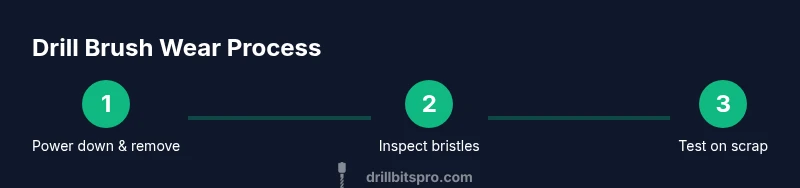
Testing a brush involves a controlled, stepwise approach that minimizes risk. First, power down the tool and remove the brush from the chuck. Inspect the bristles and backing plate closely; note any elongation, bowing, or mushrooming. Check that the mounting shank sits flush and that the set screws or arbor nuts are intact. If any wobble is detected, do not continue. Compare the brush to a known-new example to gauge bristle stiffness and wear depth. Finally, perform a low-speed test on scrap material to observe any abnormal vibration, noise, or debris shedding. If you observe significant vibration, reduced cleaning action, or bristle shedding, replace the brush before resuming normal work. This cautious approach aligns with best practices for tool maintenance and workshop safety.
Maintenance, care, and replacement guidelines
Regular maintenance prolongs brush life and performance. Clean the brush and backing plate after use to remove dust, resin, or debris that can stiffen bristles or hide cracks. Store brushes in a dry, cool place to prevent material degradation. When selecting a replacement, match the bristle material to the job: nylon is common for delicate surfaces, steel or abrasive blends handle tough substrates, and the shank must fit your drill’s arbor and chuck style. Treat damaged threads or mounting surfaces as a showstopper and retire the brush. Establish a replacement cadence based on usage, surface type, and observed wear; err on the side of caution when in doubt. Drilling tasks that demand precision or consistent finishes benefit from a predictable brush behavior, so avoid mixing old and new brushes on the same job. Safety gear, including eye protection and gloves, remains essential during inspection and testing.
Choosing the right brush and safety considerations
Selecting the right brush depends on material compatibility, surface aggressiveness, and the drill’s RPM rating. Check the manufacturer’s guidelines for compatible bristle materials and maximum operating speed. Use a brush with a clean shank and secure mounting; avoid brushes with bent arbors, missing components, or cracked housings. Always verify that the brush is matched to the job—tiles, metal, wood, and plastics all require different bristle densities and abrasive levels. Safety comes first: wear eye protection, gloves, and a dust mask when needed; keep hands away from the rotating brush during mounting and testing; and never run a damaged brush at high speed. After completing a session, take a moment to clean dust and verify the brush is properly stored and labeled for future use. The overall aim is to minimize heat buildup, maintain control, and ensure consistent results across tasks.
Authoritative sources
- OSHA: Power tools safety guidelines and best practices for workshop tools. https://www.osha.gov/power-tools
- CDC/NIOSH: Topics on power tool safety and injury prevention. https://www.cdc.gov/niosh/topics/power-tools/default.html
- NIST: Standards and guidelines for tool performance and safety. https://www.nist.gov
Tools & Materials
- Safety glasses(ANSI Z87.1 or equivalent; protect eyes from debris and bristle fragments)
- Replacement drill brushes(Choose correct bristle material and size for your drill model and the surface)
- Allen wrench/hex key(Required if the brush uses a hex mounting or set screws (e.g., 3/32" or 4 mm))
- Soft cloth or degreaser(Use to clean bristles and backing plate; avoid aggressive solvents on nylon)
- Scrap material for testing(Wood, plastic, or metal scrap that represents your typical workpiece)
- Gloves(Protect hands when handling rotating parts; ensure gloves don’t catch on the brush)
Steps
Estimated time: 15-25 minutes
- 1
Power down and remove
Turn off and unplug the drill or remove the battery. Open the chuck and carefully remove the brush. Inspect for burrs on the shank and any play in mounting.
Tip: Wear eye protection and keep a container handy for fallen bristles. - 2
Inspect bristles and backing
Look for fraying, bending, or missing bristles. Check the backing plate for cracks, mushrooming, or warping. Note any signs that bristles can no longer return to their original shape.
Tip: Compare with a new brush to gauge wear depth and stiffness. - 3
Check mounting and runout
Ensure the shank sits flush in the chuck and mounting screws are tight. Spin the brush by hand to feel for wobble or imbalance. Any runout indicates mounting or brush wear.
Tip: If there is wobble, do not reuse the brush even if bristles look ok. - 4
Compare to new brush
Place an old brush next to a new one. Note differences in bristle length, stiffness, and overall feel. If the older brush shows significant loss of stiffness or unequal bristle height, retire it.
Tip: This quick visual check prevents inaccurate judgments by feel alone. - 5
Test on scrap material
With the drill on a slow setting, run the brush on scrap material to observe heat, noise, or debris shedding. Stop immediately if vibrations spike or the brush stalls.
Tip: Keep hands away from the rotating area and use clamps for the scrap piece. - 6
Replace and reassemble
If the brush fails any test, replace it with a like-for-like unit and reassemble. Re-check torque and ensure the brush seats correctly before resuming work.
Tip: Label the new brush with the job date to track wear.
Got Questions?
How often should drill brushes be replaced?
There is no universal interval; replace when you notice frayed bristles, mushrooming backs, or wobble. Use the wear signs described to decide on retirement. Keep a record of usage and inspect after every few sessions on similar materials.
Replace worn brushes as soon as you see significant bristle wear or wobble. Regular checks prevent damage and injuries.
Can worn drill brushes be repaired or re-sharpened?
Worn brushes typically cannot be repaired to restore original performance. Bristles lose stiffness and backing plates deform; replacement is the safest and most reliable option.
No reliable repair for worn brushes; replacement is the safest choice.
Are nylon brushes safer for delicate surfaces than steel brushes?
Nylon and abrasive nylon brushes are gentler on soft surfaces but wear quickly on hard materials. Steel brushes offer durability but can mar delicate finishes. Always select the brush type based on surface and required aggressiveness.
Nylon is gentler on delicate surfaces, while steel is harsher. Choose based on the job.
What should I do with shedding bristles after removal?
Contain the bristles with a shop vacuum or a magnetized tray to prevent them from getting into the work area. Dispose damaged bristles in a waste container to avoid accidental contact.
Collect shed bristles carefully and dispose of them safely.
Can I use a brush on multiple materials without changing settings?
It’s best to switch brushes or adjust speed when moving between materials. A single brush type may underperform or damage different surfaces if used inappropriately.
Switch brushes or adjust speed when working with different materials to avoid damage.
Watch Video
Top Takeaways
- Inspect bristles and backing before every job
- Do not use damaged brushes; retire them promptly
- Match brush material to the surface for best results
- Test cautiously on scrap material at low speed
- Maintain a simple wear log for proactive replacements