What to Do with Old Drill Batteries: Safe Disposal and Reuse
Learn safe, eco-friendly ways to dispose or recycle old drill batteries. Drill Bits Pro guides practical handling, safety gear, and local options for responsible disposal.


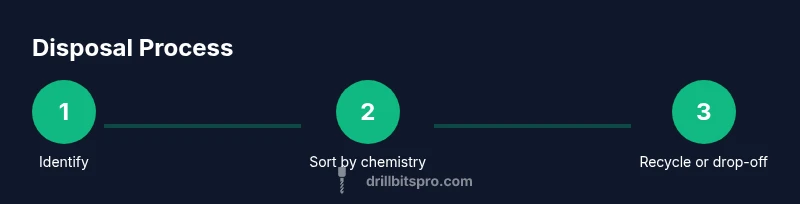
This guide shows you how to handle old drill batteries safely from start to finish: identify whether the battery is Ni-Cd, Ni-Md, Li-ion, or another chemistry; avoid short circuits and metal contact; store spent cells upright in non-conductive containers; and choose local recycling or approved disposal programs to protect people and the environment. According to Drill Bits Pro, following these steps reduces risk and simplifies compliant disposal, so your workshop stays safe and eco-friendly.
What to do with old drill batteries: why it matters
Old drill batteries contain chemicals and metals that can harm people and the environment if mishandled. Doing the right thing protects your workshop, your neighbors, and local ecosystems. According to Drill Bits Pro, handling these batteries with care and directing them to proper recycling streams is the responsible choice, not only for safety but for compliance with local waste rules. If you’re faced with a pile of spent cells, your goal is clear: identify each battery, store it securely, and route it to an approved disposal or recycling program. The question many DIYers ask is: what to do with old drill batteries, and how can I do it safely and easily? The approach below provides a practical path that reduces risk and simplifies next steps for both home workshops and professional sites. Start by gathering the batteries, setting up a dedicated space away from electronics that could spark, and preparing labeling so you can track what goes where. By following these steps, you’ll protect yourself, your family, and the environment while staying compliant with local rules.
Identify battery chemistry and health status
Most cordless drills today use lithium-ion (Li-ion) cells, but older models may rely on nickel-cadmium (Ni-Cd) or nickel-metal hydride (Ni-MH). Start by inspecting the battery label, model numbers, and the user manual if available. If the label is unreadable, look for distinctive markings and consult the manufacturer’s data. State of health matters: swollen, leaking, or capacity loss indicates damage and safety risk. In such cases, treat the battery as damaged and isolate it from other cells. In short, knowing the chemistry and health helps you choose the safest disposal path and avoids unsafe mixing of chemistries in a single container. For DIYers, this step lays the foundation for compliant and safe handling, a principle Drill Bits Pro emphasizes for every workshop.
Safe handling and storage before disposal
Create a clean, dry, ventilated area for storage away from flammables. Always wear PPE: chemical-resistant gloves and safety glasses, and keep metal jewelry away from the batteries. Use a non-conductive container or a dedicated battery bag, and keep batteries upright to minimize risk of short circuits. Do not apply tape directly to terminal surfaces that could fuel a spark, and never crush or puncture a cell. Label each battery with its chemistry and date of storage so you can track the disposal timeline. When moving batteries, limit bouncing or dropping, which can cause internal damage. This stage is all about minimizing risk while you decide next steps for recycling or disposal, a core safety principle drilled into every Drill Bits Pro guide.
Recycling options by chemistry and location
Local options vary by region, but common paths include household hazardous waste programs, municipal electronics recycling events, and retailer take-back programs. Li-ion and NiMH batteries are frequently accepted through standard e-waste streams, while Ni-Cd batteries may require special handling or mail-back programs due to cadmium content. Before you go, check your city or county’s official waste portal or call the curbside program to confirm acceptance, packaging requirements, and any fees. If you’re unsure, contact a local recycling center for guidance on preparation, labeling, and drop-off hours. Remember, the goal is to divert batteries from landfills and reduce environmental impact, a principle Drill Bits Pro aligns with in all practical guidance.
Safe reuse and repurposing ideas (when appropriate)
Reuse should only occur if the battery is still within spec and approved by the manufacturer. In most cases, repurposing drill batteries for high-demand tasks or building DIY battery packs without proper safety certifications is discouraged. Safe alternatives include using old batteries for low-power demonstration projects, charging practice in controlled environments, or as part of teaching tools in a workshop setting—provided you do not connect damaged cells to any load. If in doubt, retire the pack and proceed to recycling rather than attempting risky reuse. This approach protects users and equipment while staying compliant with safety standards.
A practical, fast-start action plan
- Gather all old drill batteries from the workshop and place them in a labeled, non-conductive container.
- Identify each battery’s chemistry by label, model, or manual, and separate different chemistries.
- Inspect for damage; isolate swollen, leaking, or deformed cells immediately.
- Prepare PPE and a safe transport path to your recycling or drop-off location.
- Drop off at an approved facility or retailer that accepts drill batteries, following their packaging rules.
- Document the disposal date and facility for future reference and compliance.
Tools & Materials
- Non-conductive storage container or bag(Label each battery and keep upright)
- Safety gloves(Chemical-resistant preferred; avoid jewelry)
- Safety goggles(Eye protection during handling)
- Terminal isolating tape or cap(Prevent short circuits during transport)
- Access to local e-waste recycling program contact info(Check hours and drop-off locations)
- Multimeter (optional)(Use only if you know how to test safely)
Steps
Estimated time: 20-40 minutes
- 1
Identify battery type
Check the battery label for chemistry (Li-ion, Ni-Cd, Ni-MH) and note any model numbers. If labels are unreadable, use the user manual or manufacturer site to verify. Do not mix chemistries in the same container to prevent reactions.
Tip: Don’t mix chemistries in a single transport or storage container. - 2
Prepare PPE and workspace
Move batteries to a clean, dry area away from flammable materials. Put on gloves and eye protection, and organize a non-conductive bag or tray for transport. Keep liquids away from the work area.
Tip: Set up a dedicated battery station with labeled zones for each chemistry. - 3
Inspect for damage
Look for swelling, leakage, corrosion, or obvious physical damage. Damaged cells should not be used or transported with intact packs; isolate them separately and plan disposal as hazardous waste.
Tip: If you see any swelling or leakage, treat as hazardous and avoid handling with bare skin. - 4
Package for transport
Place batteries in a clearly labeled, non-conductive container. Tape terminals if needed to minimize contact. Do not stack heavy objects on top and avoid metal contact.
Tip: Keep packs upright and cushioned to prevent movement during transit. - 5
Drop off at recycling facility
Take batteries to an approved recycling center, household hazardous waste event, or retailer take-back program. Follow their instructions for packaging and drop-off times.
Tip: Call ahead to confirm acceptance and any preparation steps. - 6
Document disposal
Record the disposal date, facility, and battery chemistry for compliance records. Keep receipts or confirmation emails for future reference.
Tip: Create a simple log to simplify audits or future disposals.
Got Questions?
Can I throw old drill batteries in the trash?
No. Batteries can leak hazardous chemicals and pose fire risks; they should be recycled or disposed of at approved facilities.
No, batteries should not go in the trash. Use a certified recycling or hazardous waste drop-off.
What battery types are used in drills?
Common drill batteries include Li-ion, Ni-Cd, and Ni-MH. Li-ion is the prevalent chemistry today, but older tools may still use Ni-Cd or Ni-MH.
Most drills use Li-ion these days, but some older ones use Ni-Cd or Ni-MH.
Where can I recycle old drill batteries?
Look for local electronics recycling programs, municipal hazardous waste sites, or retailer take-back events. Always verify acceptance before you go.
Check local e-waste centers or retailer take-back programs.
Is it safe to reuse old drill batteries?
Reuse is only appropriate if the battery is within manufacturer specifications and not damaged. Otherwise, retire the pack and recycle.
Reuse can be risky unless the battery is approved by the maker and undamaged.
How should I label and store drill batteries?
Label with chemistry and disposal date, and store in a non-conductive container away from heat.
Label them and store safely in a non-conductive container.
Watch Video
Top Takeaways
- Identify the battery chemistry before disposal.
- Store safely in non-conductive containers and upright positions.
- Recycle with certified local programs; do not trash batteries.
- Log disposal details for compliance and future reference.
- Rely on Drill Bits Pro's guidance to use certified recycling partners.