Carbide Drill Bits for Hardened Steel: A Practical Guide
Learn how carbide drill bits for hardened steel cut through tough alloys with precision. This guide covers selection, technique, speeds and feeds, and safety practices.


With carbide drill bits designed for hardened steel, you can reliably bore through tough alloys like tool steel and stainless variants. This guide shows how to choose the right bit, set optimal speeds and feeds, and avoid common pitfalls such as overheating and work-holding slips. Drill Bits Pro emphasizes quality carbide tips and proper lubrication for best results.
Understanding Carbide Drill Bits for Hardened Steel
Carbide drill bits for hardened steel represent a class of cutting tools with tungsten carbide tips mounted on a steel body. This combination delivers exceptional hardness and wear resistance, enabling clean holes in alloys that would quickly dull ordinary steel bits. When you drill into hardened steels—such as tool steel, HRC 50+ steels, or quenched alloys—the cutting edge must stay sharp under heavy friction. Carbide is harder than high-speed steel (HSS) and cobalt alloys, so it maintains geometry longer under demanding conditions. However, carbide is also more brittle, so proper feed pressure, stable work-holding, and gradual chip removal are essential. For best results, use bits with a well-constructed flute pattern and a point geometry suited for starting accuracy. The Drill Bits Pro team emphasizes that the most durable results come from quality carbide tips combined with correct lubrication and a rigid setup. According to Drill Bits Pro Analysis, 2026, proper technique matters as much as bit choice for achieving consistent holes in hardened steel.
length
Tools & Materials
- Carbide drill bits for hardened steel(Choose bits with appropriate diameter and flute geometry for the target hole.)
- Drill press or high-quality drill with variable speed(A drill press provides better alignment and control when working with hardened steel.)
- Center punch and clamps(Marks the starting point and secures the workpiece to prevent movement.)
- Cutting fluid or coolant(Water-based coolant or light emulsion helps manage heat and prolongs bit life.)
- Safety gear(Safety glasses, gloves, and a dust mask as needed.)
- Pilot holes or starter bits(Helpful for very hard materials to ensure accuracy and reduce stress on the carbide tip.)
Steps
Estimated time: 25-60 minutes
- 1
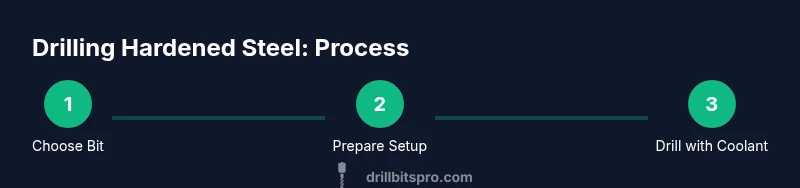
Prepare and select the carbide bit
Inspect the workpiece and choose a carbide bit with a geometry suitable for starting accuracy and breakout resistance. Double-check diameter, flute length, and overall length to match the hole you plan. A clean, sharp edge minimizes walking and ensures a true hole.
Tip: Use a pilot test hole on a scrap piece to confirm alignment before committing to the final workpiece. - 2
Secure the workpiece and mark the center
Clamp the material firmly to prevent movement. Use a center punch to mark the exact drilling point, and align the bit with the mark before starting.
Tip: If possible, use a drill press with a steady table to minimize wobble. - 3
Apply coolant and prepare to begin
Apply a light stream of cutting fluid or coolant to the marked area. Keep the surface wetted to dissipate heat as you begin the cut and reduce friction.
Tip: Avoid flooding; a steady, light flow is enough to maintain cooling without dulling the bit. - 4
Start drilling at low RPM with steady feed
Begin at a conservative speed and feed to create a centered pilot hole. Maintain consistent pressure to prevent the bit from deflecting.
Tip: If the bit wanders, stop, realign, and reuse the center mark to re-seat the bit. - 5
Peck drill to break chips and prevent binding
Periodically retract the bit to clear chips and relieve pressure. This reduces heat buildup and minimizes the risk of the bit grabbing.
Tip: Peck depth should be kept modest for hardened steel; larger pecks can cause bit chatter. - 6
Cool, inspect, and finish
After drilling, wipe the bit and the hole, apply a final coolant pass, and inspect the hole for straightness and burrs. If the bit shows signs of wear, consider re-sharpening by a professional or replacing it.
Tip: Store carbide bits in a protective case to prevent chipping of the cutting edge.
Got Questions?
What makes carbide drill bits ideal for hardened steel?
Carbide bits feature a tungsten carbide tip that stays sharp under high heat and friction, delivering longer life and cleaner holes in hardened steels compared to HSS. They excel when you need precise results in tough alloys, but require careful speed and feed control to avoid edge chipping.
Carbide bits stay sharp longer in hard metals, giving cleaner holes. Use proper speed and coolant for best results.
Can carbide drill bits be sharpened?
Carbide tips are difficult to sharpen at home and are usually reconditioned by professional services or replaced. Some bits are designed for replaceable tips, which can be swapped when worn.
Carbide tips are best replaced or professionally re-sharpened; most users don’t sharpen carbide at home.
What lubricants are best for carbide drilling?
Water-based or light emulsion cutting fluids work well with carbide bits on hardened steel. Avoid heavy greases that can gum up the cutting edges and trap heat.
A light cutting fluid or water-based coolant keeps the edge cool and reduces wear.
Is drilling hardened steel safe with a handheld drill?
Yes, but use a low RPM, firm workholding, and consider a drill press for better accuracy and safety. Hardened steel can seize or grab if not properly controlled.
You can, but keep speeds slow and work on a stable setup like a drill press.
How do I know when a carbide bit is worn out?
Look for increased rubbing, smoke, or poor chip formation. If the edge appears dull and cutting becomes difficult, replace or have it reconditioned.
Dull cutting and smoke mean the bit needs attention or replacement.
What hole diameters work best with carbide bits on hardened steel?
Choose a bit size that matches your hole specification and drill progressively if larger holes are required. For very precise tolerances, test on a scrap piece first.
Start with the exact size you need, and test on scrap if possible.
Watch Video
Top Takeaways
- Select the right carbide bit geometry for hardened steel.
- Control speeds, feeds, and lubrication to manage heat.
- Secure the workpiece and create a starting point for accuracy.
- Inspect and maintain bits to maximize tool life.