How to Know If Drilling Into Metal: Practical Guide
A practical, step-by-step guide to determine whether your drilling target is metal, identify material type, and drill safely with the right tools and technique.


In short, you can verify metal by checking hardness, magnetism, and finish, then proceed with appropriate bits, speeds, and lubrication. Start by securing the workpiece, marking a starting point with a center punch, and selecting a metal-specific drill bit. Use cutting oil and light, steady pressure to minimize heat and wear.
How to know if you're drilling into metal
When you approach a metalworking task, the first question is whether the target is metal. Knowing this guides your choice of drill bits, speeds, lubrication, and safety precautions. In practice, you can identify metal through a combination of simple tests and surface clues. The phrase how to know if drilling into metal is central to this decision, because the answer determines everything that follows. Start with a basic material check: magnetic attraction and hardness relative to softer plastics and wood. If a magnet sticks and the surface resists scratching with a common craft knife, you are likely dealing with a ferrous metal or alloy. If the magnet does not stick, you may be dealing with non-ferrous metals like aluminum or brass, which require different handling but still drillable with the right bit.
Surface appearance also helps. A shiny, uniform, metallic surface with little evidence of plastic or coating usually indicates metal. Scale buildup, slight oxide coloration, or grinding marks can reveal metal usage. For many DIY projects, you will treat unknown materials conservatively: assume metal until proven otherwise, and choose an approach appropriate for metal drilling. Quick checks such as a small scratch test with a sharp center punch can reveal metallic hardness; if the tool marks bite in and show metal, you have your answer. However, these are heuristic checks and should be backed by proper measurement when precision matters. As you gain experience, you'll recognize subtle cues: the smell of oil when you cut, the way chips break, and the sound of the drill. All these indicators help you answer the question of how to know if drilling into metal.
Material identification in practice
Material recognition begins with reliable, repeatable checks. For how to know if drilling into metal, start with a magnet test: ferrous metals will typically attract magnets, while most non-ferrous metals like aluminum will not. Follow with a scratch test using a sharp center punch; if marks reveal metal, you’re likely dealing with metal rather than plastic or wood. If you have access to a small file, attempt to mark a sample area—metal will produce metal shavings, while softer materials will yield different results.
When the magnet test is inconclusive, verify by observing spark characteristics. A grinder or drill cutting into steel typically yields bright, long, and continuous sparks, whereas non-ferrous metals produce shorter spark trails. These cues are not definitive alone, but combined with weight, malleability, and tearing behavior during drilling, they help you classify the material. Always document your findings before starting: note the color of any oxide layer, the presence of protective coatings, and any unusual hardness shifts as you attempt to cut. In professional settings, you may consult a metal identification chart or perform a simple thin-section check, but for most DIY tasks, the above tests provide a practical, quick answer. By adopting a structured approach, you’ll avoid using inappropriate bits and risk-free or dangerous techniques.
Remember: the goal is to establish whether you are drilling into metal and, if so, what kind of metal you’re dealing with to tailor your tooling and technique accordingly.
Preparing the work area and securing the workpiece
Before you drill, protecting yourself and ensuring precision is essential. A metal workpiece should be clamped securely to a stable surface so it cannot shift under pressure. Use a sturdy vise or a properly aligned clamp to fix the material. If you’re drilling scrap or a curved surface, consider a sacrificial backing board to prevent tear-out on the far side. Place masking tape over the drilling area to reduce wandering and to protect the surface from scratches caused by the punch and bit. Mark the exact starting point with a center punch, then verify alignment with a square or straightedge. The right setup reduces wobble and ensures you drill where you intend, reinforcing accuracy for the final hole.
Choosing the right drill bit for metal and why it matters
Selecting the correct drill bit for metal is critical to the outcome. For most ferrous and non-ferrous metals, high-speed steel (HSS) bits work well, but hardened alloys or thicker workpieces benefit from cobalt-alloy bits or carbide-tipped bits. Consider your hole size first, then choose bits that match the target diameter. When in doubt, start with a smaller pilot hole to guide the larger bit and reduce wandering. Metal bits work best with labeling that indicates their material compatibility (e.g., HSS for general metal, cobalt for hard alloys). Check the bit’s point angle; a 118-degree point is common for metal drilling and provides a clean start. Keep spare bits of several sizes on hand, and avoid forcing dull bits through metal—resist the urge to rush a cut, as forcing a dull edge can overheat the bit and damage the workpiece.
Lubrication, speed, and feed: how to set parameters
Lubrication is essential to cooling and prolonging bit life when drilling metal. A light application of cutting oil or mineral oil reduces friction, minimizes heat buildup, and improves hole quality. For standard steel, a moderate drill speed with steady, consistent feed works best; too fast a feed can generate heat and blur edges, while too slow a feed can cause brownish discoloration and glazing. Aluminum and softer metals require even lighter lubrication and slightly slower speeds to prevent galling. If you’re using a drill press, lower speeds can be more controllable and precise than handheld drilling. Always start at a conservative speed and increase gradually only if the bit remains cool to the touch and produces clean chips. Read the tool’s manual for recommended RPM ranges based on material thickness, bit size, and machine capability.
Drilling technique: starting hole, steady feed, depth control
Begin with the center punch groove aligned with your bit’s point to encourage a precise starting point. Align the drill perpendicular to the work surface to avoid angled holes and burrs. Start with a light touch to seat the bit, then apply steady pressure and allow the bit to do the cutting rather than forcing it. Maintain lubrication throughout the process and pause to cool if you notice heat buildup or smoke. For vented metal or thicker stock, drill in short bursts with rest periods to prevent overheating and dulling. If you need to drill to a specific depth, use a depth stop or a piece of tape on the drill bit as a visual indicator.
Finishing the hole: deburring and inspection
When the hole is complete, inspect the edge for burrs and sharpness. Deburr with a round needle file, a deburring tool, or a fine abrasive stone to remove sharp edges and reduce the risk of cuts or stress risers. Ensure the hole is concentric with the intended mark and not oversized. Clean up chips and coolant, then measure the hole with a caliper to confirm it matches the desired diameter. If your measurement reveals a slight mismatch, correct it with a ream or a slightly larger bit and retest. Document outcomes for future projects and keep a log of the bit used, material type, and any lubrication details to refine your process next time.
Troubleshooting common issues when drilling into metal
Even with preparation, issues can occur. If the bit overheats or smokes, stop and allow cooling, then retest at a lower speed and with more lubrication. If you notice feathery spirals instead of clean chips, the edge might be dull or misaligned; replace or sharpen the bit. If the hole wanders, double-check your starting point and ensure the workpiece is secured and perpendicular. Common mistakes include using too much pressure, choosing an improper bit for the metal, and neglecting lubrication. By recognizing these symptoms early, you can adjust your approach and minimize damage. Finally, maintain a clean workspace to keep chips from affecting accuracy and to prevent slipping hazards.
Safety and best practices recap
Always wear eye protection and gloves when drilling metal. Keep long hair tied back and remove jewelry that could catch in the drill. Use clamps and a stable bench to prevent movement. Ensure you are working in a well-ventilated area when using cutting fluids to avoid inhalation of fumes and keep fluids away from open flames. Store bits properly in their cases to preserve sharpness and prevent accidental contact with a dull edge. By following these safety and best practices, you’ll ensure successful, safe metal drilling projects.
Tools & Materials
- HSS or cobalt drill bits (metal-specific)(Choose sizes for metal; have multiple bits ready, including pilot sizes)
- Drill (cordless or corded) with variable speed(Prefer a drill press for accuracy; handheld drills require steadier technique)
- Center punch(Marks starting point to prevent bit wandering)
- Masking tape(Prevents bit from wandering on slick metal surfaces)
- Lubricant / cutting oil(Reduces heat and extends bit life)
- Clamps or a metal vise(Secures workpiece to stop movement during drilling)
- Safety gear (goggles, gloves)(Protects eyes from chips and reduces skin exposure to hot surfaces)
- Calipers or a vernier gauge(Helpful for accurate hole sizing)
- Marker or scribe(Marks starting point and hole center)
- Depth stop or limiter tape(Controls hole depth on thicker stock)
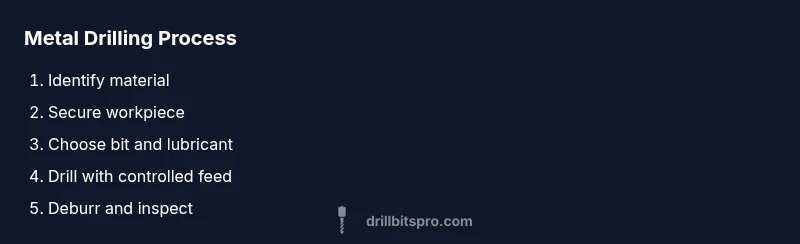
Steps
Estimated time: 30-60 minutes
- 1
Secure the workpiece
Clamp the metal securely to a stable surface so it cannot shift under pressure. Position a sacrificial backing if the work could tear out. This prevents deflection and ensures hole accuracy.
Tip: Use a vise jaw protector and double-check the clamp bite before starting. - 2
Mark the starting point
Use a center punch to create a small indentation at the hole center. A precise starting point reduces wandering when the bit first contacts the surface.
Tip: Tap lightly to avoid deforming the metal around the mark. - 3
Choose the correct bit
Select a metal-appropriate bit (HSS or cobalt). For thicker or harder stock, start with a smaller pilot bit to guide the larger one.
Tip: Maintain a consistent set of bits and label them for easy identification. - 4
Lubricate and set speed
Apply a light lubricant to the drill point and surface. Set a conservative RPM and be prepared to reduce speed if heat builds up quickly.
Tip: If using a drill press, align lubricants to minimize fling-off. - 5
Begin drilling with controlled feed
Start with light engagement, maintain perpendicular alignment, and feed steadily. Pause if heat or smoke appears and re-lubricate.
Tip: Let the bit do the cutting; avoid pressing hard and risking bit breakage. - 6
Deburr and inspect
After drilling, deburr the hole edges and verify diameter with calipers. Smooth edges prevent injury and improve fit.
Tip: Use a deburring tool or fine file for the best finish. - 7
Clean up and document
Wipe away chips, store bits properly, and record material type, bit size, and lubrication settings for future reference.
Tip: Maintain a simple drilling log to improve consistency across projects.
Got Questions?
Can you drill through metal without a center punch?
Center punches guide the drill and reduce wandering, especially on slick metal. While not strictly required, using one improves accuracy and reduces the risk of slipping.
A center punch helps you start exactly where you want, so use one whenever possible.
What drilling speed is best for metal?
Metal drilling benefits from moderate speeds with coolant or oil. Too high a speed can overheat and dull the bit, while too low slows the process and may cause heavy cutting.
Start at a moderate speed and adjust as needed while keeping the bit cool.
How can I tell metal from aluminum or brass quickly?
Magnetic tests help distinguish ferrous metal from non-ferrous. Aluminum is typically non-magnetic, lighter, and scratches differently. If in doubt, use a small, cautious test with a center punch and compare chip appearance.
A quick magnet test and scratch check can usually tell you if it’s metal and often what kind.
What if I see smoke while drilling?
Stop, remove the drill, and let everything cool. Check that you’re lubricating properly and that the bit isn’t dull. Restart at a lower speed with fresh lubrication.
If you see smoke, pause and inspect; cooling and lubrication are key.
Do I need a drill press for metal drilling?
A drill press is not strictly required but greatly improves accuracy and control, especially on thicker stock. For handheld drilling, take extra care to keep the bit perpendicular and steady.
A drill press makes clean, accurate holes easier, but you can do it with care using a handheld drill.
Should I deburr the hole after drilling?
Yes. Deburring removes sharp edges that can cause cuts or stress risers and gives a better fit for hardware.
Always deburr to finish the job safely and neatly.
Watch Video
Top Takeaways
- Secure the workpiece before drilling.
- Choose the right bit and lubricant for metal.
- Maintain steady feed and avoid excessive pressure.
- Deburr holes and inspect for accuracy.
- Prioritize safety and keep a clean workspace.