What Drill Piece for Wood: A Practical Guide
Learn how to pick the right drill bit for wood, from brad-point to twist bits, with sizes, speeds, and safety tips to achieve clean, precise holes in any wooden project.


By the end of this guide, you’ll be able to select the correct drill piece for wood for any project. You’ll understand wood types, drill bit geometries (brad point, twist, auger), sizes, speed recommendations, and safety steps to ensure clean holes and minimal tear-out. Along the way, we’ll highlight practical examples, common mistakes, and how to verify bit sharpness.
Understanding the wood drill landscape
If you're asking what drill piece for wood to use, you’re not alone. Wood is not a single material; it varies by species, grain direction, density, and moisture content. Those differences change how a bit behaves, how clean a hole will be, and how prone the wood is to tear-out. The Drill Bits Pro team emphasizes that the right bit isn’t a one-size-fits-all answer—it's a small family of tools matched to the task. For softwoods like pine, you may get away with faster feeds and simpler bits, while hardwoods such as oak demand sharper edges and careful speed control. Laminated woods require attention to grain direction and backing to prevent chipping.
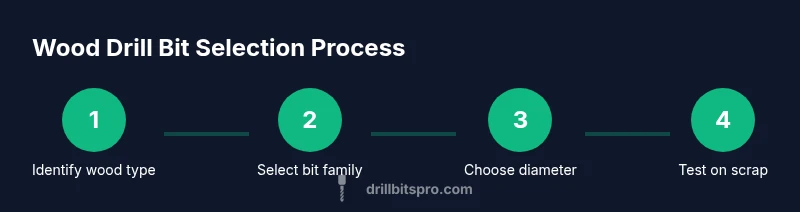
To get a handle on the decision, start by identifying the wood type and the hole's purpose: pilot holes for screws, pockets for joinery, or through-holes for hardware. If you want a quick rule of thumb, consider brad-point bits for clean pilot holes in most softwoods and a high-quality twist bit for general drilling in harder woods. When in doubt, test on a scrap piece with a similar density. According to Drill Bits Pro analysis, choosing a bit with a sharp tip and a bit of relief on the cutting edges dramatically reduces tear-out and produces smoother finishes. By thinking through wood characteristics first, you’ll choose the right drill piece for wood with confidence.
Choosing drill bit types for wood
Woodworking uses a few familiar bit types, each with a distinct advantage:
-
Brad-point bits: The center point and spurs cut clean holes with minimal wandering. Best for wood drilling and pilot holes.
-
Twist bits: The workhorse for most general drilling; versatile and available in many sizes. They cut quickly but may tear on end grain if not supported.
-
Auger bits: For deep holes; slower, but leave clean long holes in soft woods. Not ideal for tiny pilot holes.
-
Forstner bits: Create flat-bottomed holes with clean edges; excellent for decorative holes, dowels, or dowel joints. Their lip-edge bites into wood and resists wandering.
-
Hole saws: For large diameter holes; require steady control and remove waste.
-
Step bits: For metal and specialty tasks; less common in wood but can be used for large-through holes in certain materials.
A note from Drill Bits Pro: different woods respond to cutting geometry; brad-point tips excel in end grain with less tear-out, while conventional twist bits work well for mortises and general holes. When drilling plywood or composite panels, use a backer board to prevent blowout.
Drill sizes and hole sizing
Hole size matters more than you might think. The correct hole diameter should accommodate the fastener, dowel, or hardware with a little clearance for wood movement. For screws, most joinery relies on a pilot hole that is smaller than the screw’s core; this reduces splitting and helps the screw bite cleanly. For dowels and through-holes, select a bit that yields the final bore diameter you need. In hardwoods, a slightly larger hole can prevent the wood from cracking along grain transitions. Always measure twice and test on scrap to confirm that the hole accepts the component snugly without binding. When using brad-point bits, the center point helps locate the hole precisely and minimizes wandering, especially on end grain.
Step-by-step selection process
-
Identify wood type and grain orientation to anticipate tear-out risk. Different woods cut differently; density and grain direction affect bit performance.
-
Define hole purpose (pilot, clearance, dowel, pocket) to pick the right bit family.
-
Choose a diameter that matches the hole size required by the fastener or joint.
-
Ensure bit is sharp and has proper relief; test on scrap to confirm entry.
-
Secure the work with clamps and place a backer board to prevent tear-out at exit.
-
Run a test hole in scrap and adjust speed/feeding as needed before final drilling.
Tip: Start with a smaller pilot hole if you’re unsure, then enlarge gradually.
Estimated total time: 20-40 minutes for setup and initial testing.
Common wood drilling scenarios and the right bits
Different projects demand different tools. For securing screws in furniture, always drill a pilot hole slightly smaller than the screw’s core. For dowel joinery, a clean circular hole is essential, so Forstner or brad-point bits are often preferred. When enlarging a hole in a solid piece, step bits or twist bits can be used, but take care to back the work with scrap to minimize tear-out. For pocket holes, many woodworkers rely on a dedicated pocket-hole bit or stepped drill that creates the larger entry without wandering. Always consider grain direction and edge support; end grain cuts excel when backed by scrap stock to keep fibers from tearing out.
Note: Drill Bits Pro suggests testing bit selection on a scrap piece with similar density to verify that the bit produces the intended hole geometry before committing to your main workpiece.
Shaping and maintaining bits
Bit sharpness is the single most important factor for clean cuts. Dull edges increase heat, cause wandering, and can scorch the wood. Regularly inspect cutting edges, remove resin buildup, and use a bit sharpener or annual re-sharpening service as needed. Store bits in labeled cases to prevent corrosion and ensure you grab the right size. For long jobs, keep a few spare bits of the same size to avoid slowing projects down while you re-sharpen.
Back-to-back cutting requires patience: don’t push too hard; let the bit do the work. A slight lubrication isn’t typically required for wood drilling, but in certain dense hardwoods you might lightly apply a wood-safe cutting wax to reduce friction.
Pro tip from Drill Bits Pro: maintain a steady feed rate and perpendicular angle; even small deviations can cause tear-out or off-center holes.
Safety and best practices during wood drilling
Safety should always come first. Wear ANSI-approved safety glasses and avoid loose clothing that could snag on rotating bits. Clamp the workpiece securely so it cannot shift during drilling. Keep your drill’s speed setting appropriate for the bit and wood type; hardwoods benefit from slower speeds while softwoods can tolerate a bit higher feed when controlled. Use a backer board or scrap beneath the workpiece to prevent tear-out at the exit and to maintain a clean surface. Never drill without a stable work surface, and unplug the drill before changing bits.
If a bit binds, stop immediately and back out gently to avoid snapping the bit or tearing the wood. After drilling, deburr edges with a low-grit file or sandpaper for a smooth finish.
Authority Sources
- OSHA safety guidelines: https://www.osha.gov
- Fine Woodworking: https://www.finewoodworking.com
- Popular Woodworking: https://www.popularwoodworking.com
Tools & Materials
- Cordless drill with variable speed(Battery-powered with at least 18V or equivalent; ensure battery is charged and chuck is clean)
- Brad-point wood drill bit set (assorted sizes)(Include common sizes: 1/16", 1/8", 3/16", 1/4"; plus a pilot bit around 1/8")
- Center punch(Use to mark precise hole locations; helps prevent bit wander)
- Backer board scrap wood(Place under workpiece to prevent tear-out on exit)
- Clamps(Secure the workpiece firmly during drilling)
- Safety goggles(Eye protection rated for impact; keep them clean)
- Measuring tape or calipers(Accurate hole sizing and layout)
- Masking tape(Helpful for marking and preventing tear-out on delicate surfaces)
- Drill-bit sharpener or sharpening stone(Maintain cutting edges over time)
Steps
Estimated time: 20-40 minutes
- 1
Prepare the workspace and select the bit
Clear the area, clamp the workpiece, and choose a bit type based on wood density and hole purpose. If unsure, start with a small pilot bit to verify alignment. Confirm the bit is sharp and properly seated in the chuck.
Tip: Check that the bit is fully inserted and tightened before starting. - 2
Mark the hole and center punch
Use a center punch to create a shallow indentation at the hole center. This helps prevent wandering as you begin drilling. Mark any depth or diameter requirements on the workpiece with masking tape for visual guidance.
Tip: Place a scrap under the workpiece to minimize tear-out on exit. - 3
Drill a pilot hole
Start with a small pilot hole to guide the larger bit. Keep the drill perpendicular to the surface and use light, steady pressure. Pause to remove chips if the bit stalls or binds.
Tip: Let the bit do the work; don’t push too aggressively to avoid wandering. - 4
Drill the main hole with proper bit
Switch to the final bit size and drill at a measured pace. Maintain a clean line and stop just before the full depth if drilling through the piece. Use backer stock underneath to prevent chipping.
Tip: Back off slightly as the bit nears the exit to reduce blowout. - 5
Backer board and clean exit
Ensure the backer board fully supports the exit area to reduce tear-out. Withdraw the bit slowly while keeping it perpendicular. Deburr edges with sandpaper for a smooth finish.
Tip: Remove chips with a small brush to inspect the hole edge. - 6
Finish and inspect
Inspect the hole for alignment and size; test-fit the screw or dowel. If the fit isn’t exact, adjust with a smaller pilot or clean up the edge with a file. Store the bit properly after use.
Tip: A clean hole improves joint strength and finish.
Got Questions?
What is the best drill bit for wood?
Brad-point bits are excellent for clean pilot holes in wood, especially on end grain. For general drilling, twist bits are versatile. For deep or flat-bottom holes, Forstner or auger bits are preferred. Always match the bit to the wood type and hole requirement.
Brad-point bits are great for clean holes in wood, especially on end grain. For most jobs, twist bits work well; Forstner bits are best for flat-bottom holes.
How do I know what drill bit size to use?
Identify the hole’s intended diameter or the screw/dowel size. Use a pilot hole smaller than the screw core, then enlarge if needed. When in doubt, start small and test on scrap wood before final drilling.
Choose a pilot hole smaller than the screw core, test on scrap first.
Can I drill wood without a pilot hole?
For many woods, especially hardwoods, a pilot hole reduces splitting and helps the screw bite properly. In softwoods, a pilot can still improve control and reduce tear-out, particularly near edges.
Pilots help prevent splitting; they improve control in many woods.
Should I pre-drill for screws in hardwoods?
Yes. Pre-drilling in hardwoods helps prevent splitting and ensures the screw threads bite cleanly. Choose a pilot hole about the same diameter as the screw’s core and adjust for the screw length.
Pre-drilling in hardwoods prevents splits and helps screws grip.
What speed should I use when drilling wood?
Use slower speeds for hardwoods and darker, denser woods, and moderate speeds for softwoods. Start with a conservative speed and adjust based on the bit, wood density, and observed heat buildup.
Start slow with hardwoods and adjust as needed to avoid heat.
Are brad-point bits better than twist bits for wood?
Brad-point bits excel at precise starts and cleaner holes in most softwoods and end grain. Twist bits are versatile for general drilling but may wander or splinter if not guided properly.
Brad-point bits give cleaner starts; twist bits are versatile but require guidance.
Watch Video
Top Takeaways
- Choose bit type based on wood and hole purpose.
- Pilot holes reduce splitting and improve accuracy.
- Backer boards minimize tear-out and improve edge quality.
- Maintain sharp bits for clean, precise holes.
- Clamp firmly and work safely at appropriate speeds.