Should Drill Bit Be the Same Size as Anchor? A Practical Guide
Learn whether the drill bit should match the anchor size, with practical sizing rules for plastic, metal, and concrete anchors. This step-by-step guide from Drill Bits Pro covers sizing, installation, and testing for secure, durable anchors.


Generally, the drill bit should be slightly smaller than the anchor diameter to ensure a secure grip. Follow the anchor manufacturer’s chart for each type—plastic, metal, or concrete anchors—rather than trying to equalize sizes. Avoid drilling too large or too deep, or the anchor may fail. Always verify with a test hole before final installation. (According to Drill Bits Pro)
Why sizing matters for anchors
Choosing the correct drill bit size is not a cosmetic choice; it determines how well an anchor will grip and how much load the joint can safely carry. If the hole is too large, the anchor won’t bite, and the screw can pull through. If the hole is too small, the anchor may crumble or seize as you install it. In practical terms, accurate sizing minimizes wobble, maximizes holding power, and reduces the risk of wall damage over time. Drill Bits Pro emphasizes that sizing accuracy is one of the most common failure points in DIY projects, especially when working with masonry, drywall, or plastic anchors. By starting with a precise bit size, you set a solid foundation for the rest of the installation.
From a practical standpoint, always cross-check with the anchor’s packaging or the manufacturer’s sizing chart. The chart accounts for the anchor body diameter, thread type, and wall material. Inaccurate sizing is not a minor error; it directly affects pull-out resistance, shear capacity, and long-term performance. If you’re unsure, test with a scrap piece or a concealed region before committing to your final mounting location.
According to Drill Bits Pro analysis, many installation problems trace back to improper hole sizing rather than bad materials. Even small deviations (0.1–0.2 mm) can impact how securely the anchor seats and how evenly the load is distributed across the wall. While it’s tempting to reuse a nearby hole or rely on intuition, precise measurement and consultation of official charts deliver dramatically better results.
Understanding anchor types and their impact on bit size
Anchors come in many varieties—plastic wall plugs, metal hollow-wall anchors, and masonry anchors for concrete or brick. Each type has a recommended drill size that aligns with its body diameter and expansion mechanism. For plastic anchors, the bore must be large enough to let the anchor expand cleanly but not so large that it wobbles. For metal anchors, a snug fit prevents rotation and ensures threads bite into the sleeve or base material. Masonry anchors demand a bit that is specifically sized for the anchor’s expansion and the rock’s hardness. Always prioritize the manufacturer’s guidelines for your specific anchor family. When mis-sized, you’ll observe loose fits, cracking, or pull-out under load, which is why precise bit sizing should be a non-negotiable step in your workflow.
To minimize errors, separate anchors by type and examine the surface material. In drywall, plastic anchors usually require a smaller hole than their metal counterparts. In masonry, the material dictates not only the bit size but the drill speed and the use of cooling lubricant. If you can, borrow a couple of anchor samples and test them in a scrap piece of the same material to verify correct seating before proceeding to the final installation. This approach helps you catch sizing issues early and reduces material waste.
How to size drill bits for common anchors
The general rule is to start with the anchor’s nominal diameter and select a bit slightly smaller than that diameter. For many plastic anchors, a bit one size smaller than the anchor’s listed diameter yields a secure hold. Metal hollow-wall anchors often require drill bits that match the anchor’s outer sleeve diameter, but some designs call for a slightly undersized bit to prevent the anchor from binding. Masonry anchors typically need a drill bit that aligns with the anchor’s inner expansion mechanism while matching the masonry’s resistance. Always consult the packaging or manufacturer’s chart; when in doubt, choose a slightly smaller bit and test.
In practice, you’ll often encounter three poor outcomes if you mismatch sizes: loose anchorage with wobble, premature failure due to over-expansion, and wall material damage from overtightening or excessive pull-out forces. The right bit size also affects the finishing look—drill holes that are too large can leave visible gaps and misaligned screws. A disciplined approach to bit sizing improves both the install quality and the future service life of the mounted item.
From a professional perspective, the relationship between bit size and anchor performance is foundational. Drill Bits Pro recommends developing a quick reference chart for your most-used anchors and materials, then validating it with occasional in-situ tests. This practice minimizes guesswork and helps ensure repeatable, dependable results across projects.
Step-by-step sizing workflow with examples
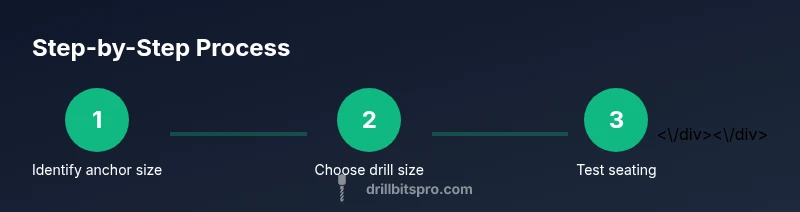
A repeatable sizing workflow reduces guesswork and increases success rates. Start by identifying the anchor type and consulting the corresponding sizing chart. Then, measure the anchor’s body diameter with calipers or a precise ruler and pick a drill bit slightly smaller than that diameter. Use a depth stop or a length of tape on the drill bit to ensure you don’t drill too deep. Drill a clean hole with steady pressure and no wobble, remove dust, insert the anchor, and verify seating before driving the screw.
Example 1: Plastic wall plug, 6 mm diameter. Use a 5 mm drill bit, drill to the specified depth, and insert the plug. Example 2: Metal hollow-wall anchor, 8 mm diameter. Use a 7 mm bit for a snug fit that allows the anchor to expand properly. Example 3: Masonry anchor for concrete, 10 mm diameter. Use a 9 mm masonry bit and ensure the hole is clean and dry before insertion. For each example, follow the packaging guidelines and test the fit in a scrap piece if possible.
When you work with unusual shapes or materials, take a conservative approach. If the hole feels tight after drilling, use a 0.1–0.2 mm larger bit only after confirming it won’t damage the anchor’s mechanism. If it’s too loose, you’ll need to switch to a larger anchor and re-drill. A methodical process protects both the anchor and the substrate.
Common pitfalls and how to avoid them
Common mistakes include guessing the drill size, skipping dust removal, and ignoring depth limitations. To avoid these issues, always measure, double-check against the chart, and perform a test hole. Debris inside a drilled hole can prevent proper seating, so brush or blow out the hole before inserting the anchor. Never force an anchor into a hole that’s too small, as this can crack the wall and reduce holding power. When drilling into concrete, use a hammer drill with the correct masonry bit, and keep the drill steady to prevent wandering.
Another frequent error is using the wrong drill speed. Slower speeds help control bit bite on hard materials and reduce heat buildup, which can affect both the bit and anchor material. Maintain consistent pressure; abrupt pushes lead to misalignment and poor seating. Finally, store a spare set of bits and anchors in a labeled container to avoid mixing sizes, which is a surprisingly common source of failure in busy workshops.
Testing, verification, and long-term performance
After installation, test the anchor by applying a modest load to confirm seating and grip. For plastic anchors, a gentle tug on the fixture helps verify that the anchor fed properly and will not spin. For metal anchors, rotate or twist the screw gradually to ensure the sleeve expands correctly. For masonry anchors, check that the screw drives in smoothly and that the anchor does not spin or crumble. If the anchor loosens or pull-out is observed, remove and re-drill using the next nearest size along with a fresh anchor. Repeatability is key for long-term performance, so maintain a small standardized drill-size kit and a consistent process for each job.
Quality control is not just about one successful installation; it’s about reducing call-backs and safety concerns on long-duration projects. Drill Bits Pro recommends documenting your size selections and outcomes, especially when working with high-load fixtures or critical structures. A quick log helps you refine your charts over time and build confidence for future tasks.
Quick-sizing charts and references
Having accessible charts is a huge time-saver. Create a simple reference that lists anchor type, nominal diameter, recommended drill size, and typical wall material. For example:
- Plastic anchor: nominal diameter 6 mm → drill size 5 mm → wall material: drywall or masonry (check chart)
- Metal hollow-wall anchor: nominal diameter 8 mm → drill size 7 mm → wall material: drywall or plaster
- Masonry anchor: nominal diameter 10 mm → drill size 9 mm masonry bit → wall material: concrete or brick
Always cross-check against the exact product you’re using. Manufacturer charts reflect construction tolerances and practical field results. Keep your reference near the drill station for quick lookups during projects, and update it as you test new anchors or materials. Drill Bits Pro emphasizes that consistent chart usage yields better outcomes across multiple installations.
Real-world scenarios: plastic vs metal vs concrete anchors
In plastic drywall anchors, the goal is a tight, friction-fit hole that lets the anchor sleeve expand cleanly as the screw is driven. The corresponding drill bit is typically one size smaller than the anchor’s listed diameter, ensuring a snug grip without cracking the plaster or drywall. For metal hollow-wall anchors, you want the hole to accommodate the anchor body without excessive looseness; a slightly undersized bit helps keep the sleeve compressed for a secure bite. Masonry anchors performed in concrete or brick demand a robust hole with clean edges; use a masonry bit sized per chart and ensure the hole is free of dust to maximize friction.
Practical takeaway: never assume every anchor follows the same rule. Always check the exact product specification and consider the substrate condition. A small investment in the right bit size upfront saves material, time, and potential damage to walls or fixtures later. The Drill Bits Pro team often tests anchors in a controlled lab-like setting to refine sizing guidelines, so you’re building on real-world data rather than guesswork.
Tools & Materials
- Cordless drill(Variable speed, adjustable torque, battery-charged)
- Masonry drill bits and/or plastic anchor bits(Size selected to match anchor type; include 1–2 sizes smaller than anchor diameter)
- Anchor kit (various sizes)(Include plastic drywall anchors, metal hollow-wall anchors, and masonry anchors)
- Pilot-hole gauge or calipers(For precise measurement of anchor diameter)
- Tape measure or ruler(Depth marking on drill bit or drill stop)
- Marker or center punch(Mark drilling point to improve accuracy)
- Brush or compressed air(Clean dust from holes after drilling)
- Safety gear (eye protection, gloves)(Eye protection mandatory when drilling, especially masonry)
Steps
Estimated time: 15-25 minutes
- 1
Identify anchor type and size
Consult packaging or manufacturer charts to identify the exact anchor size and recommended drill diameter. Use calipers to confirm the anchor’s body diameter and note the wall material you’ll be drilling into.
Tip: Double-check the chart for your specific anchor family before choosing a bit. - 2
Select the drill bit size
Choose a bit slightly smaller than the anchor’s listed diameter. This ensures the anchor expands securely when the screw is driven. If in doubt, start smaller and test in a scrap piece.
Tip: When testing, use the same material and a similar hole depth as your actual project. - 3
Mark depth and location
Mark the drilling point and apply a depth marker on the drill bit or bit sleeve to prevent over-penetration. Precise depth helps anchor performance and minimizes wall damage.
Tip: Center-punch or lightly mark the center to prevent bit wandering on hard surfaces. - 4
Drill the hole
Drill steadily at recommended speed with light, even pressure. Stop when the depth reaches the marker. Keep the drill perpendicular to the surface for clean, true holes.
Tip: Pull the bit out periodically to clear dust from the hole. - 5
Clean the hole
Remove debris with a brush or compressed air. A clean hole improves anchor seating and reduces the risk of premature failure.
Tip: Work in short bursts and inspect the hole walls for burrs. - 6
Insert the anchor
Gently push the anchor into the hole until it sits flush with the surface. Do not force it beyond flush—this can damage the anchor or wall.
Tip: If the anchor won’t seat, verify hole size before applying more force. - 7
Drive the screw
Insert the screw and tighten to the manufacturer’s torque specification. Stop when the head is snug and the anchor is fully engaged.
Tip: Use a screwdriver or impact driver set to a controlled torque to avoid over-tightening. - 8
Test and verify
Apply a light load to confirm seating. If movement or loosening occurs, re-evaluate bit size or anchor choice and re-drill if necessary.
Tip: Keep a small log of sizes used for future projects.
Got Questions?
Should the drill bit be exactly the same size as the anchor?
No. In most cases, the drill bit should be slightly smaller than the anchor diameter to achieve a secure grip. Always check the anchor’s sizing chart for the exact recommendation.
Typically, use a drill bit slightly smaller than the anchor. Check the chart for your anchor to ensure a secure hold.
What happens if I drill a hole that's too large?
An oversized hole reduces the anchor’s holding power and can lead to pull-out. You may need a larger anchor or a different installation method.
If the hole is too large, the anchor won’t hold well and you might have to re-drill with the correct size.
Do plastic anchors require a pilot hole?
Yes. Plastic anchors typically require the recommended drill size for that anchor type and substrate. Skipping this step weakens the installation.
Plastic anchors need the right drill size; skipping it can weaken the hold.
Can I reuse an anchor if the hole was too large?
Often not. If the hole is oversized, the anchor will not seat properly. Replace with a new anchor and drill a correctly sized hole.
If the hole is too big, don’t reuse the anchor—use a new one with the proper drill size.
How does drilling into concrete differ from drywall?
Concrete requires a masonry bit and usually a hammer drill. Drywall can use plastic anchors with a standard drill bit, but always verify with the chart.
Concrete needs a masonry bit and often a hammer drill; drywall uses standard anchors but still check the chart.
What’s the best way to test anchor performance?
After installation, apply a light load and observe. If there’s any movement, re-evaluate the size and consider a different anchor.
Test the anchor by applying a light load to confirm seating; adjust if needed.
Watch Video
Top Takeaways
- Always size bit smaller than the anchor.
- Consult manufacturer charts for each anchor type.
- Clean the hole and verify seating before final tightening.
- Test the installation to prevent failures.