How to Drill with Anchor: A Practical Step-by-Step Guide
Learn how to drill with anchor bolts into concrete safely with a step-by-step approach, tool prep, and pro tips from Drill Bits Pro.


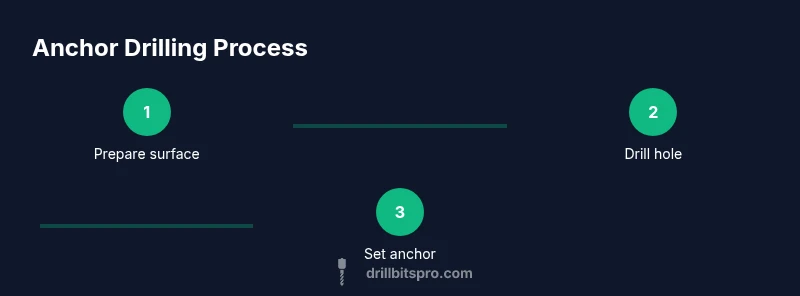
You can securely install anchors by selecting the right type, preparing the drill site, and following a clear, step-by-step method. Gather the correct drill bit and anchor, mark the hole depth, drill to the recommended depth, clean the dust, insert the anchor, and tighten to spec. When done correctly, the anchor provides reliable support for fixtures and loads.
What is an anchor and why it's important
Anchors are engineered fasteners that transfer a load from a fixture into a substrate such as concrete or masonry. Installing anchors correctly ensures structural integrity, safety, and long-term reliability. For DIY projects and professional jobs alike, choosing the right anchor type and installation method matters more than the fixture itself. According to Drill Bits Pro, the failure rate for poorly chosen anchors often stems from mismatched load requirements and substrate conditions. The Drill Bits Pro team found that understanding substrate hardness, hole size, and the anchor's pull-out resistance helps prevent creeping or loosening over time. In this guide we lay out the core concepts you must know before drilling, so you can achieve predictable, repeatable results on any project.
Anchor types for concrete and masonry
Concrete and masonry anchors come in several families, each with different load capacities and installation requirements. Common types include wedge anchors, sleeve anchors, drop-in anchors, and epoxy anchors. Wedge and sleeve anchors are excellent for medium to heavy loads and are straightforward to install with a standard hammer drill. Epoxy anchors deliver superior pull-out resistance for high-load applications, but they require mixing and curing time. Understanding the substrate and load conditions helps you pick a solution that minimizes failure risk and simplifies future maintenance. Drill Bits Pro notes that the best results come from matching anchor type to both the material grade and the fixture’s load profile, not from chasing the highest-rated product alone.
Safety and site preparation
Before you drill, set up a clean, well-lit work area with stable footing and minimal vibration. Wear safety glasses, gloves, and a dust mask to protect against concrete dust and flying debris. Secure the workpiece so it cannot move during drilling, and check for hidden utilities with a provided stud finder or metal detector. Always verify the anchor’s specification for hole diameter, depth, and torque, then double-check your measurements. By establishing a safe baseline, you reduce the risk of board or wall damage and create a repeatable process for future installations. According to Drill Bits Pro, neglecting safety checks is one of the most common sources of on-site incidents, so take a moment to review the plan with your team or yourself.
Drilling considerations: bits, drills, and settings
Choose a masonry drill bit with carbide tips that matches your anchor diameter. Use a hammer drill or rotary hammer with a percussive mode set to a low-to-moderate impact for clean, straight holes. Set the drill speed to a moderate, steady pace — fast drilling can cause bit wear and rough holes. If you encounter metal reinforcements, pause to re-evaluate the hole alignment and use a smaller pilot hole if needed. Keeping the drill perpendicular to the surface minimizes elongated holes, which can compromise anchor seating. Inspect the bit for wear after a few holes and replace it if the cutting edge appears rounded or chipped. Drilling at the correct speed and depth ensures reliable anchoring.
Drilling technique: depth, straightness, and dust control
Depth accuracy is critical. Measure and mark the required depth on the drill bit with a shallow piece of tape so you can see when you’ve reached the correct depth. To maintain straightness, use a guide or a drill stand if you have one, or steady the drill with both hands and keep your body aligned with the hole. Periodically pause to remove dust from the hole using a brush or vacuum; packed dust can clog the anchor and reduce grip. A clean hole is essential for the anchor to sit flush and perform as intended. Drill Bits Pro emphasizes that consistent technique across holes yields uniform performance across the structure.
Inserting and setting the anchor: torque and curing
Insert the anchor to the correct engagement depth, then tighten to the manufacturer’s specified torque using a calibrated driver or torque wrench. Some anchors require a set time or curing period (especially epoxy systems) before loading; do not rush curing or load testing. If an anchor seats unevenly, back it out slightly and re-seat to avoid a false seat that can mask a failure path. After installation, inspect the seating and confirm the fixture is level and stable. Proper torque and seating are the final steps that prevent loosening under dynamic loads.
Troubleshooting common issues during anchor installation
If a hole is under-sized, do not force the anchor; re-drill a correctly sized hole and clean out debris thoroughly. Cracking or spalling around the bore indicates overdrilling or over-izzing (overheating) the substrate; stop and reassess anchor choice or drilling technique. If the anchor seats loosely or pulls out under load, verify the anchor type, hole size, and depth; you may need to switch to a higher-strength anchor or use a different installation method. Always test a small load after installation before committing to the full fixture weight.
Maintenance and inspection after installation
Periodically inspect anchored fixtures for signs of movement, corrosion, or loosening. Retorque if the fixture has a sealed torque specification and is showing signs of slack. For epoxy anchors, allow the cure time specified by the manufacturer and perform a gentle load test only after curing. Maintain a log of installation details (anchor type, hole diameter, depth, substrate notes) to inform future maintenance or upgrades. Routine checks help ensure long-term performance and safety.
Tools & Materials
- Hammer drill or rotary hammer(Use in hammer mode for concrete; ensure SDS capability if using an SDS bit)
- Masonry drill bits (carbide-tipped)(Diameter matched to anchor size; ensure bits remain sharp)
- Anchors compatible with concrete(Select wedge, sleeve, drop-in, or epoxy anchors based on load and substrate)
- Vacuum or brush for dust removal(Crucial for hole cleanliness and anchor seating)
- Center punch and marker(Mark precise drill points to avoid drift)
- Safety gear (eye protection, gloves, dust mask)(Protect from concrete dust and debris)
- Torque driver or wrench(Tighten to anchor manufacturer torque specification)
- Water bottle or cooling spray (optional)(Light misting can reduce bit wear on hard concrete)
Steps
Estimated time: 60-90 minutes
- 1
Prepare the work area
Clear the zone, set up lighting, and put on safety gear. Mark the drill points using a center punch and a marker so you begin with precise locations.
Tip: Secure the fixture so it cannot move; this improves hole accuracy. - 2
Choose anchor size and drill bit
Select the anchor and corresponding drill bit based on load requirements and substrate. Double-check that the bit diameter matches the anchor’s nominal size.
Tip: Check manufacturer data for the exact hole diameter and depth. - 3
Drill the holes to depth
Set your drill in perpendicular alignment and drill to the specified depth. Stop when the tape marks reach the required depth to prevent over-penetration.
Tip: Keep steady pressure to avoid wandering and ensure clean walls inside the hole. - 4
Clean the holes
Remove all dust and debris from the bore using a vacuum and a stiff brush. A clean hole yields better anchor bite and seating.
Tip: Make multiple passes with the brush and vacuum to ensure thorough cleaning. - 5
Set and tighten the anchor
Insert the anchor to the correct depth, then tighten to the recommended torque. For epoxy anchors, follow the curing time before loading.
Tip: Do not over-tighten; exceed torque can strip threads or crack the substrate. - 6
Test and inspect
Apply a light load to verify seating. Visually inspect for any movement or gaps and re-tighten if required.
Tip: Document the installation details for future maintenance.
Got Questions?
What anchor types work best for concrete?
For most concrete applications, wedge or sleeve anchors offer reliable performance with straightforward installation. For high-load or critical connections, epoxy anchors provide greater pull-out strength, but require careful mixing and curing.
Wedge and sleeve anchors cover common uses; epoxy anchors are for higher loads but need proper curing.
How deep should holes be drilled for anchors?
Drill holes to the depth specified by the anchor manufacturer, plus a small allowance for debris removal. For some anchor types, the hole depth must be exact to ensure proper expansion or epoxy bonding.
Follow the manufacturer’s depth guidelines to ensure the anchor seats correctly.
Is center punching necessary before drilling?
Center punching helps mark the exact starting point and prevents the bit from wandering, especially on smooth or slick surfaces. It is highly recommended for precision.
Yes—center punching is a simple step that keeps your hole in the right spot.
Can I reuse anchors if I remove them?
Most mechanical anchors are designed for one-time use; reusing may compromise grip and safety. If you must reuse, inspect for wear and replace as needed.
Usually anchors aren’t reusable; inspect carefully if you plan to re-use.
Do I need special tools for epoxy anchors?
Epoxy anchors require mixing kits and a curing time before loading. Use a clean mixing cup and stick, and follow the product’s cure schedule precisely.
Epoxy anchors need proper mixing and curing—plan your timing.
Watch Video
Top Takeaways
- Choose anchors matched to substrate and load.
- Keep holes clean for maximum anchor grip.
- Apply correct torque; avoid over-tightening.
- Follow cure times for epoxy anchors.
- Test load after installation.