Do You Need a Hammer Drill for Brick? A Practical Guide
Explore when a hammer drill is necessary for brick projects, how to choose the right tool, and proven techniques to drill bricks safely and efficiently.


In most brick drilling tasks, you don’t instantly need a hammer drill; a standard drill equipped with a masonry bit can suffice for light-duty holes. However, for dense brick, thick mortar, or anchors that must bear load, a hammer drill or rotary hammer dramatically speeds up the job and reduces bit wear. The deciding factors are brick hardness, hole size, and whether you’re aiming for speed or precision.
Understanding brick drilling: what influences your choice
Brick is a versatile but variable material. It comes in soft, medium, and hard varieties, and mortar joints can add density that resists penetration. The tool you choose for brick drilling should reflect these realities: tool type, drill speed, and bit geometry. According to Drill Bits Pro, the most significant factors are brick hardness, joint size, and whether you’re drilling into solid brick or through a mortar seam. For light-duty holes in standard clay brick, a conventional drill with a masonry bit may be adequate. When you encounter dense brick or older, very hard mortar, you’ll benefit from a hammer-action tool that delivers percussive force synchronized with rotation. In this guide, we’ll distinguish the core differences between hammer drills and rotary hammers, explain when each is advantageous, and provide practical, field-tested steps to drill bricks safely and efficiently. If you’re wondering do you need a hammer drill for brick, the answer depends on the brick type and hole requirements.
Hammer drill vs rotary hammer: core differences
A hammer drill uses a pounding action that helps the bit bite into masonry while it rotates. A rotary hammer delivers a more powerful, piston-driven percussive action with a separate chisel mode. For smaller holes or lighter brick types, a hammer drill often suffices. For larger holes, dense brick, or long anchors, a rotary hammer increases efficiency and protects the bit from overheating. In practice, many DIYers start with a standard hammer drill and upgrade only if the project demands faster performance or frequent, heavy-duty brick work. The key distinction is impact energy and control: rotary hammers offer more robust percussive force with less operator fatigue on tough materials.
When a hammer drill is the right tool for brick
If you’re drilling into denser brick or through thick mortar joints, a hammer drill can dramatically reduce drilling time and wasted effort. It’s particularly useful when you need multiple holes quickly or when the holes must align with anchors that bear load. A hammer drill also helps when the brick is set in a wall that contains metal ties or rebar near the drill path. For small pilot holes or shallow penetrations in standard brick, a regular drill may be perfectly adequate, saving you from carrying additional equipment. The drill’s weight and control often translate to more precise starts and cleaner holes in everyday DIY scenarios.
When you can safely drill brick with a regular drill
A standard drill with a masonry bit can handle light-duty brick projects—think small pilot holes for picture anchors or shallow electrical boxes in soft brick. If your brick is older, crumbly, or you only need a few holes under 1/4 inch (6 mm) in diameter, you can usually manage without a hammer action. Always start at a slow speed and use a center punch or tape as a guide to prevent wandering. If you encounter resistance that causes the bit to skid, pause, retreat, and reassess the angle and depth. In many hobby projects, this approach delivers reliable results without the extra weight of a hammer tool.
Selecting masonry bits and anchors for brick
The brick drilling journey hinges on the right bit. Carbide-tipped masonry bits are standard for brick and concrete due to their durability. Choose a bit length that matches your hole depth and a diameter that matches the anchor or plug you plan to install. For larger holes, you may need pilot holes and a two-step approach to reduce stress on the brick. Anchors vary by brick type and mortar profile, so follow the manufacturer’s recommendations. Always ensure your bits are sharp and free of chipping, which can cause cracks or misaligned holes. When in doubt, test a scrap brick to dial in technique before proceeding to the actual wall.
Preparation: marking, securing, and starting a pilot hole
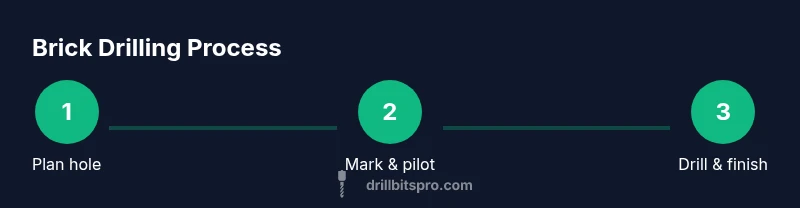
Before you drill, mark the exact center of the hole with a pencil and confirm the height using a tape measure. Secure the brick or wall section with clamps if possible, especially in vertical work. Begin with a small pilot hole to guide the larger bit, which reduces walking and ensures accuracy. If you’re drilling in a wall with studs or lattice, use a level to maintain alignment. Pilot holes are your friend: they establish a clean path for the final hole and help prevent mortar spalling or brick chipping when the full-size bit engages.
Drilling technique: speed, pressure, and dwell
Drill with steady, moderate pressure and let the bit do the work. Start at low speed to minimize wobble, then gradually increase as you feel the bit bite into the brick. Periodically withdraw the bit to clear dust and inspect progress. If you notice the bit overheating, pause to cool and re-lubricate if recommended by the bit manufacturer. Keep a consistent angle and avoid forcing the tool; excess pressure can cause brick cracking or bit breakage. Proper technique reduces wear and yields cleaner holes.
Common mistakes and how to avoid them
Rushing through brick drilling leads to cracked brick, misaligned holes, and dull bits. Avoid starting on dry, dusty surfaces; dampen the area slightly or use dust extraction. Do not assume all bricks drill identically—vary your approach for soft clay bricks and hard concrete bricks. Using a dull bit or insufficient pilot holes increases the risk of bit binding. Finally, neglecting safety gear or stepping away from the drill while it’s running increases the chance of injury.
Safety and maintenance after brick drilling
Always wear eye protection, hearing protection if using a power tool with a loud percussion setting, and a dust mask when drilling indoors. After finishing, clean the hole and surrounding area to remove dust and debris. Inspect the bit for wear and store it properly to extend its life. If you’re using anchors, check their seating and the load path after installation. Regular maintenance includes keeping the chuck clean, checking for wobble, and sharpening bits as needed. By treating brick drilling as a craft, you improve outcomes and reduce the risk of damage to your project.
Tools & Materials
- Hammer drill or rotary hammer(Choose a model with adjustable speed and hammer mode)
- Masonry drill bits (carbide-tipped)(Have a few diameters on hand (start small, then enlarge as needed))
- Center punch or masking tape(Helps start the drill accurately)
- Clamps or a helper(Useful for securing the workpiece on vertical surfaces)
- Dust mask or vacuum(Keeps dust out of lungs and off surfaces)
- Tape measure and pencil(Precise measurements prevent misalignment)
- Safety glasses and hearing protection(Essential PPE for brick drilling)
- Water bottle or cooling method(Only if recommended by the bit manufacturer; avoid near electricals)
Steps
Estimated time: Total time: 25-40 minutes
- 1
Identify hole location and mark
Mark the center of the hole with a pencil. For accuracy, use a level and a square to verify alignment. If available, use a center punch to create a small dimple that guides the bit.
Tip: Double-check measurements from multiple reference points to avoid misplacement. - 2
Choose tool mode and bit size
Select hammer mode for dense brick or large holes; choose a masonry bit that matches the anchor size. If unsure, start with a small pilot hole to guide the final bit.
Tip: Start with a smaller pilot hole to prevent brick cracking. - 3
Secure the workpiece
Clamp the brick or wall section to prevent movement. A stable setup reduces wandering and improves hole accuracy.
Tip: If you can’t clamp, have a helper hold the brick firmly with gloves on. - 4
Drill a pilot hole
Begin with a pilot hole using a smaller bit at low speed. This path guides the larger bit and minimizes chipping.
Tip: Keep the drill perpendicular to the surface for clean walls. - 5
Drill to final depth
Switch to the final bit and continue drilling with steady pressure. Pause to remove dust and check depth as you approach the required length.
Tip: Withdraw the bit every few millimeters to clear debris. - 6
Install anchors or plugs
Insert anchors according to the manufacturer’s instructions. Ensure the hole depth and diameter match the anchor’s requirements.
Tip: Test-fit the anchor before setting; if loose, adjust the hole size or use a different anchor. - 7
Finish and inspect
Clean the area, verify hole alignment, and ensure the anchor seats firmly. Check for cracks or chips around the hole.
Tip: A quick dry-fit confirms fit before final installation. - 8
Clean up
Vacuum dust and wipe the work area. Store bits and tools properly to extend their life.
Tip: Keep a small brush handy for residual debris in mortar joints.
Got Questions?
Do I always need a hammer drill for brick?
Not always. Light holes can be drilled with a regular drill and masonry bit. For dense brick or heavy anchors, a hammer drill or rotary hammer is usually beneficial.
Not always. Light holes can be drilled with a regular drill; for dense brick or heavy anchors, consider a hammer drill.
Can I drill brick with a regular drill?
Yes, for small holes or soft bricks, a standard drill with a masonry bit works. For harder bricks or larger holes, a hammer action speeds things up and reduces bit wear.
Yes, for small holes in soft bricks you can use a regular drill. For harder bricks or bigger holes, a hammer drill helps.
What type of masonry bit should I use for brick?
Carbide-tipped masonry bits are standard for brick and concrete because they resist wear. Choose the diameter to match your anchor and depth to match the installation.
Carbide-tipped masonry bits are best for brick; pick the right diameter and depth for your anchor.
What hole size should I use for brick anchors?
Follow the anchor manufacturer’s recommendation for hole diameter and depth. If you’re unsure, test with a scrap brick to dial in the right size.
Use the anchor’s recommended hole size and depth; test on scrap brick if unsure.
How do I prevent brick from cracking during drilling?
Start with a pilot hole, use the correct drill bit, avoid excessive pressure, and maintain a steady angle. Don’t drill through extended mortar joints that are already cracked.
Begin with a pilot hole, use the right bit, don’t press hard, and keep a steady angle.
Watch Video
Top Takeaways
- Assess brick hardness before choosing tools.
- Pilot holes reduce brick cracking and improve accuracy.
- Use the right bit for the brick type and anchor size.
- Prioritize safety and clean-up after drilling.